




WASHINGTON — President Donald Trump warned airlines and pilots on Saturday that the airspace near Venezuela was closed, ratcheting up what his administration has characterized as a war against drug cartels.
In a post on social media “to all airlines, pilots, drug dealers and human traffickers,” the president wrote that the airspace “above and surrounding Venezuela” should be considered “closed in its entirety.”
Trump did not go into further detail in his post, but it came after he warned Thursday night that the United States could “very soon” expand its attacks on boats thought to be carrying drugs in the waters off Venezuela to targets inside the country. The U.S. boat strikes have killed more than 80 people since early September.
As president of the United States, Trump has no authority over Venezuelan airspace. But his social media post could deter airlines from flying into and out of Venezuela and is bound to cause havoc with air travelers, further disrupting Venezuelan commerce.
The closing of the airspace will probably have a limited effect on air travel between the United States and Venezuela. There are no scheduled direct flights operated by any airline between the two countries, according to Cirium, an aviation data firm. Direct flights from the United States to other South American destinations generally avoid Venezuelan airspace.
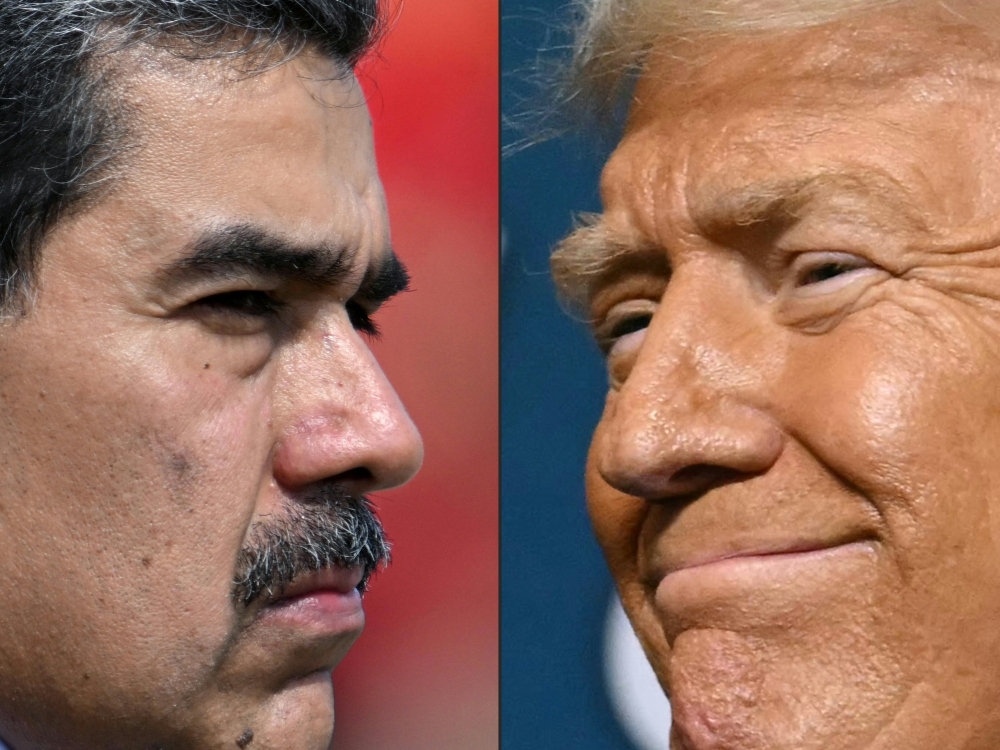
The United States has built up a substantial military presence in the Caribbean to put pressure on Venezuela. Administration officials have said their goal is to deter drug smuggling, but they have also made clear that they want to see Venezuelan President Nicolás Maduro removed from power, possibly by force.
People briefed on the Trump administration’s Venezuelan strike deliberations have said that the initial targets could be drug-related sites, including production or storage facilities used by Colombian cartels that ship cocaine through Venezuela. U.S. spy agencies have given the military intelligence about the locations of such sites in both Venezuela and Colombia.
Whether Trump plans to conduct strikes imminently is not clear, but the actions and threats have the effect of increasing pressure on Maduro and his government.
On Friday, The New York Times reported that Trump had spoken by phone this month with Maduro, even as the United States continued to threaten military action against Venezuela.
The conversation, according to two people with knowledge of the discussion, included a discussion about a possible meeting in the United States between the two leaders, according to the people, who spoke on condition of anonymity because they were not authorized to discuss the matter publicly. There are no plans at the moment for a meeting, one of the people said.
The phone call between Trump and Maduro, which included Secretary of State Marco Rubio, came days before the State Department officially designated Maduro as the leader of what the administration considers a drug cartel that is also a foreign terrorist organization, the Cartel de los Soles.
U.S. military officials have developed a range of target options for Trump, including Venezuelan military units that support Maduro or are believed to profit from the drug trade.
Other options have included oil-related facilities. Those strikes could be justified as part of a counterdrug initiative, though they would also likely be an attempt to weaken Maduro’s hold on power by cutting off access to his funding and dramatically ramping up pressure on him.
Trump has consistently talked about Venezuela as a source of drugs and illegal immigration into the United States.
The immigration story is complicated. Large numbers of Venezuelans have come to the United States, but many were fleeing Maduro’s authoritarian government. While the Trump administration has accused a Venezuelan prison gang of fueling violence, the administration has ignored assessments saying that Maduro does not control the group, Tren de Aragua, and instead has tried to manipulate the intelligence.
In reality, Venezuela plays only a small part in the drug trade in America, according to drug experts and U.S. government assessments. Cocaine produced in Colombia does pass through Venezuela, but most of it goes to Europe. Colombian cocaine that is headed to the United States is exported through the Pacific Ocean. And U.S. agencies have determined that fentanyl is produced almost entirely in Mexico, not in Venezuela, with chemicals imported from China.
From the beginning, the boat strikes have come under criticism from Democrats, who have said they are unauthorized, illegal and amount to murder or extrajudicial killing. And on Saturday, critics of the campaign said the closing of the airspace amounted to a threat to use force.
“Threats of the use of force, much less an actual attack on Venezuela, would violate the U.N. Charter,” said Brian Finucane, a former State Department lawyer who is a specialist in the laws of armed conflict. “Any such attack would also lack congressional authorization.”
Republican criticism has been far more muted. But on Friday evening, the Republican chair of the Senate Armed Services Committee, Sen. Roger Wicker of Mississippi, said he would investigate the boat strikes.
On Thursday, The Washington Post reported that for the first strike, on Sept. 2, Defense Secretary Pete Hegseth gave a verbal order to kill everyone on the boat. And CNN reported that after the military detected survivors, a second attack was carried out to kill them.
In September, The New York Times reported there were multiple strikes during the first operation. The Times also reported that the boat that was struck had altered its course and appeared to have turned around before the attack started because the people onboard had apparently spotted a military aircraft stalking it.
In a statement, the Pentagon denounced the Post report but said officials had been clear in all the operations that they were designed to be “lethal, kinetic strikes.”
While Hegseth has been clear that he ordered “lethal strikes,” the orders around follow-on strikes are not clear, nor is whether Hegseth or a military officer directly ordered a strike to kill survivors in the water. In a later operation, on Oct. 16, two survivors were rescued and transported back to their home countries.
In a joint statement, Wicker and the committee’s top Democrat, Sen. Jack Reed of Rhode Island, said they would examine the follow-on strikes that the military had carried out.
“The committee has directed inquiries to the department, and we will be conducting vigorous oversight to determine the facts related to these circumstances,” the statement said.
This article originally appeared in The New York Times.
Oman Observer is now on the WhatsApp channel. Click here