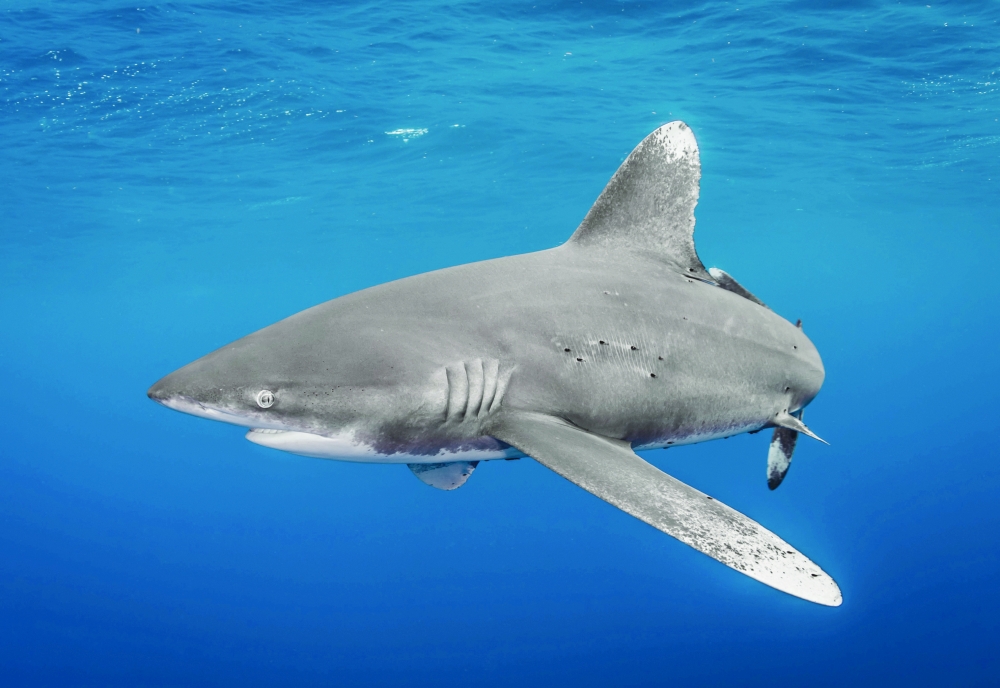





BANGKOK: The world's top wildlife trade organisation increased protections on Friday for more than 70 species of sharks and rays, in a move conservationists hailed as a "historical win".
Signatories to the Convention on International Trade in Endangered Species of Wild Fauna and Flora (CITES) backed increased trade restrictions on species from whale sharks to manta rays at talks in Uzbekistan.
Conservationists and experts have warned that shark and ray species face growing pressure from overfishing and climate change.
"This is a historical win for sharks, something we were strongly hoping for", said Barbara Slee, senior programme manager at the International Fund for Animal Welfare.
"Scientific data clearly shows sharks need to be treated as a conservation issue not a fishing resource", Slee said.
CITES regulates trade in over 40,000 species, effectively banning sales of the world's most endangered flora and fauna listed under its Appendix I and putting limits on threatened species under Appendix II.
Friday's decisions move whale sharks, manta rays and devil rays onto Appendix I after countries on Thursday did the same for the critically endangered oceanic whitetip shark.
A range of other species, including tope and smooth-hound sharks often hunted for their meat and gulper sharks targeted for their liver oil, were placed on Appendix II.
This means trade will be regulated and allowed only if it is considered sustainable.
After several contentious sessions on regulating trade in other species, including eels, the proposal to increase shark protections passed by consensus, which Slee said was a sign of changing perceptions of sharks.
"This should mark the end of overfishing and a fresh wave of hope for sharks", she said.
Over a third of ray and shark species are threatened with extinction, largely due to overfishing, according to the International Union for the Conservation of Nature.
Many are targeted for specific body parts, like fins or liver, or their meat, while others are killed incidentally by fishing nets targeting other species. — AFP
Oman Observer is now on the WhatsApp channel. Click here