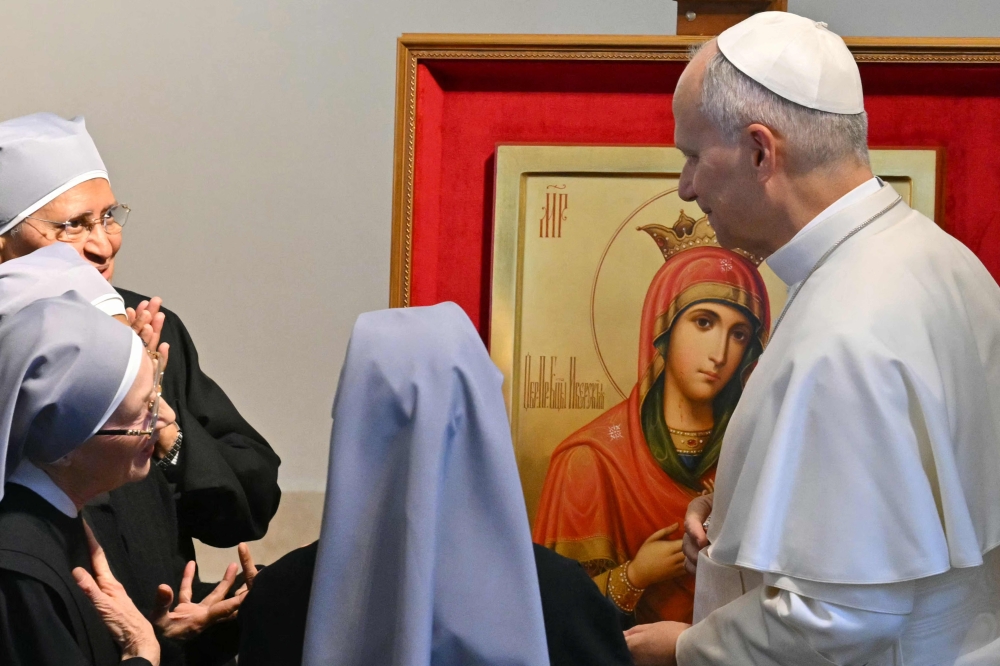
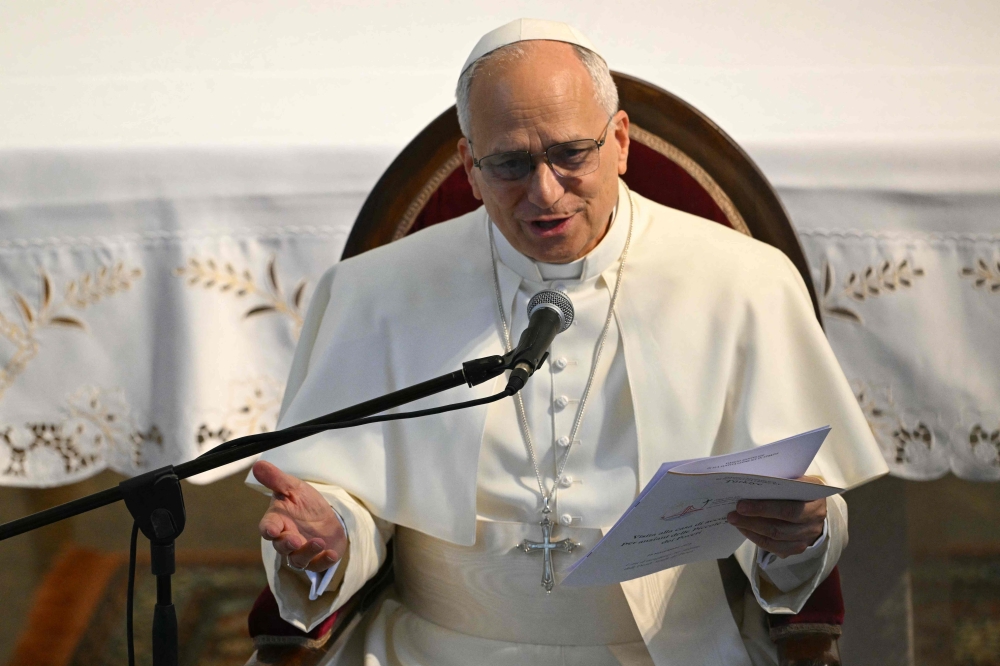
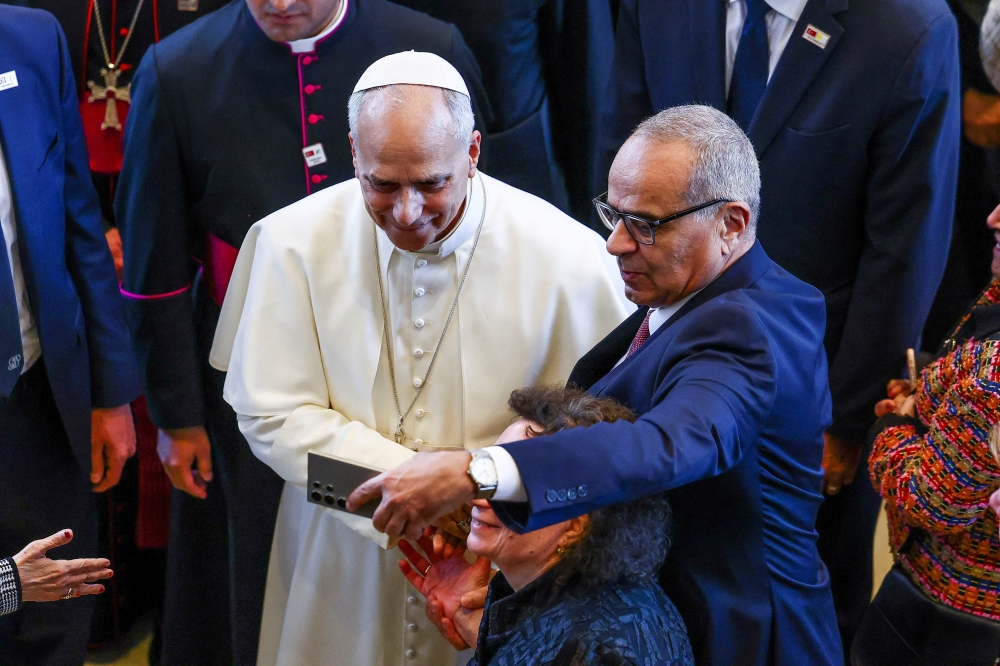





Pope Leo XIV kicked off the first foreign trip of his papacy on Thursday, arriving in Muslim-majority Turkey for a visit aimed at showcasing his interest in dialogue with other faiths and cooperation with other Christian denominations.
On the first of his four days in Turkey, Leo met with President Recep Tayyip Erdogan. Later in the trip, he is set to visit local Catholic clergy and leaders of other Christian groups, including Ecumenical Patriarch Bartholomew I of Constantinople, head of the Eastern Orthodox church.
On Sunday, Leo is expected to fly to Lebanon, home to the Arab world’s largest Catholic community, to meet with church and government officials there.
The pope’s visit there will force him to confront one of the world’s most fraught geopolitical contexts, testing his diplomatic mettle in ways he has rarely previously faced. Israel regularly strikes south Lebanon, endangering a fragile truce with Lebanese militias that was forged a year ago on Thursday, following a 13-month war.
In Turkey on Thursday, Leo stood inside the rotunda of the National Library and in front of a large globe in the capital, Ankara, and issued a broad appeal for dialogue and compassion between people of different countries, faiths and economic backgrounds. He spoke after meeting with Erdogan.
He took aim at artificial intelligence, saying it merely “accelerates processes that, on closer inspection, are not the work of machines, but of humanity itself.”
He criticized “consumerist economies” that he said fueled loneliness and said that people should instead build “a culture that appreciates affection and personal connection.”
Without mentioning specific countries, he warned of a “heightened level of conflict on a global level” that was distracting humanity from its greatest challenges, namely, “peace, the fight against hunger and poverty, health and education, and the protection of creation.”
Speaking before the pope, Erdogan praised Leo’s call for diplomacy to end the war in Ukraine and expressed admiration for his stance on the Palestinians. Leo said in September that people in the Gaza Strip “continue to live in fear and survive in unacceptable conditions, forced once again to leave their land.”
“You can see mosques, churches and synagogues side by side” in many Turkish cities, Erdogan said. “They are witnesses to our culture of coexistence.”
He did not mention that since the years surrounding the foundation of modern Turkey in 1923, the number of ethnic Greeks, who are overwhelmingly Orthodox Christians, has drastically fallen. Reasons include a population exchange between Turkey and Greece, communal violence against Greeks in Istanbul and discriminatory government policies. The ethnic Turkish population in Greece also hugely declined.
Most of the Greeks were gone by the time Erdogan became prime minister in 2003, but his government has converted former Christian churches such as the Hagia Sophia, an ancient Byzantine cathedral, into mosques.
Leo’s decision to begin his first trip abroad in Turkey, a predominantly Muslim country with a tiny Catholic population, is a nod to Christian history that he hopes will signal his modern day message, Vatican officials have said.
On Friday, he will visit the site of the ancient city of Nicaea, now called Iznik, to commemorate the 1,700th anniversary of a Christian gathering there that defined tenets of the faith. The resulting document, the Nicene Creed, is still followed by modern Catholic, Orthodox and Protestant Christians, regardless of their other theological differences.
It was a trip, Vatican officials have said, that Leo’s predecessor, Pope Francis, had hoped to make before falling ill. Leo became pope after Francis died in April.
During the flight from Rome, Leo told the reporters onboard that he sought to “proclaim how important peace is throughout the world” and to encourage “greater unity” among people, “despite different religions, despite different beliefs.”
He wished the Americans onboard a happy Thanksgiving and walked the length of the plane delivering greetings to journalists, signing programs and blessing rosaries. He also received homemade pumpkin pies from two reporters, and told another that he had completed the day’s Wordle game in The New York Times and “got it in three.”
The visit is a boon for Erdogan, who got the honor of being the first head of state to receive the new pope.
In Ankara, soldiers on horses escorted Leo to the gate of the presidential palace, where he entered alongside Erdogan. A phalanx of guards stood by as the leaders walked up a turquoise carpet. Soldiers fired ceremonial cannons, and a military band played the Turkish national anthem.
That followed Leo’s first stop, at the mausoleum of Mustafa Kemal Atatürk, the founder of modern Turkey and its first president, where two soldiers laid a wreath bearing the pope’s name.
Emre Oktem, a professor of international law at Galatasaray University in Istanbul, said, “As a good Muslim, I am very happy” about the pope’s visit. Referring to Leo, he added, “As a Catholic pope, he comes and pays his first visit to a Muslim country — it is a sign of openness and interest in cooperation.”
This article originally appeared in The New York Times.
Oman Observer is now on the WhatsApp channel. Click here