




MUSCAT: The Sultanate of Oman strengthened its international maritime and transport profile this month with two Memoranda of Understanding signed at the International Maritime Organisation (IMO) meetings in London, moves that industry analysts say could sharpen the country’s logistics competitiveness and support decarbonisation ambitions.
On November 24, Oman and the Republic of Türkiye signed an MoU covering cooperation in transport, international transport corridors, communications and information technology — a pact negotiated at ministerial level between Eng Said bin Hamoud al Maawali, Minister of Transport, Communications and Information Technology and Abdulkadir Uraloğlu of Türkiye.
The Türkiye agreement builds on deeper bilateral momentum seen this year, including the establishment of an Omani-Turkish coordinating council and reciprocal visa facilitation measures that are already smoothing people and goods flows between the two markets.
For Oman, closer ties with Türkiye open opportunities to align on transport corridors that link the Gulf to Mediterranean transhipment hubs and European markets, potentially boosting transit volumes through Omani ports and attracting value-added logistics services.
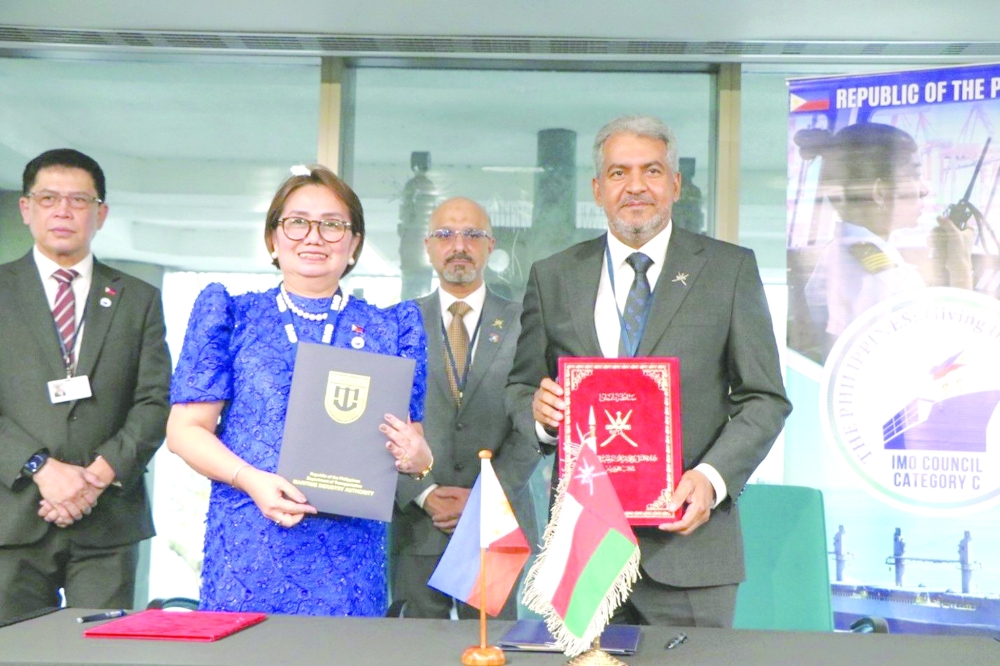
Also on November 24, Oman and the Republic of the Philippines signed an MoU on the mutual recognition of seafarers’ certificates — a practical step that streamlines crew certification, supports labour mobility and can reduce administrative friction for ship operators employing multinational crews.
The agreement, signed by Eng Khamis bin Mohammed al Shammakhi, Under-Secretary of the Ministry of Transport, Communications and Information Technology for Transport and Sonia B Malaluan of MARINA, is significant for Oman’s shipping and offshore sectors because access to a broader, mutually recognised seafarer pool can lower crewing costs and ease manpower constraints for regional shipping lines and port operators.
Oman’s delegation at the IMO also pursued broader partnerships in Europe. On November 17, the ministry’s delegation held talks at the Embassy of Austria in London, where discussions on sustainable maritime development, green energy initiatives and potential collaboration with European partners were front and centre. Engagements like this reflect a two-track approach: commercialising Oman’s logistics assets while aligning with international environmental and safety standards that increasingly influence chartering and financing decisions.
Strategically, Oman’s recent activity at IMO sessions — including participation in the Marine Environment Protection Committee (MEPC) meetings in October, where member states debated the practical framework for maritime carbon neutrality — signals a policy mix that aims to marry market access with sustainability.
Adoption of IMO measures such as the Net-Zero Framework will shape fuel choices, retrofit demand and port investments; Oman’s early engagement positions its ports, state logistics groups such as Asyad and free-zone operators like SOHAR Port and Freezone to compete for green shipping flows and related financing.
For the Omani economy, the near-term business implications are tangible: potential rises in transhipment volumes, new corridor management and IT-enabled customs interoperability projects with Türkiye and smoother crewing arrangements with the Philippines that reduce operational friction for owners and operators calling Omani terminals.
Over the medium term, alignment with IMO decarbonisation rules should stimulate investment opportunities in low-carbon bunkers, shore power and green port infrastructure — areas where public–private partnerships and targeted green finance could mobilise capital and jobs.
Oman Observer is now on the WhatsApp channel. Click here