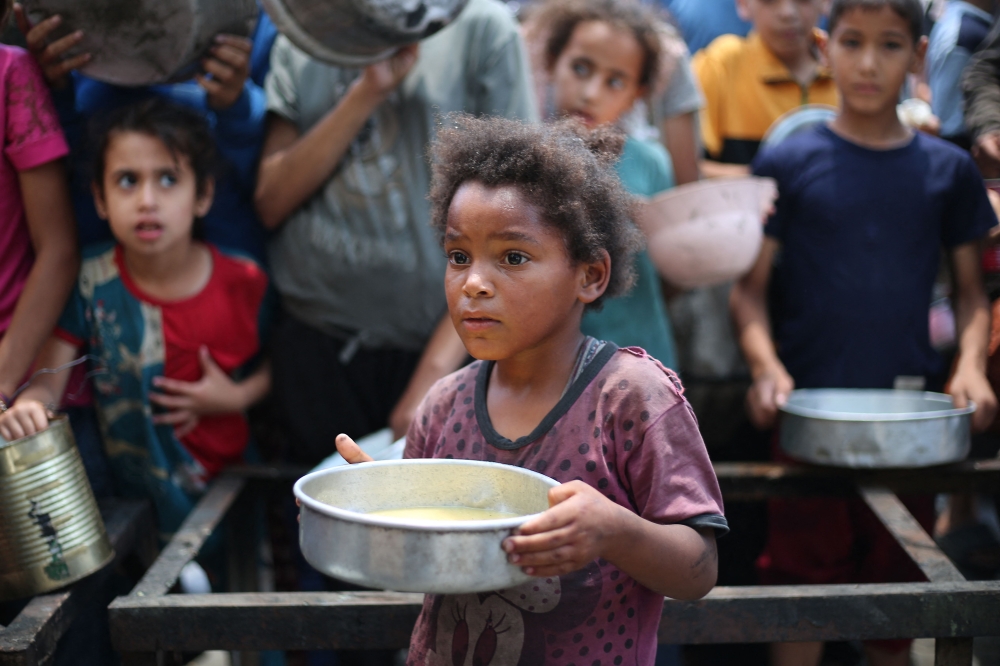
Oman is widely recognised as a pillar of peace and stability, yet its foreign policy is equally grounded in justice. This principle became unmistakable during recent regional crises, especially Israel’s brutal war on Gaza.
At a moment when many governments were silent or complicit, Oman stated clearly that Israel is the aggressor and affirmed that peace will remain elusive without ending the occupation and granting Palestinians their legitimate rights. This firm voice reflected the country’s longstanding commitment to moral clarity in international affairs.
Oman’s global respect stems from a balanced foreign policy that has earned it the reputation of a “trusted mediator” and “voice of wisdom” in a region marked by instability and political manoeuvring. Since the rise of the modern Omani state, the late His Majesty Sultan Qaboos established guiding principles centred on respecting sovereignty, non-interference, and resolving disputes through dialogue and peaceful means. These foundations have shaped Oman’s diplomatic conduct for decades.
Recognising the importance of external relations in building a modern state, the late His Majesty Sultan Qaboos ensured that Oman joined key regional and international organisations, including the Arab League and the Gulf Cooperation Council. He strengthened bilateral ties with diverse nations, emphasising dialogue, openness and cooperation. This outward-looking vision helped Oman navigate complex geopolitical landscapes while maintaining constructive relations with all parties.
Upon assuming the throne, His Majesty Sultan Haitham bin Tarik reaffirmed the enduring principles of Oman’s foreign policy. In his first national address, he highlighted Oman’s historical role in fostering positive engagement with the world’s civilisations. Since then, His Majesty has embodied this vision through official visits, by hosting world leaders in Muscat, and by directing ambassadors to enhance cooperation and extend diplomatic bridges. This continuity has reinforced Oman’s position as a respected and dependable actor on the international stage.
Oman’s balanced diplomacy has enabled it to contribute effectively to resolving intricate regional crises. It played a vital role in facilitating the Iranian nuclear negotiations with the P5+1, which produced the 2015 nuclear agreement. When the United States later withdrew and imposed new sanctions on Iran, Oman again sought to bridge differences through consultations in Muscat and Rome. These efforts moved the parties closer to understanding, yet the renewed conflict triggered by Israel’s strike on Iran halted the talks and provoked a twelve-day confrontation involving the US. Iran responded with strikes on American bases in the Gulf before international mediation helped contain the escalation. Oman condemned the aggression against Iran and reiterated that Israel’s conduct fuels instability across the region.
Oman also supported efforts to end the Yemen conflict by hosting rounds of negotiations that resulted in a peace agreement between warring factions. It contributed to resolving the intra-Gulf dispute and hosted Libyan dialogues aimed at guiding the parties towards peaceful solutions. These roles underscore Oman’s belief in dialogue as a strategic pathway rather than a tactical option.
The Palestinian cause has long been central to Oman’s foreign policy. Oman has consistently affirmed the Palestinians’ right to an independent state with East Jerusalem as its capital and stressed that the continuation of Israeli occupation remains the root of regional turmoil.
In this context, Oman welcomed initiatives aimed at strengthening the role of the UN General Assembly to ensure global governance becomes more just and credible. Oman’s foreign policy remains a reflection of its deep civilisational heritage — a legacy His Majesty Sultan Haitham bin Tarik expressed when he affirmed that Oman will continue to uphold its historical mission of fostering security, prosperity and peace, building bridges and honouring its enduring responsibility to humanity.
Abdulwahab al Hinai
The writer is a journalist and political editor at Oman newspaper
Translated by Badr al Dhafari
The original version of this article was published in Arabic in the print edition of Oman newspaper on November 20.
Oman Observer is now on the WhatsApp channel. Click here