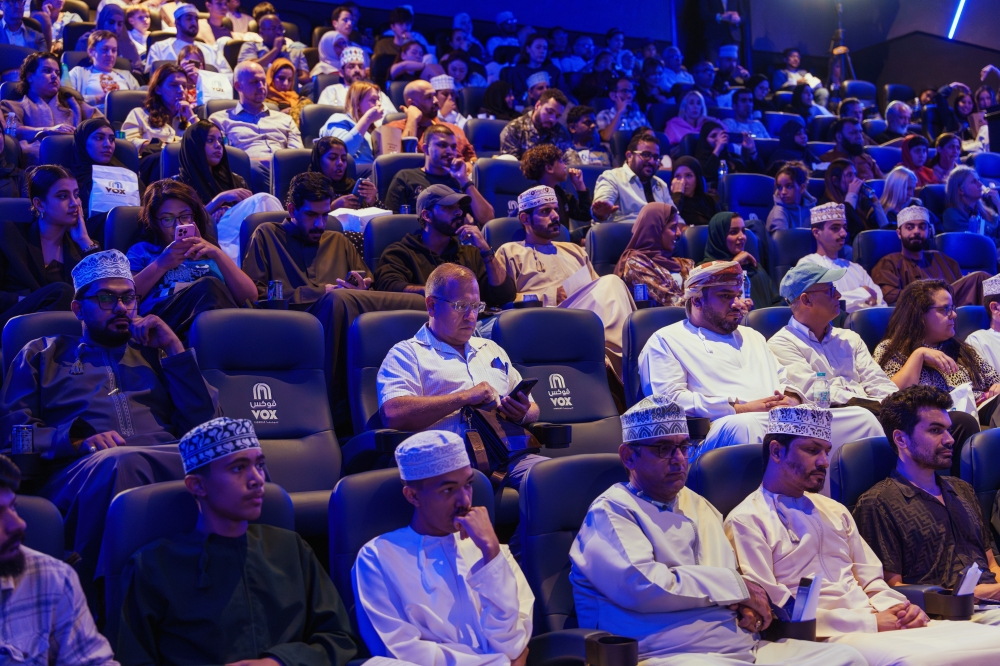





The Gulf Film Festival 2025 in Muscat is drawing a wide audience of filmmakers and cinema enthusiasts. The second day featured a rich programme of training workshops and film screenings, ranging from short fiction and documentary films to full-length features, reflecting the growing cinematic movement across GCC countries.
The day began with a workshop on cinematic makeup delivered by Bahraini theatre director Yasser Saif, who discussed the fundamentals of makeup design and its role in building a character, in addition to advanced techniques that shape a film’s visual identity. Saif explained that makeup is the final stage in an actor’s journey to fully embody a character, noting that audiences first encounter a character through the face before observing the rest of the performance. He emphasized that the success and visual presence of a character rely greatly on the accuracy and quality of makeup.
The programme also included a workshop by sound engineer and producer Ammar al Hudhaifi, who showcased professional methods for designing and producing sound effects that add depth and realism to visual scenes. He highlighted modern tools for recording and audio processing, and demonstrated how sound can create atmosphere, enhance emotion, and transform the cinematic experience into a cohesive audiovisual world. The workshop aimed to equip participants with a solid understanding of the vital role sound plays in building and enriching cinematic storytelling.
The festival further screened a selection of participating films across three sessions in the amphitheatre, alongside a special screening of “Baqshat Saad” attended by Kuwaiti actor Saad al Faraj.
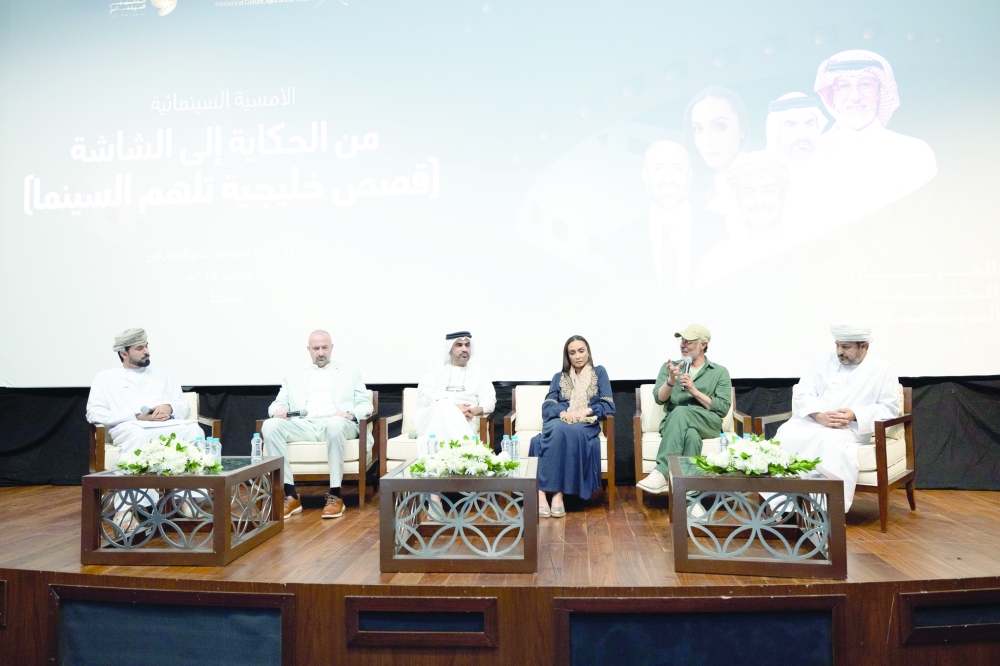
An evening panel titled “From Story to Screen: Gulf Narratives Inspiring Cinema” brought together actor Abdul Mohsen al Namir, Bahraini writer Sheikha Suha al Khalifa, Emirati writer Mohammed Hassan Ahmed, Omani director Mohammed al Kindi, and Kuwaiti writer Ziyad al Hussaini. The session was moderated by media presenter Mohammed Al Alawi.
During the discussion, Omani filmmaker Mohammed bin Suleiman Al Kindi stressed that the essence of cinematic creativity lies in the story itself, and that artists—writers, producers, and directors alike—derive their vision from the ability to tell a story in a fresh and distinctive way. He highlighted the importance of collaboration among the three pillars of filmmaking, where differing perspectives help elevate the artistic quality of a project. Al Kindi also spoke about his award-winning film “The Unknown: The Disappearance of Mousa,” which won Best Feature Film at the Rabat International Film Festival. He noted that the screenplay blends elements of Omani folklore with a modern visual approach that makes use of the country’s diverse landscapes—mountains, forts, and traditional architecture—creating a cinematic environment rooted in Omani identity.
Emirati writer Mohammed Hassan Ahmed explained that his connection to storytelling began with place before character, as everyday details in his surroundings were his earliest source of inspiration after the year 2000. He said that transforming oral traditions into cinematic language requires a visual reconstruction based on image, character, location, and music, since a story alone is not enough to make a film. Small, seemingly ordinary details in the real world, he added, often spark the beginnings of a larger narrative. The task of a screenwriter, he emphasized, is to uncover the deeper essence of a story rather than simply reproduce it.
Saudi actor Abdul Mohsen al Namir highlighted the major challenge of adapting Gulf novels into visual works, pointing to weaknesses in screenwriting despite the region’s abundance of rich stories. He explained that many literary works struggle in adaptation due to a shortage of qualified screenwriters, in addition to the high production costs of historical settings and detailed scenes. Nevertheless, he expressed optimism about the growing focus on training talent and the rapid expansion of the cinema market in the GCC—especially in Saudi Arabia—providing filmmakers with a stronger audience base and a more mature industry environment.
Bahraini writer Shaikha Suha al Khalifa offered a personal reflection on her experience in screenwriting, noting that one reason behind the success of “Rashash”—which reached Hollywood—was its ability to evoke genuine human emotions, particularly the scene depicting the loss of a father. She shared that the authenticity of this moment stemmed from her own experience with her father’s passing, allowing her to infuse the scene with emotional depth. She stressed that cinema resonates most powerfully when it springs from sincere feelings, and that personal pain, when channelled artistically, can become a source of creative strength capable of touching audiences everywhere.
The second day of the festival underscored the growing regional interest in cinematic arts and highlighted Oman’s increasing role in supporting and nurturing the Gulf’s expanding film landscape.
Oman Observer is now on the WhatsApp channel. Click here