



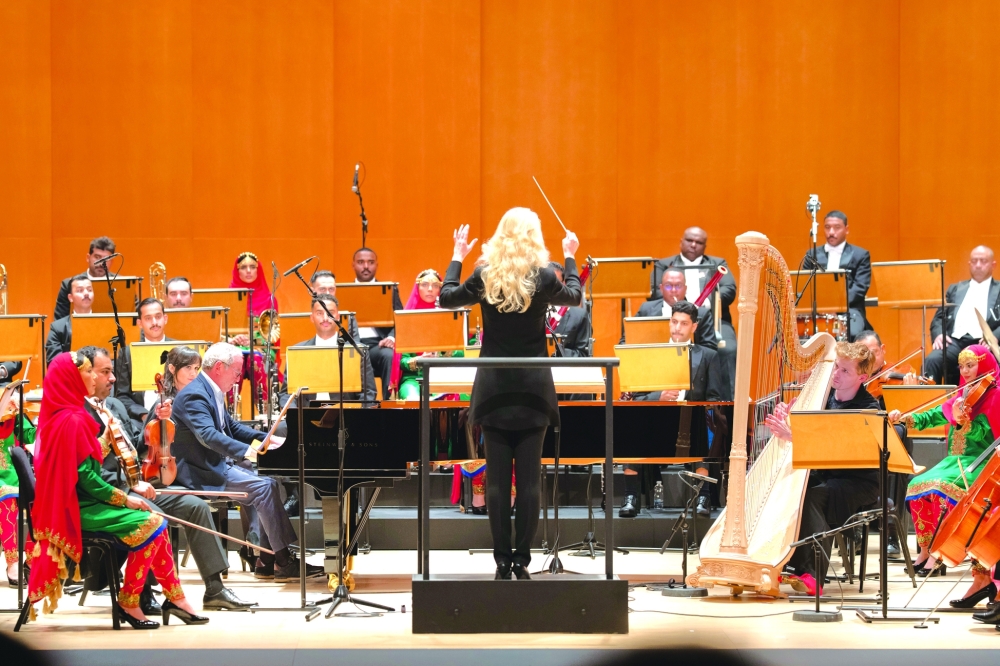





The performance at the Royal Opera, House of Musical Arts on Monday evening presented by the Royal Oman Symphony Orchestra (ROSO), was billed as a “Special Concert” — and so it was in many ways.
An Egyptian engineer, business founder and developer, Samih Sawiris, decided at age 61 to perform a Piano Concerto. He gave himself 6 years to study the piano — from scratch — to achieve a competent standard to perform the solo role with an orchestra. He succeeded together with German composer-pianist, Joja Wendt and 42-year old Swiss conductor, Lena-Lisa Wüstendörfer in bringing this ambitious project to fruition and has already performed in venues around Europe and Egypt.
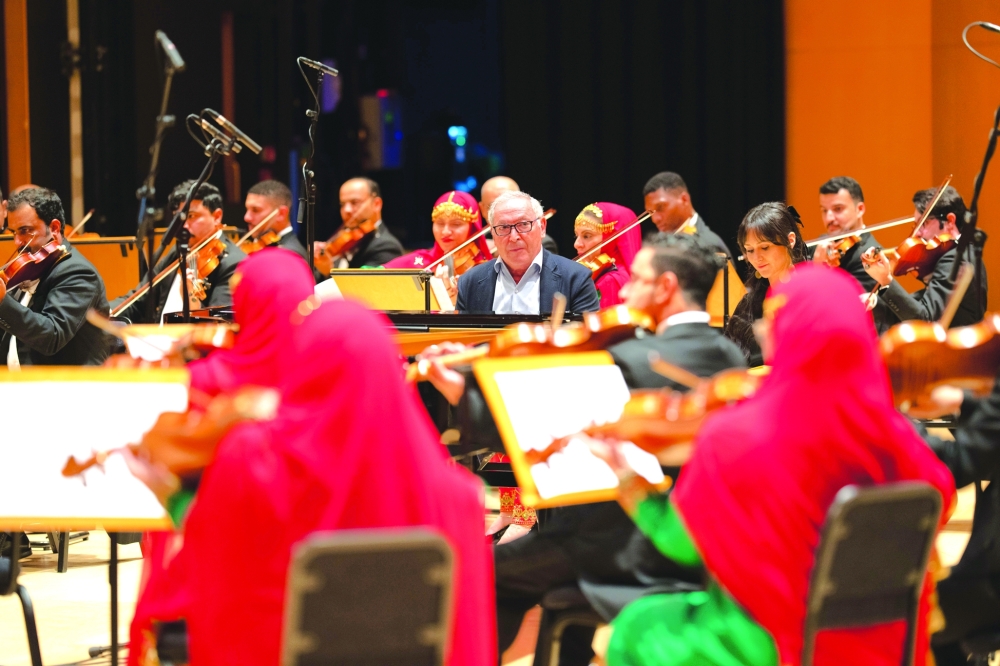
Here in Muscat he was supported by ROSO with the especially composed concerto forming the third part of the hour-long concert. The programme started with the early 20th century Egyptian Architect-Composer, Abu Bakr Khairat. His, “Suite Folklorique”, re-discovered by Wüstendörfer, is a delightful blend of Arabic folk tunes and Western Romanticism in an engaging, accessible style.
The first movement opened with light pizzicato strings under gentle melodies in the woodwind, supported by some interesting rhythms from the percussion. The piece is not too complex nor demanding with its themes composed on Arabic scales, yet brought out the best of ROSO playing.
The work is artistically structured, with explosive interruptions from timpani, percussion and brass providing the 2nd and 4th movements as links. The 3rd movement was a return to the first material and featured oboe themes (Hanan al Hikmani), passed between flute, (Qaiser al Abri), strings and woodwind.
The fifth movement featured Egyptian folksongs in the woodwind over Hispanic rhythms, while the 6th used western scales and themes from the brass and percussion in a military style, ending in a patriotic, Nationalistic flurry. The audience enjoyed this work so much that they clapped after each movement!
After stage rearrangement, the second piece of the evening featured the 35-year-old wunderkind harpist-composer, Alexander Boldachev.
Entitled, “Harmony of Sand and Sea” his solo composition used innovative techniques for amplified harp such as harmonics, beating or plucking strings with reverb and melodies above tremolo patterns. There were Spanish infections in the language and even echoes of Albeniz towards the end. The rippling glissandos familiar in harp technique suggested the sea washing upon the sand and Boldachev even sang vocalise at one point. Syncopated rhythms drove the composition to an exciting finale. Alexander returned to the stage for his prepared encore, his virtuosic transcription of Vivaldi’s “Winter”. His interpretation of this iconic Baroque favourite was subtle and sensitive and well received by the adoring audience.
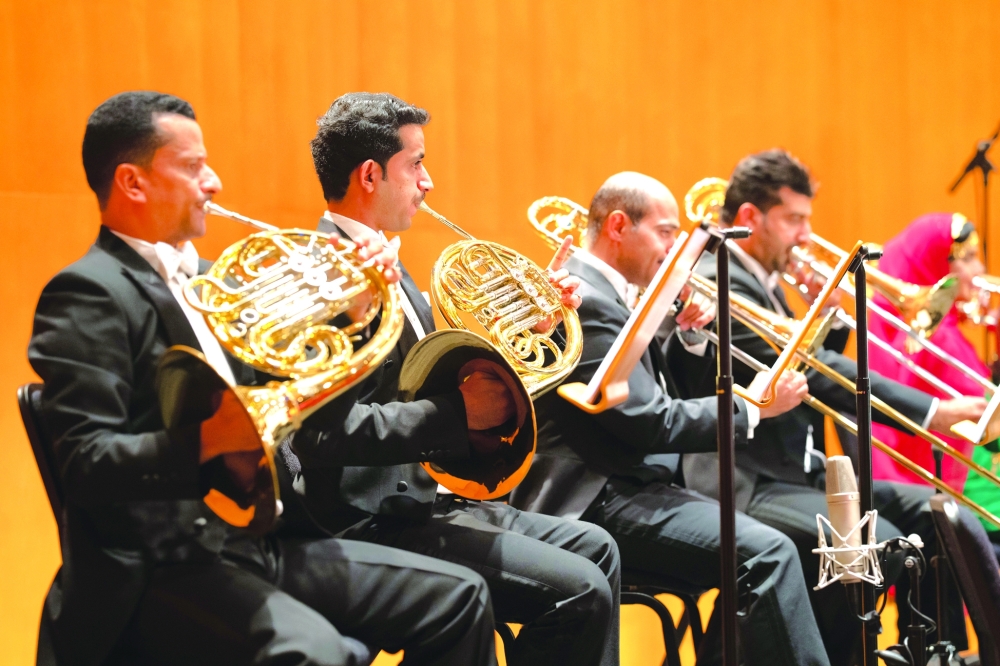
Boldachev took his place within the orchestra and then conductor and Mahler expert, Lena-Lisa Wüstendörfer returned with the Man of the Night, Samih Sawiris. His solo piano introduction to the Concerto was with confident, strident chords until the orchestra joined in. The harp became part of the orchestral texture in a cinematic, romantic style, yet the solo piano was clearly audible above a pianissimo tutti. Sawiris is clearly competent, though he has a tendency to hold down the sustain pedal — perhaps a subconscious mannerism. His first arpeggiated solo cadenza was not too challenging, yet accurately and sympathetically performed. There was some tricky writing for the brass in the full orchestral sections, while the piano part was doubled in the bright glockenspiel. This may have been a reference to Sawiris’ early school experience as a relegated xylophone player! The theme was easy to follow as it passed between woodwind and strings, swelling in a romantic vein at times, with a very classical ending to the movement.
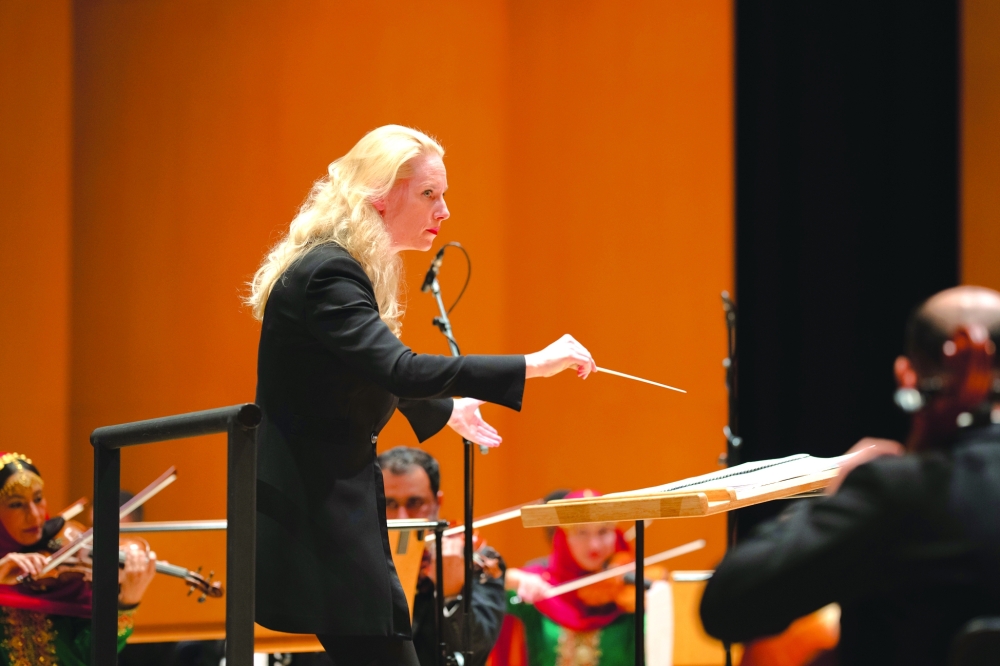
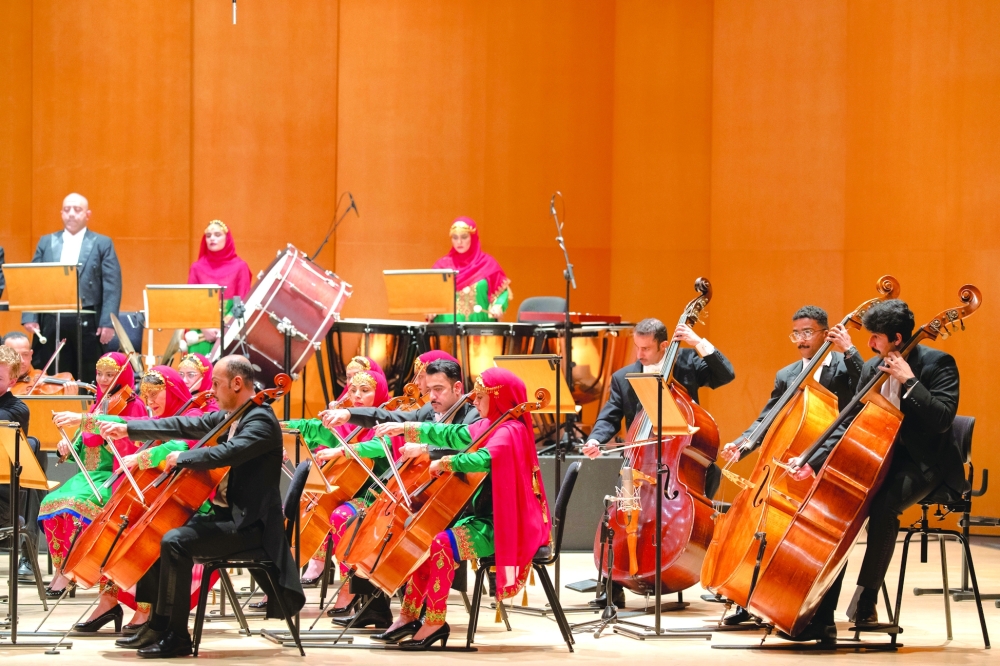
The second movement was Johan Wendt's re-orchestration and re-interpretation of the Slow Movement from Ravel’s beautiful Piano Concerto — requested by Sawiris. It was sensitively performed by Sawiris, especially in bringing out the melody in his right hand. Ravel’s score was interpreted so tenderly throughout — cellos, horns, oboe, lush clarinet lines from Safa al Balushi and resonant violin timbres. Applause greeted the end for Samih Sawiris as well as the composer.
The final Mahleresque movement featured warm cello sonorities, excellent horn playing, some brilliant brass passages, chromatic falling motifs towards the climax and many timpani rolls, worthy of any Mahler performance. Well done, ROSO! The piano contribution is interesting (Mahler himself was a fine pianist but did not compose for the instrument) adding to the orchestral texture, rather than as soloist. The final movement was just the right length to keep the audience’s attention.
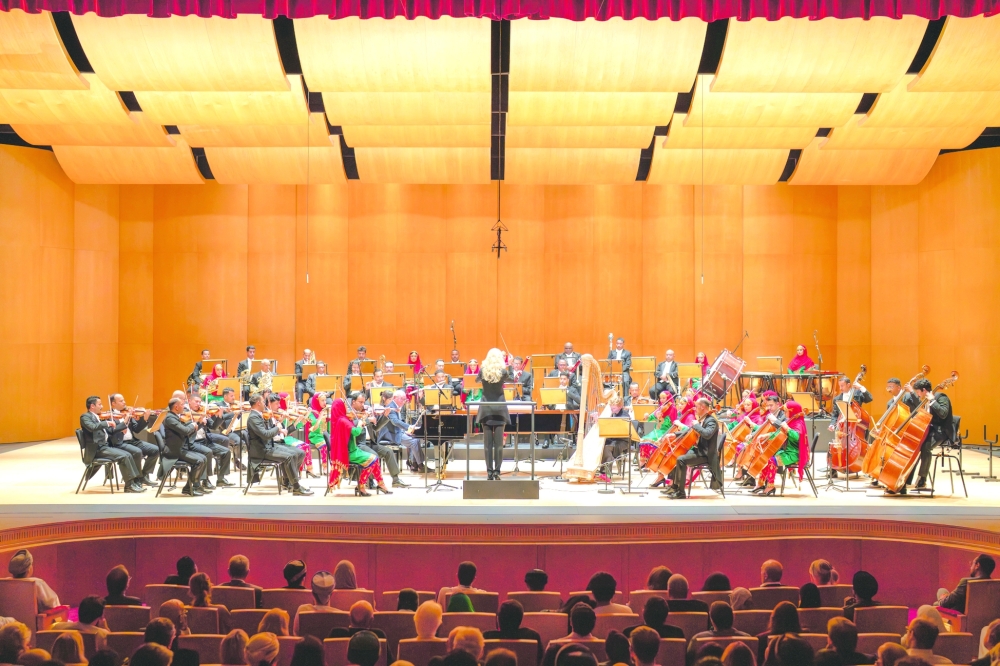
As a great innovator of the Symphonic form, if Mahler were alive today he would be gratified to see the direction in which his orchestral writing has led. He — along with the public — would also be very impressed with Samih Sawiris’ perseverance, diligence and commitment to becoming a successful concert pianist in six years under the expert guidance of Wendt and Wüstendörfer.
PHOTO CREDIT: KHALID AL BUSAIDI
Oman Observer is now on the WhatsApp channel. Click here


