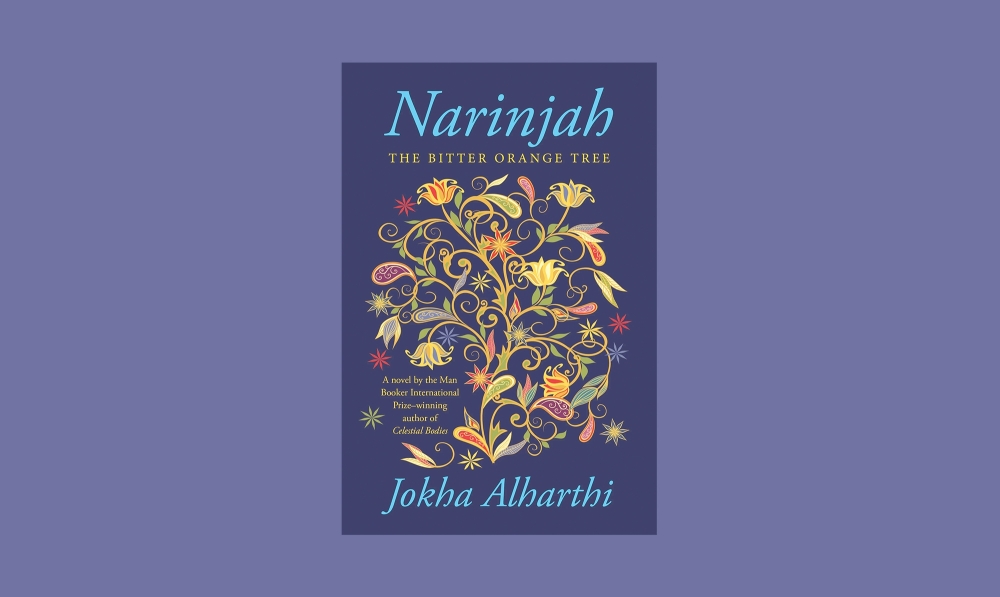





The bitter orange — narinjah in Arabic — is a fruit that is not easy to define. It greets you with its delicate sweet scent and lingers on your tongue with a sharp sting that remains. Jokha al Harthi’s novel Narinjah, like its namesake, leaves a taste that is unforgettable and holds the same duality. As the narration unfolds, the contrast between beauty and pain, memory and loss, intimacy and distance is stunning.
Jokha has always been known as the writer of Celestial Bodies, the first Arabic-language novel to win the Man Booker International Prize (in) 2019. She has has enriched Omani literature and contributed to presenting many Omani cultural concepts to the world. This marked an important moment in the development of Oman and its identity and helped to bring Omani literature onto the world stage. However, not many people know about her other works. Narinjah may come as both a continuation and a surprise.
Al Harthi has always been a writer deeply attuned to the currents of memory, silence, and the unspoken ties between generations. But in Narinjah, she turns inward even more intensely, crafting a narrative that is less about the sweep of history and more about the fractures of personal experience.
In this novel, Zuhoor, a woman caught between her memories and emotions, and between them and geography, is the narrator and the centre of the story. The narration is not a straight line but a collection of fragments—absence, loss of loved ones, and the distinct ache of exile. The memories and emotions fill the novel with echoes and returns, making it feel like listening to memory itself —broken, incomplete, yet deeply moving.
The fragmented structure succeeds in reflecting the workings of the human mind: looping back, moving forward, and dwelling on moments of intimacy. From page to page, readers journey from Zuhoor’s exile to her childhood, witnessing the shifting tides of Omani society.
While readers can clearly notice the cultural resonance in the novel, it still emerges beyond cultural values and vibes, as the characters embody both the specific textures of Omani life and the universal human struggles of memory, belonging, and love. Zuhoor’s yearning and silence could belong to any woman in the world, yet they are also deeply rooted in the Omani experience of transition, migration, and modernity.
Reading this novel is like tasting a bitter-orange fruit — Narinjah. It demands the reader to travel through pain, longing, and the weight of the unspoken all throughout the novel. However, it rewards readers with a rich emotional journey, filled with depth and the zigzag motion of memory.
In the end, the novel takes its readers to real life — just like walking through an Omani garden where bitter-orange trees grow. You leave the garden not only carrying its scent but also unable to forget its mementos.
Oman Observer is now on the WhatsApp channel. Click here