Oman’s story has always been about connection: seafaring routes, bustling ports and the quiet pride of making things well. That same spirit can power our next leap — by turning our ports and zones into launchpads for higher-value production and our classrooms and workshops into engines of skills development.
The logic is familiar to any household: when you learn better, you make better; when you make better, you sell better. The World Economic Forum calls this the “quality of growth” — balancing speed with resilience, innovation, inclusion and sustainability — so that prosperity lasts and reaches more people.
For countries like Oman, that agenda is not abstract policy; it is the practical route to more stable jobs, rising incomes and confidence that our economy can weather global shocks while moving up the ladder of sophistication.
The practical path is a recipe with four ingredients that work together. First, attract and anchor foreign direct investment (FDI) — not just capital, but partnerships that bring technology, managerial systems and access to markets.
Second, plug our firms into global value chains (GVCs) so they specialise where Oman can be world‑class: components and precision processing, testing and certification, after‑sales services and spares.
Third, use our special economic zones (SEZs) as the production kitchen where approvals are quick, standards are high and logistics are seamless. Finally, place people at the centre through capability development that turns new factories into real schools of practice. International evidence is consistent: FDI and GVC participation reinforce each other when countries focus on supplier upgrading and skills, rather than on tax relief alone.
Why does FDI matter so much? Because the shortest road to know‑how is to work beside those who already have it. But it only works when deals are designed well. Incentives should be earned by what truly upgrades Oman: supplier development with measurable improvements in first‑pass yield and on‑time delivery; certified training that moves Omanis into higher‑value roles; and local engineering content — tooling, maintenance and process optimisation — so factories here can solve problems fast.
This is the difference between “fly‑in, fly‑out” operations and anchored partnerships that diffuse technology and routines into local firms. Global research shows that when governments require supplier development and skills transfer, FDI becomes a powerful escalator for productivity, complexity and export competitiveness, rather than a race for subsidies.
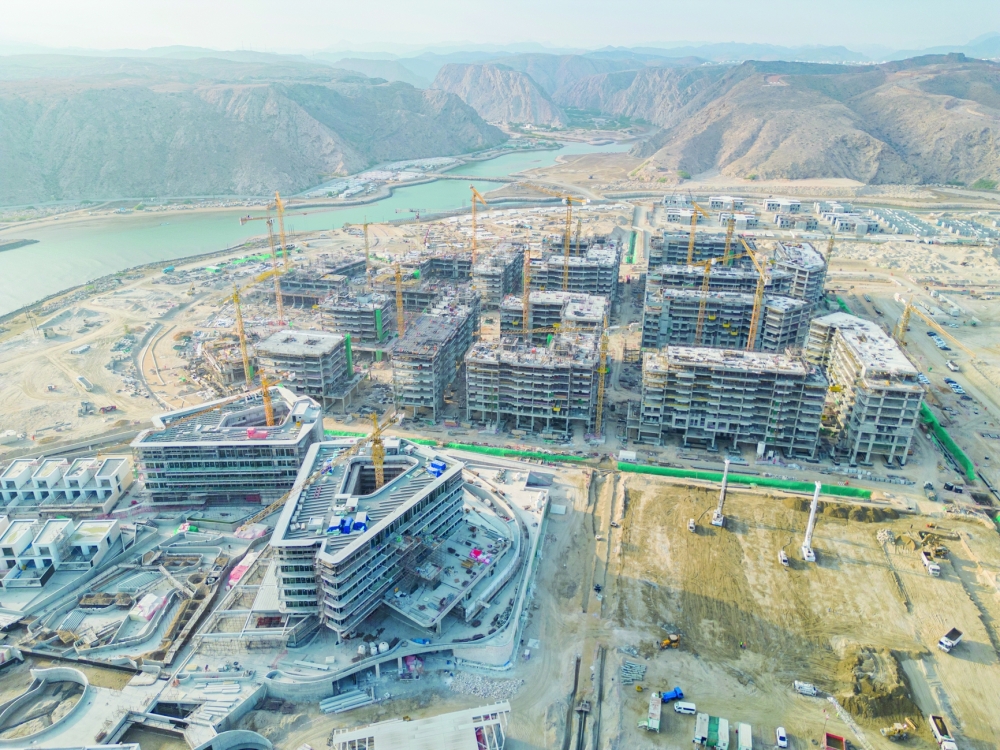
Our SEZs are where ambition becomes action. In April 2025, Oman unified and modernised the legal framework for special economic and free zones under Royal Decree 38/2025, signalling predictability on permits, guarantees, benefits and incentives. That legal clarity is a green light to structure “make‑and‑teach” agreements with every major investor — producing here and training here — backed by quarterly reporting on supplier upgrades and skill certifications. It also helps zones compete globally for time-sensitive manufacturing that values reliability, speed and rules-based administration.
With this foundation, Sohar can deepen metals and engineered plastics components, Duqm can anchor energy‑transition equipment and heavy‑industry services, and Salalah can lead in agri‑food processing and cold‑chain. The point is simple: zones must reward export sophistication, not just volume, so that Oman steadily moves up the value curve.
People sit at the centre of this plan. Oman Vision 2040 sets a national priority on education, learning, research and capabilities — the hinge that turns investment into productivity. For families, this simply means more pathways where study leads to skilled work and better pay.
For firms, it means dual‑track training inside zones — 12–18 months on real production lines, leading to trusted certificates for line leaders, maintenance planners and quality engineers. The WEF’s competitiveness work echoes the same message: countries that invest in human capital — technical skills, problem‑solving, digital fluency — are the ones that turn openness into sustained competitiveness. When we combine classroom foundations with on‑the‑job learning, we create a workforce that doesn’t just operate machines, but improves them.
What does success look like in practice? More value per kilogramme shipped; a steady pipeline of Omani SMEs that pass international standards; and a shift in what we sell — from basic materials to components, specialty chemicals, engineered plastics, precision food processing and after‑market services.
Integration into GVCs tends to increase export value density when firms move beyond basic assembly into design, testing, branding and services; the evidence is clear that upgrading raises productivity and incomes. The Gulf’s position adds tailwinds: global firms are re‑routing supply chains and want reliable, open locations with strong logistics and predictability. Oman can stand out by promising a rules‑based environment in zones, rapid approvals and a distinctive offer — “make here, train here and grow here” — that links incentives to measurable learning and supplier improvement.
In the end, this is not a leap of faith but a matter of good housekeeping. Keep the oven at the right temperature — stable rules, capable zones and steady investment in people — and the dish will rise. Anchor FDI with learning, measure what matters and tell the world our offer with confidence.
Oman has always been a nation of builders and traders; now we can be a nation of makers and innovators too. With the right contracts in our zones and the right certificates in our hands, we will sell more, earn more and employ more — while building the skills that give families security and pride. This is the kind of growth that feels resilient in a storm and generous in the sun, the kind that carries our heritage forward into a more complex, more connected world.
Oman Observer is now on the WhatsApp channel. Click here