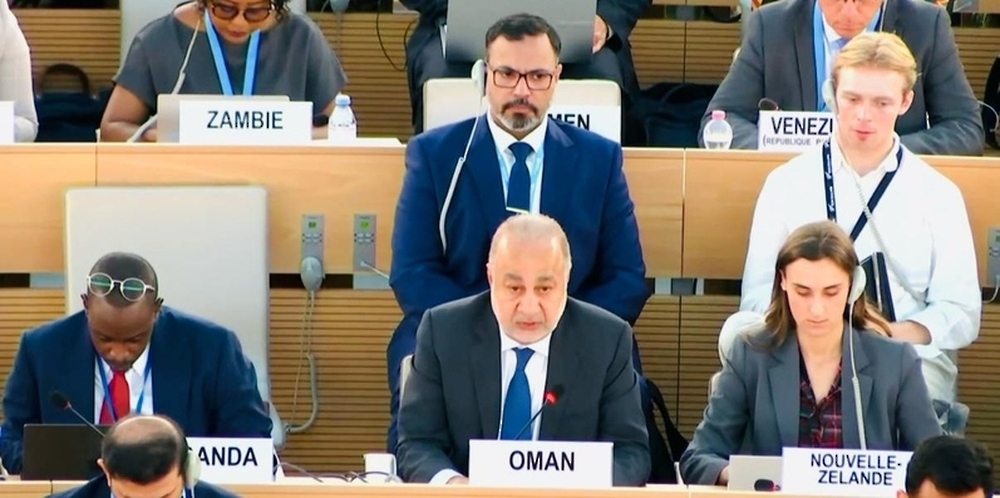
For decades, I have lived and worked at the intersection of disability, academia and social action in Oman. My journey began long before the topic became part of public discourse — when disability was largely framed in terms of charity, care and rehabilitation.
I have witnessed how individuals with disabilities, despite their resilience, were often positioned as recipients of welfare rather than as citizens with rights. That is why the new “Rights of Persons with Disabilities Law” (Royal Decree No 92/2025) feels deeply personal — not just as a legal reform, but as the realisation of a long-awaited social and moral transformation in Oman.
The new law marks a historic shift from the earlier 2008 “Welfare and Rehabilitation of Persons with Disabilities Law", which, while progressive for its time, reflected a limited understanding of disability. The previous law viewed disability through a medical and charitable lens — focusing on care, rehabilitation and specific programmes to “manage” or “alleviate” disability. Its spirit was compassionate but paternalistic. It offered help, but not equality. It gave support, but not agency.
By contrast, the 2025 law redefines disability as a matter of human rights. It replaces the outdated welfare-based model with a rights-based approach, ensuring that persons with disabilities are recognised as full and equal citizens. This transformation — from welfare to rights — is not a mere change in language; it is a shift in national consciousness.
Under the new legislation, disability is no longer confined to the domains of social welfare or rehabilitation centres. It now encompasses education, employment, healthcare, transport, civic participation and access to public spaces. It acknowledges that barriers to inclusion are not only physical but also social and attitudinal. The law mandates non-discrimination, equal opportunity and accessibility, aligning Oman with global frameworks such as the United Nations Convention on the Rights of Persons with Disabilities (CRPD), which Oman ratified in 2008.
As someone who has spent years documenting and analysing disability discourse in Oman, I see this law as the culmination of many quiet struggles — the advocacy of families, the persistence of persons with disabilities themselves and the gradual evolution of Omani society towards inclusivity. For years, scholars and activists alike have called for a holistic understanding of disability — one that recognises ability, potential and contribution rather than limitation. This law finally institutionalises that vision.
But this is only the beginning. A law, no matter how comprehensive, is merely the first step. Its power lies in its implementation — in whether schools truly become inclusive, whether workplaces adapt, whether digital and physical infrastructures become accessible, and whether society at large internalises the idea that disability is part of human diversity, not an exception to it.
As an academic, I see an urgent need for research, policy evaluation and community engagement to ensure that the law’s promises translate into lived realities. As a person invested in helping the disabled community, I see the importance of awareness campaigns and collaborations between government bodies, people with disabilities, educational institutions and civil society. And as a citizen, I feel immense pride that Oman has reached this pivotal moment — one that reflects the wisdom of our leadership and the growing maturity of our society.
When I look back at my work — from studying how technology empowers individuals with disabilities, to documenting how they represent themselves in digital spaces, to advocating for full inclusivity — I realise that every step, every conversation and every publication has contributed to a collective movement leading to this day.
The Rights of Persons with Disabilities Law (2025) does not simply replace an old law; it replaces an old mindset. It asserts that persons with disabilities are not to be pitied or “helped” into society — they are already an integral part of it. And that, more than anything, is what true progress looks like.
Dr Najma al Zidjaly
The writer is Associate Professor, Sultan Qaboos University
Oman Observer is now on the WhatsApp channel. Click here