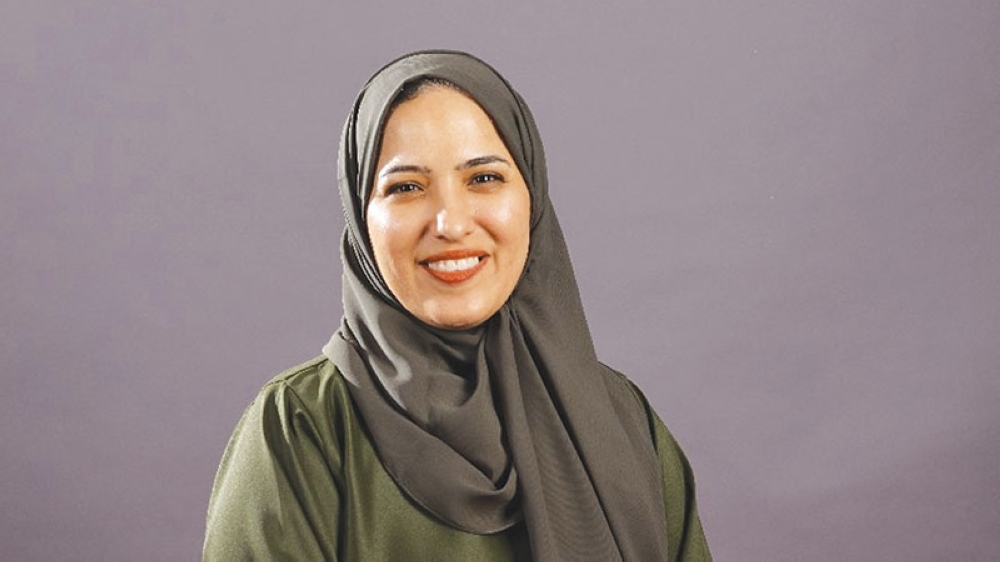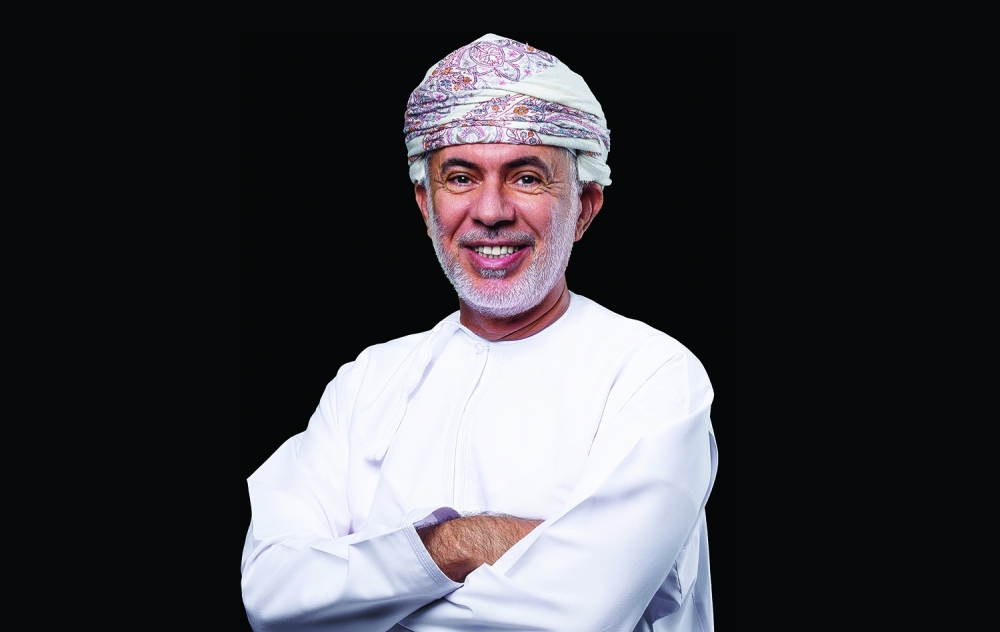





MUSCAT: The Sultanate of Oman enters the 2026–2030 execution cycle with a fourfold mandate for its financial system, to deepen capital markets, diversify products, protect investors and align its progress with Oman Vision 2040 and Net-Zero 2050.
In this CEO Talk interview, Abdullah bin Salim al Salmi, Executive President of the Financial Services Authority (FSA), outlines the FSA’s road map for delivering on this mandate through the enactment of market enhancement measures, capacity-building and cross-border alignment that puts the Muscat Stock Exchange (MSX) on the global market radar.
LIQUIDITY, LISTINGS AND CLASSIFICATION UPGRADE
The FSA sees market depth and liquidity as the heart of fair pricing. That means sound disclosure, active participation and tools that keep trading continuous. “We have introduced market makers and liquidity providers, which have already improved turnover this year”, Al Salmi says, adding that retail investors are essential for daily liquidity alongside institutions.
The primary market, where companies issue new securities to raise capital, remains the main driver of market activity. Issuance topped more than RO 4 billion in 2024, averaging RO 2.1 billion a year since 2022. New deals have expanded the retail base by about 97 per cent from the 2022 baseline and broadened MSX coverage in energy, logistics and financials. The work now is to bring mining, agriculture and fisheries, tourism, healthcare and education to market so the bourse mirrors the real economy.
To attract global capital, the Sultanate of Oman is pursuing an MSX reclassification from frontier to emerging market status, coordinated by the FSA, MSX, Ministry of Finance and Oman Investment Authority, to enhance liquidity, diversify products and lift visibility for foreign investors. “MSX is one of the region’s most open markets; the upgrade would enhance our profile with global funds”, he said.
CAPITAL MARKET INCENTIVE PROGRAMME
The programme represents a key driver in the efforts of the Sultanate of Oman to encourage private-sector participation and broaden the base of listed companies. Its core objective is to encourage enterprises, particularly SMEs, to access the capital market, benefit from financing opportunities and strengthen their governance and disclosure practices.
“Companies will move when they see tangible value in the scheme”, he emphasised.
Within this framework, the Alternative Investment Market (AIM), established as a secondary market under the FSA’s regulatory framework on August 10, 2025, will serve as a foundational platform to support the programme’s implementation.
AIM will provide a gradual entry point for companies seeking to experience the public market under a lighter regulatory regime. It will enable them to familiarise themselves with financial reporting and corporate-governance requirements through a simplified version of IFRS, preparing them for an eventual transition to the main market in MSX. The platform has already attracted notable interest from companies, with several applications received ahead of its official launch on November 3, 2025.
“The primary goal of AIM is to nurture and grow SMEs, allowing them to practise market participation, access capital for expansion and build long-term sustainability. Over time, companies listed on AIM are expected to develop the capacity and governance maturity required for full-fledged listing on the main market in MSX”, he added.
Furthermore, participating companies will benefit from a five-year incentive period, with an additional five years granted to those that enter the main market in MSX before the initial term concludes, providing up to ten years of comprehensive support.
INVESTOR PROTECTION AND ENFORCEMENT
Financial fraud has risen globally and the Sultanate of Oman is not immune. “An informed investor is far better protected than an uninformed one”, Al Salmi says, urging the public to treat “too-good-to-be-true” promises with caution and verify licences before engaging. The FSA has launched an ‘Investor Protection Portal’ on their official website and taken legal action against unauthorised entities, securing court rulings and publicising outcomes to deter misconduct. Oversight of intermediaries is tightening, as are disclosure rules and minority-shareholder protections, voting, board representation and fair treatment, alongside stronger investor relations at listed firms.
FIN-TECH AND SMES
Fin-tech is now a pillar of inclusion, especially for youth and SMEs. Crowdfunding has financed over RO 14.9 million since launch in 2022, with 81% growth between Q2-2024 and Q2-2025, proof it can meet SME needs “within minutes” when banks cannot. The FSA backs this with a national sandbox (with the Central Bank of Oman), a fin-tech desk at Invest Oman and temporary licences under Royal Decree 20/2024 to test models safely.
Beyond platforms, the FSA is widening SME routes to capital through instruments, such as sukuk wadi‘ah and the AIM, a lighter-touch listing segment that teaches disclosure and governance on the path to the main market in MSX. Cross-border MoUs also enable mutual funds and, in some cases, ETFs that give foreign investors indirect access to Omani opportunities, broadening financing channels while keeping oversight proportionate.
Insurance is diversifying beyond motor, with health now the largest line and growing at ~30% annually. The FSA is embedding risk-based supervision, expanding actuarial capacity and raising attention to climate and catastrophe risk, across both conventional and takaful, while nudging development in life and professional indemnity lines.
SUSTAINABLE FINANCE: IFRS S1/S2 BY 2029
The FSA will phase in IFRS Sustainability Standards (S1/S2) with full enforcement by 2029, backed by guidance and training so issuers, auditors and investors can adapt. A private-sector Sustainable Finance Taxonomy, aligned with the Ministry of Finance’s National Sustainable Finance Framework and benchmarked to EU, ASEAN and GCC regimes, will support green/sustainability-linked bonds and sukuk and guard against greenwashing. The aim: make sustainable finance the default in Oman’s transition.
Resilience is also about people. The FSA is investing in its own staff through structured training and secondments with peer regulators and working with supervised entities to lift professional standards. It is equally pushing financial literacy so individuals and SMEs can use banks, insurance and capital markets confidently and spot fraud.
Technology is the other lever. The regulator is structuring data and systems to deploy AI, regtech and suptech, cutting costs and boosting supervisory efficiency across sectors.
PRODUCT TOOLBOX
The rulebook now accommodates green and sustainable bonds and sukuk, plus ESG-linked bonds. The FSA is studying derivatives and futures as ecosystem readiness improves, “the regulator enables; operators issue”, Al Salmi notes. The goal is a flexible framework that responds to market demand without compromising standards.
Capital is mobile and the Sultanate of Oman wants to be visible. Alongside the MSX classification upgrade, the FSA is working with GCC counterparts on a common passporting framework for cross-border offerings and investments. Individually, Gulf markets are small; collectively, they have the scale and visibility to attract global funds. “By pursuing global visibility and regional integration, we can deepen liquidity, widen products and create better opportunities for issuers and investors”, Al Salmi adds.
Oman Observer is now on the WhatsApp channel. Click here