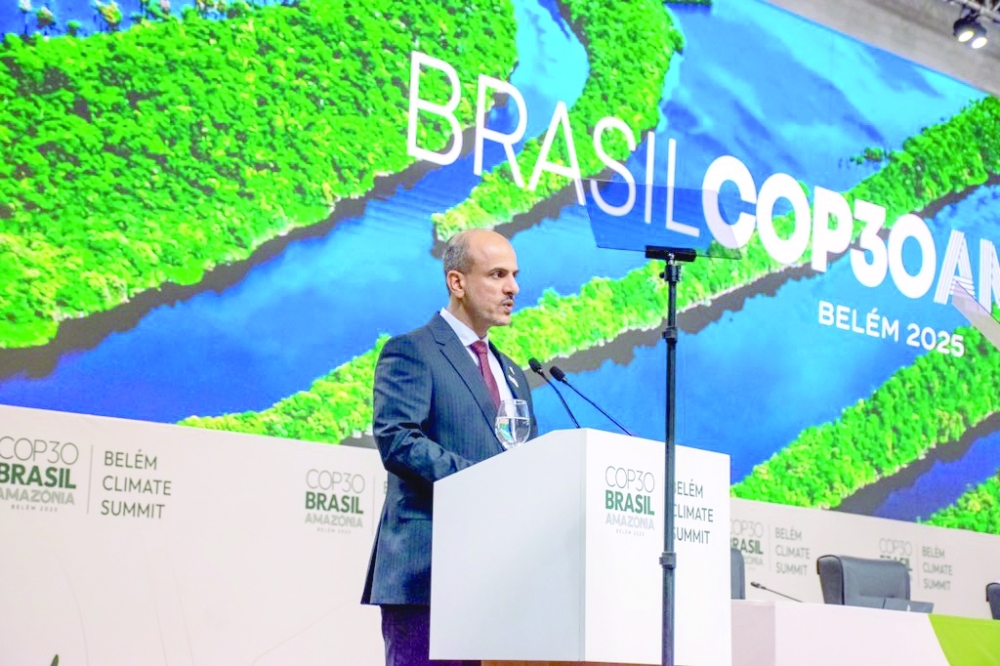





SÃO PAULO: The Sultanate of Oman affirmed its commitment to achieving environmental and climate goals, stressing that climate change presents a major economic and developmental opportunity with investing in clean energy, sustainable infrastructure and climate intelligence becoming the engines of growth in the 21st century.
This came in a speech delivered by Dr Abdullah bin Ali al Amri, Chairman of the Environment Authority, at the meeting of the COP30 Leaders’ Summit in Belém, Brazil, held ahead of the annual United Nations Climate Change Conference (COP30), which will take place will take place from November 10 to 21 with the participation of 200 countries.
In his address, the chairman of the Environment Authority said that Oman Vision 2040 has placed the requirements of the three environmental agreements as a key national priority, and has moved forward with implementing the national carbon neutrality strategy (Oman Net-Zero), activating the National Carbon Register and developing policies under Article 6 of the Paris Agreement in addition to promoting renewable energy projects.
He pointed to the serious concerns about the impact of climate change on the entire ecosystem, explaining that the phenomena witnessed on planet Earth, including human-induced changes, rising temperatures, melting glaciers, loss of biodiversity and forest fires, leave no room for doubt that climate change is an undeniable reality. This places national and global responsibilities on everyone to accelerate action, particularly after the climate report, issued in October, revealed that climate action is still falling short of expectations.
He added: “The planet’s ecosystem is a single, indivisible system, which underscores the necessity of reviewing the current global environmental institutional framework. This framework operates with outdated governance principles to manage present and future issues, leading to wasted efforts and slow procedures. Institutional governance is fundamental to the success of work systems, the standardisation of efforts, and the ability to confront challenges. The Sultanate of Oman is implementing numerous climate change adaptation projects, including an early warning system, flood protection systems and the construction of resilient and sustainable cities, in addition to expanding the adoption of nature-based solutions.”
The chairman of the Environmental Authority concluded his speech by affirming that the Sultanate of Oman believes that development and sustainability complement each other and that achieving a just and equitable transition is the way to ensure a secure future and a prosperous and sustainable economy and that preserving the environment is the best investment in the future and the true foundation for the well-being of peoples. — ONA
Oman Observer is now on the WhatsApp channel. Click here