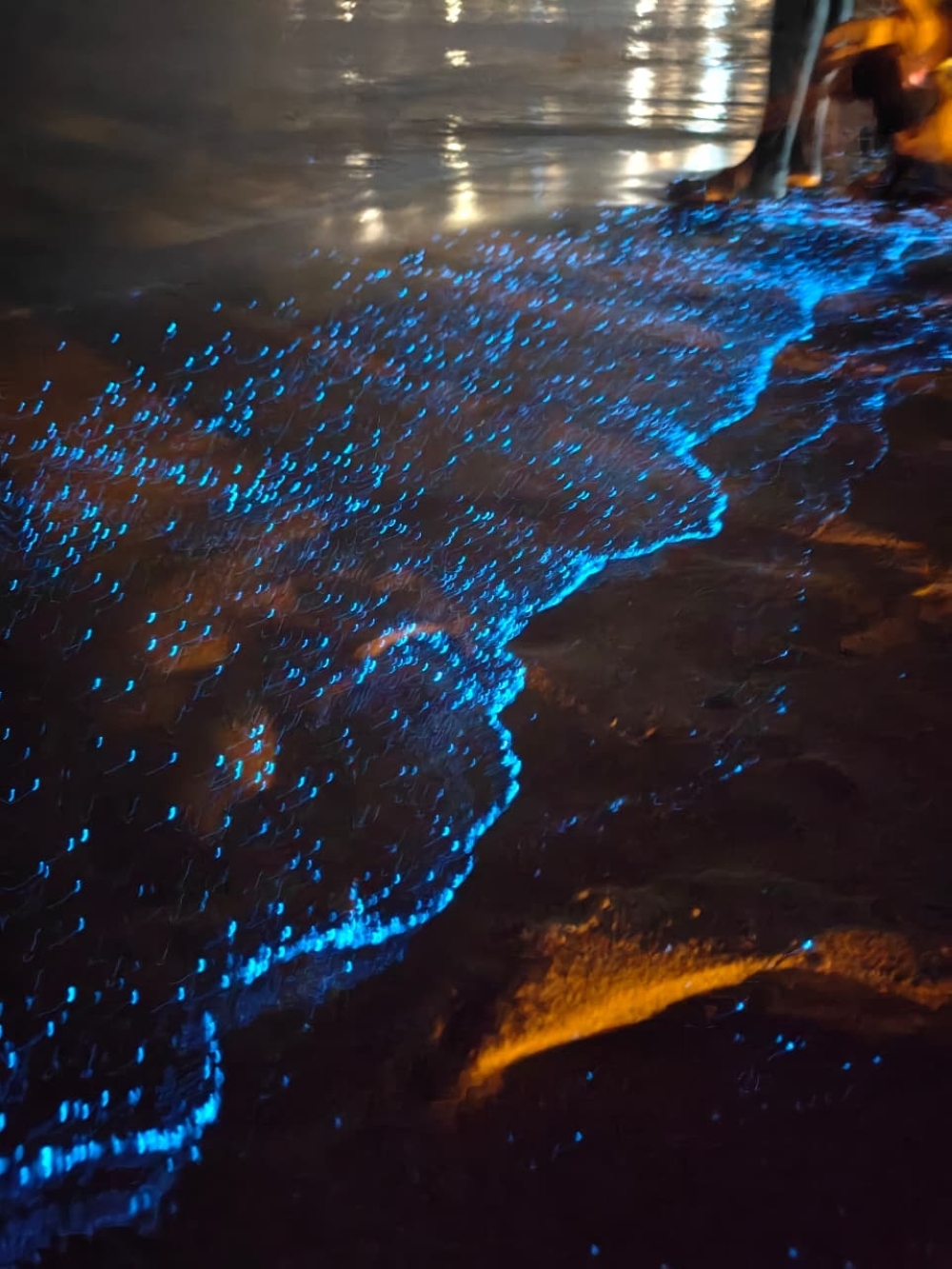
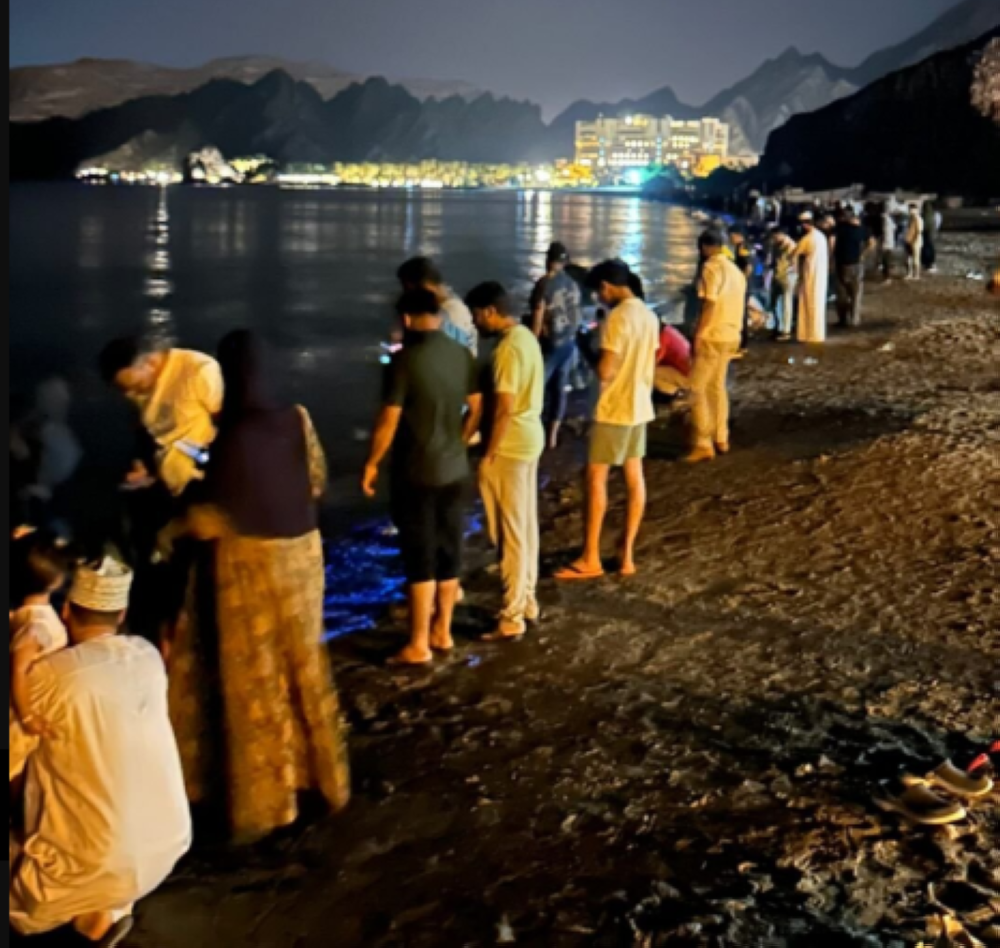
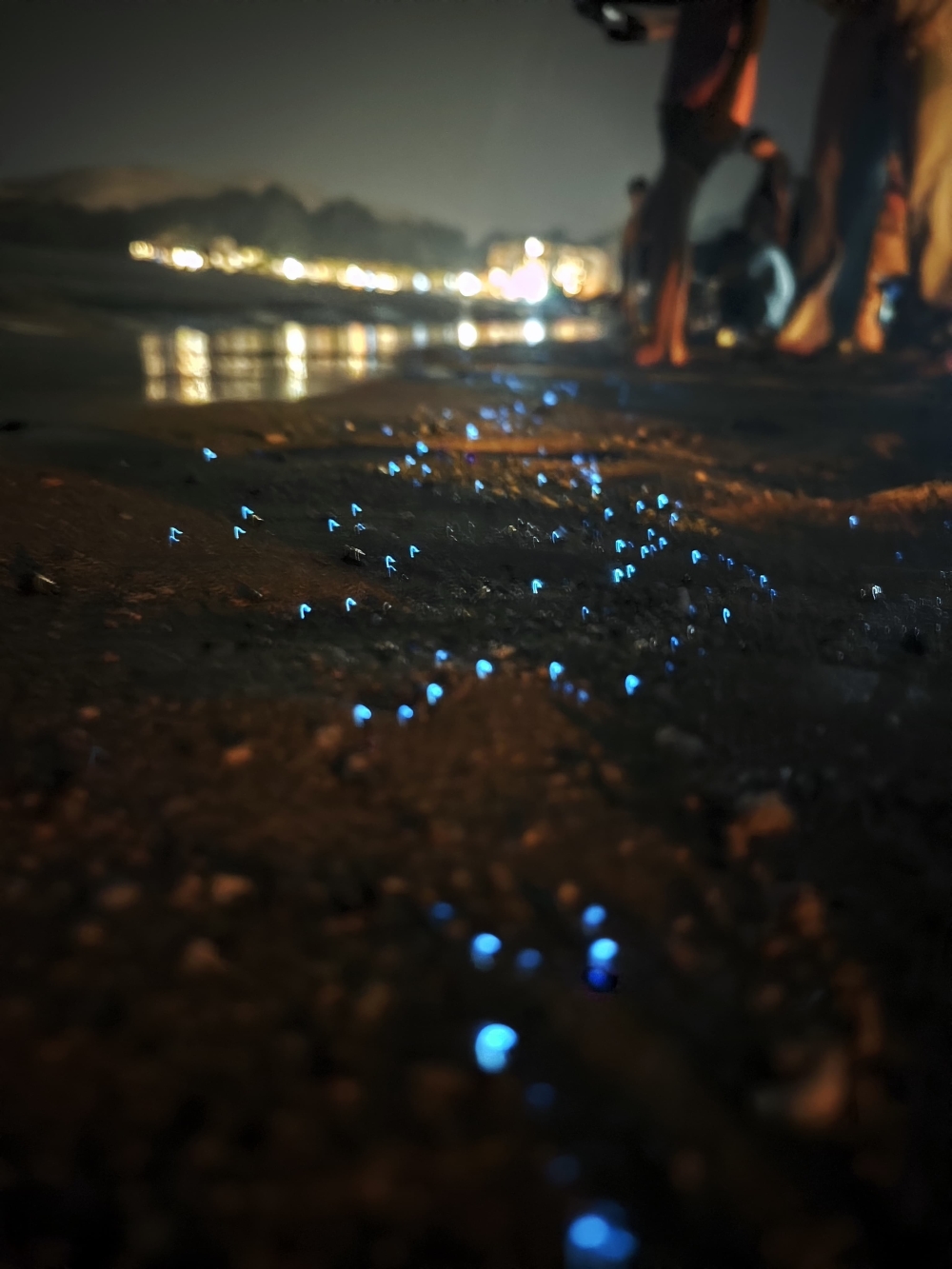





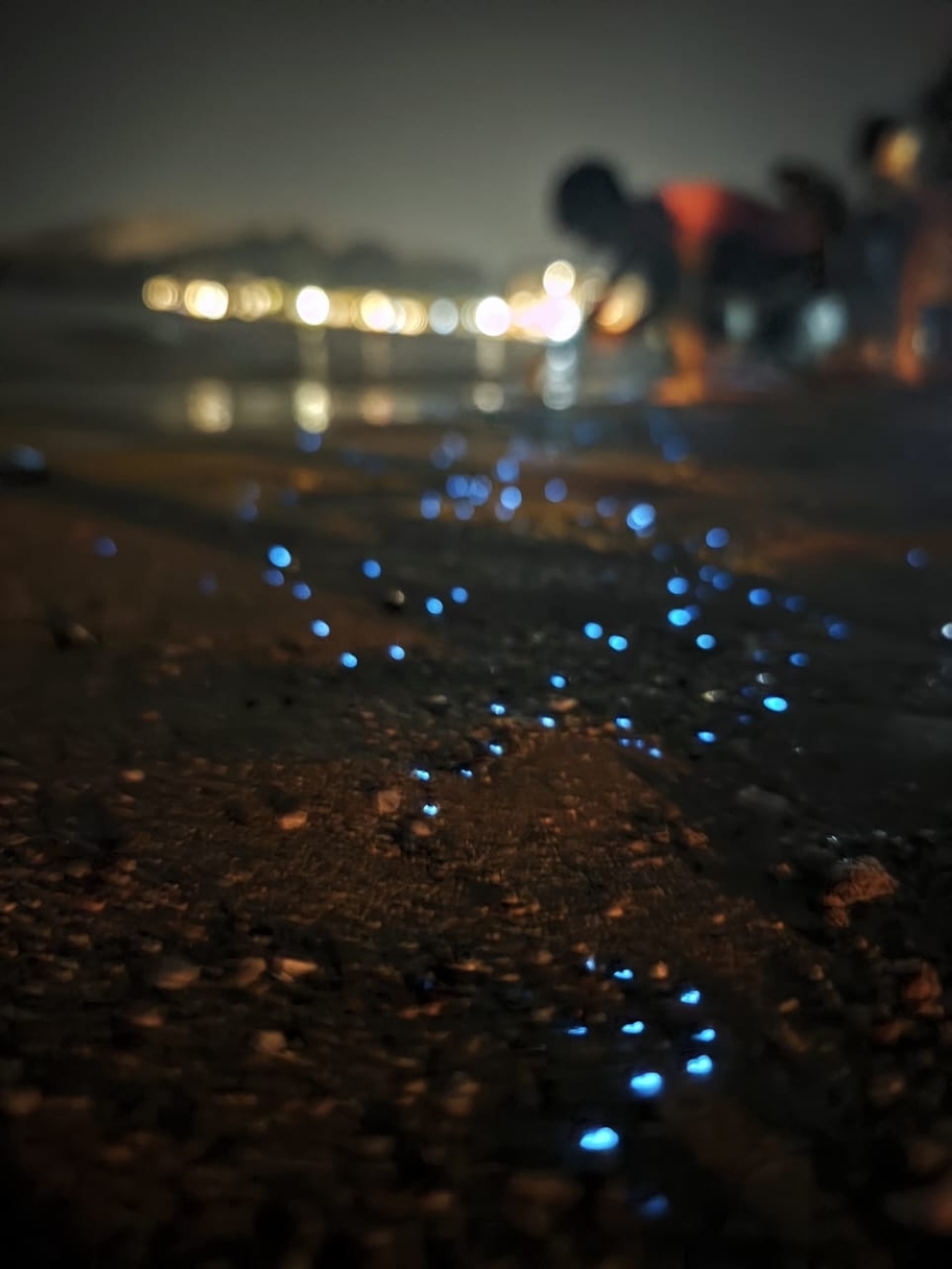
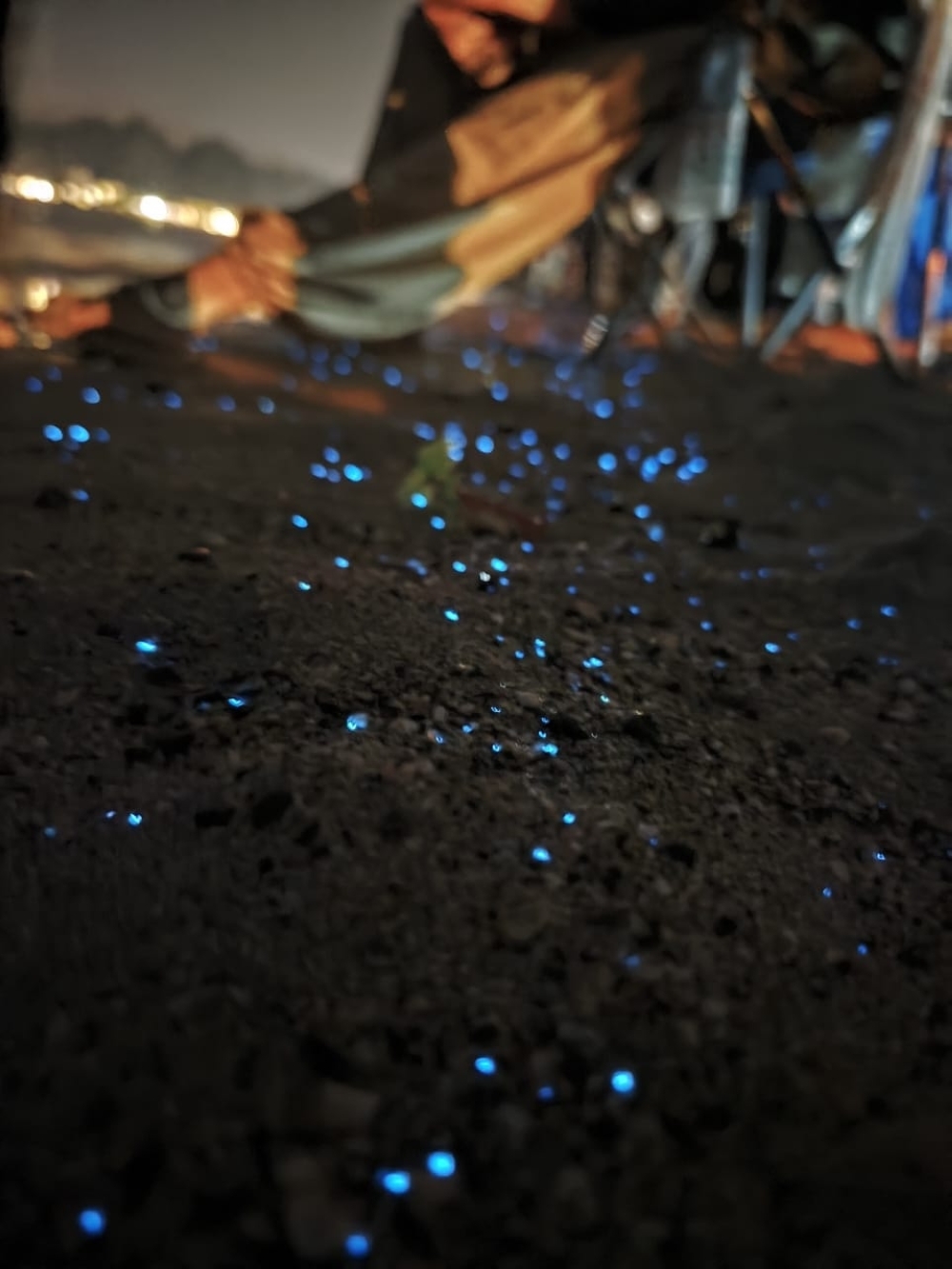
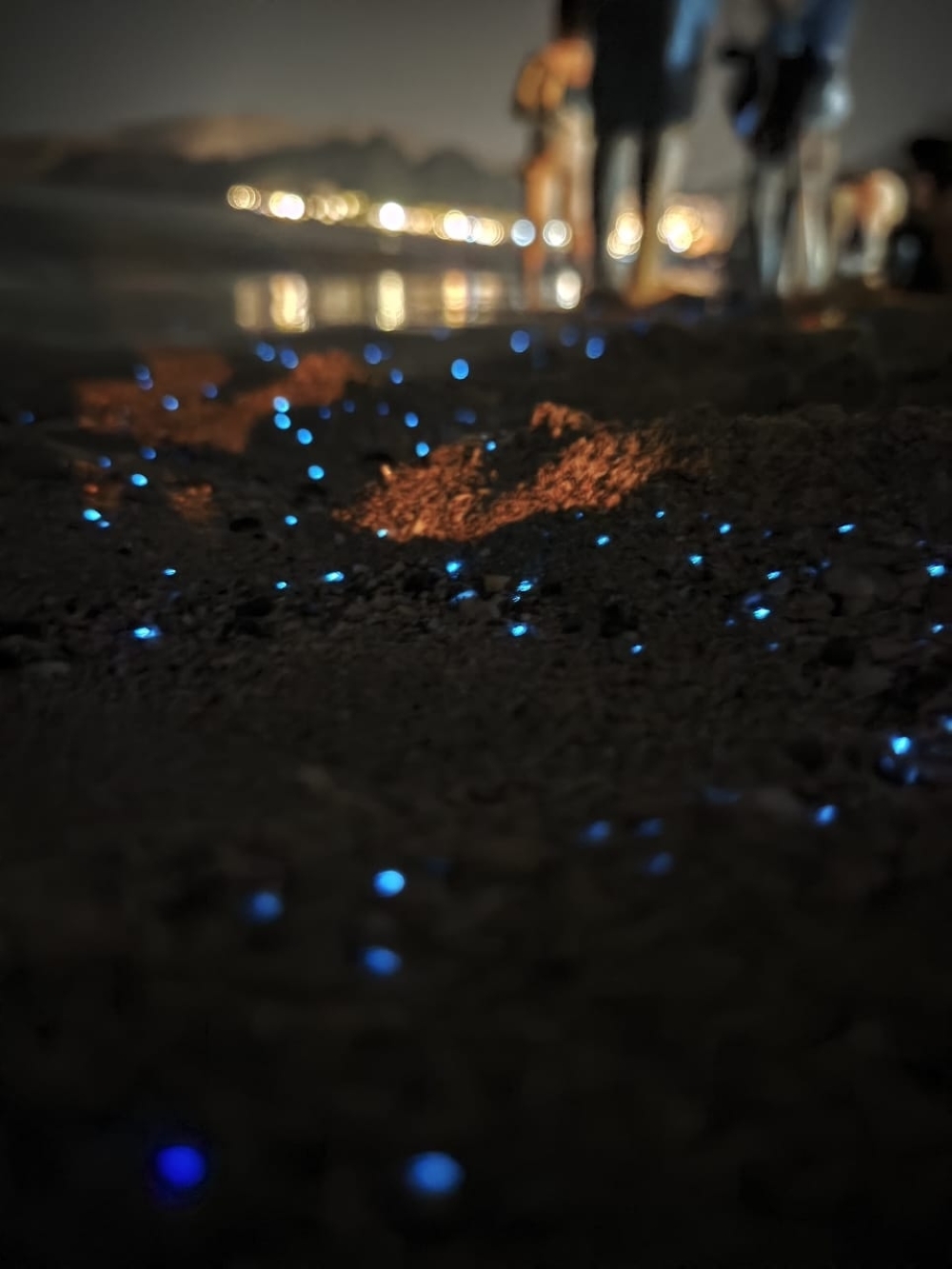
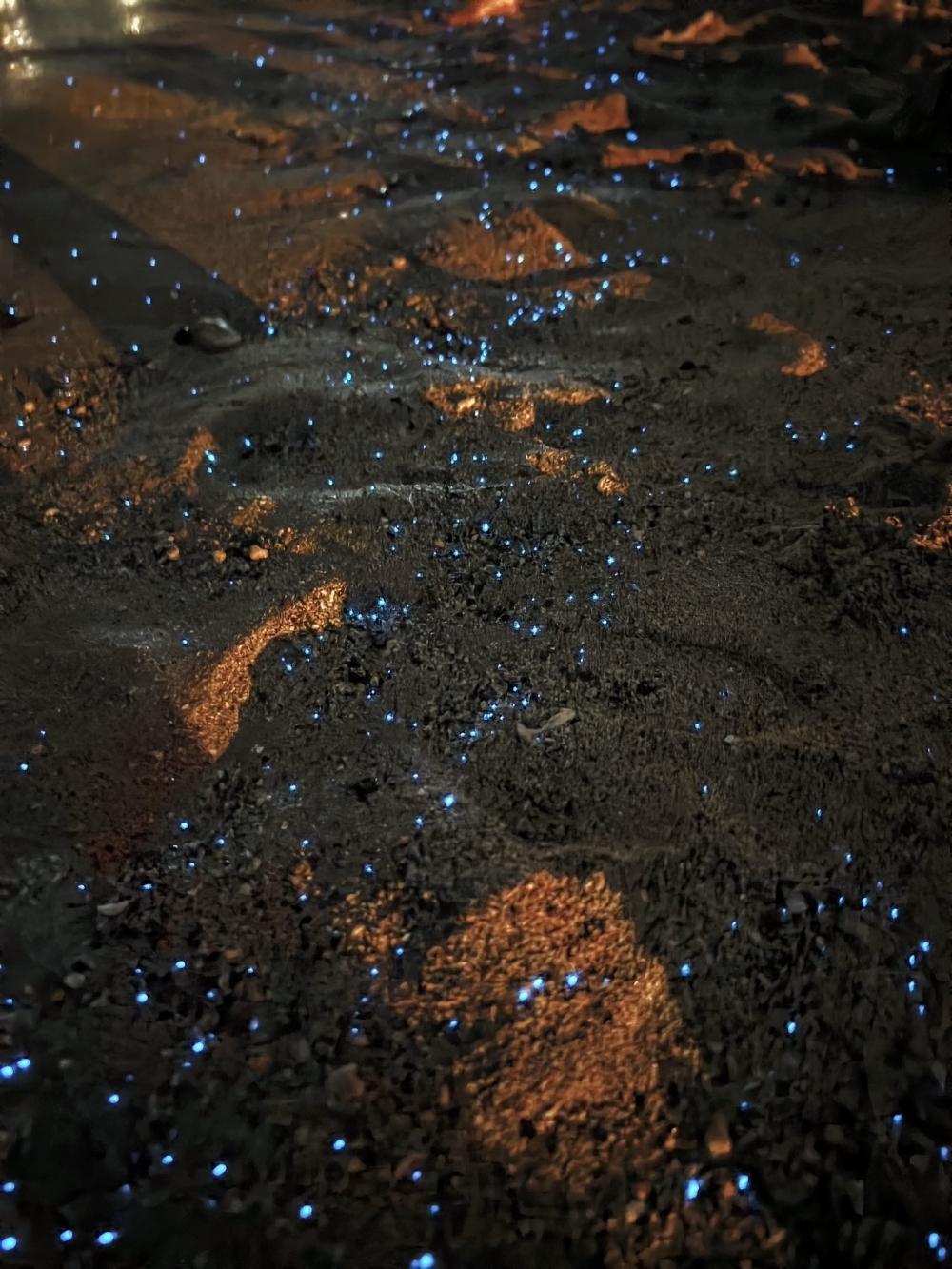
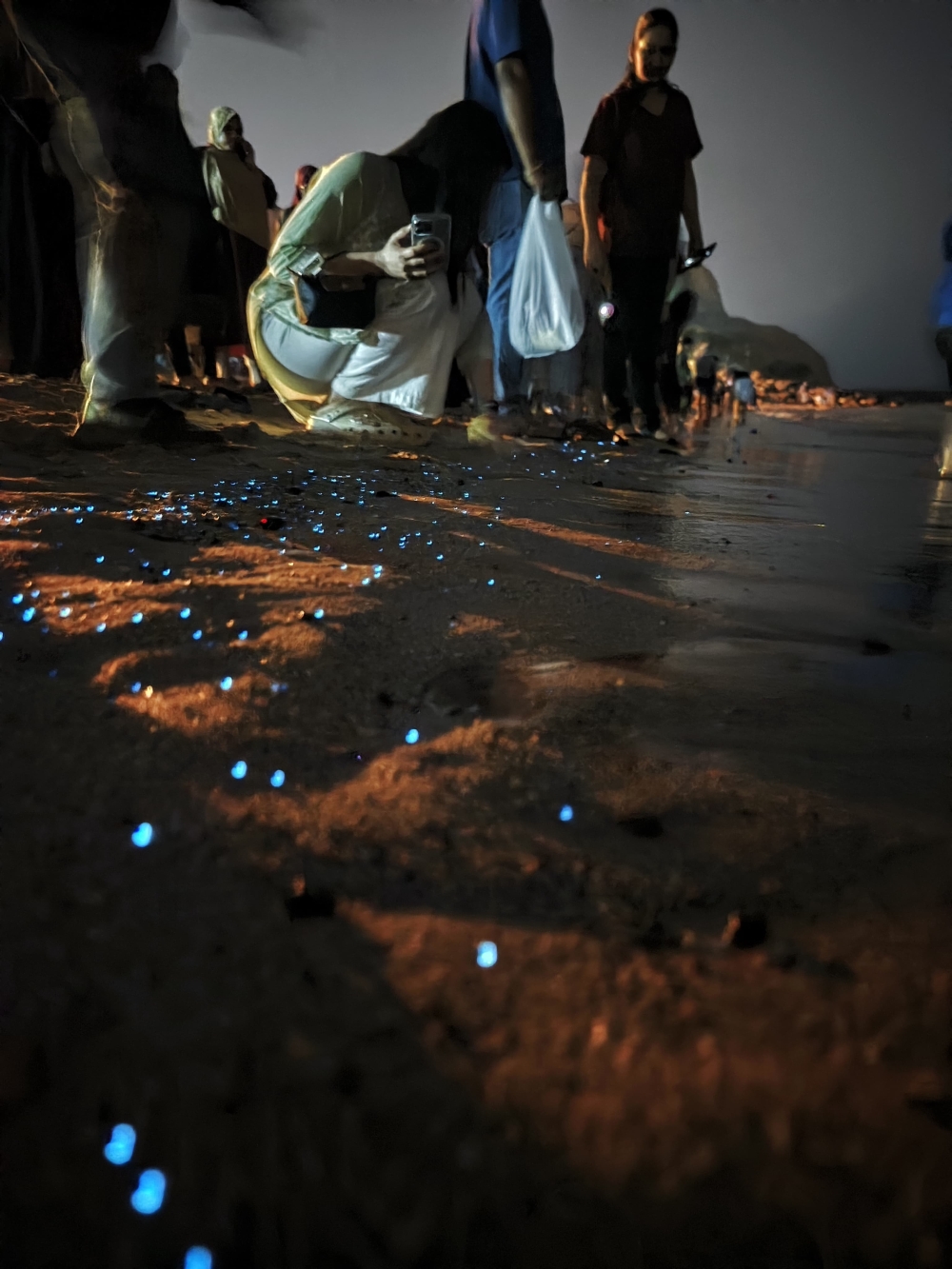
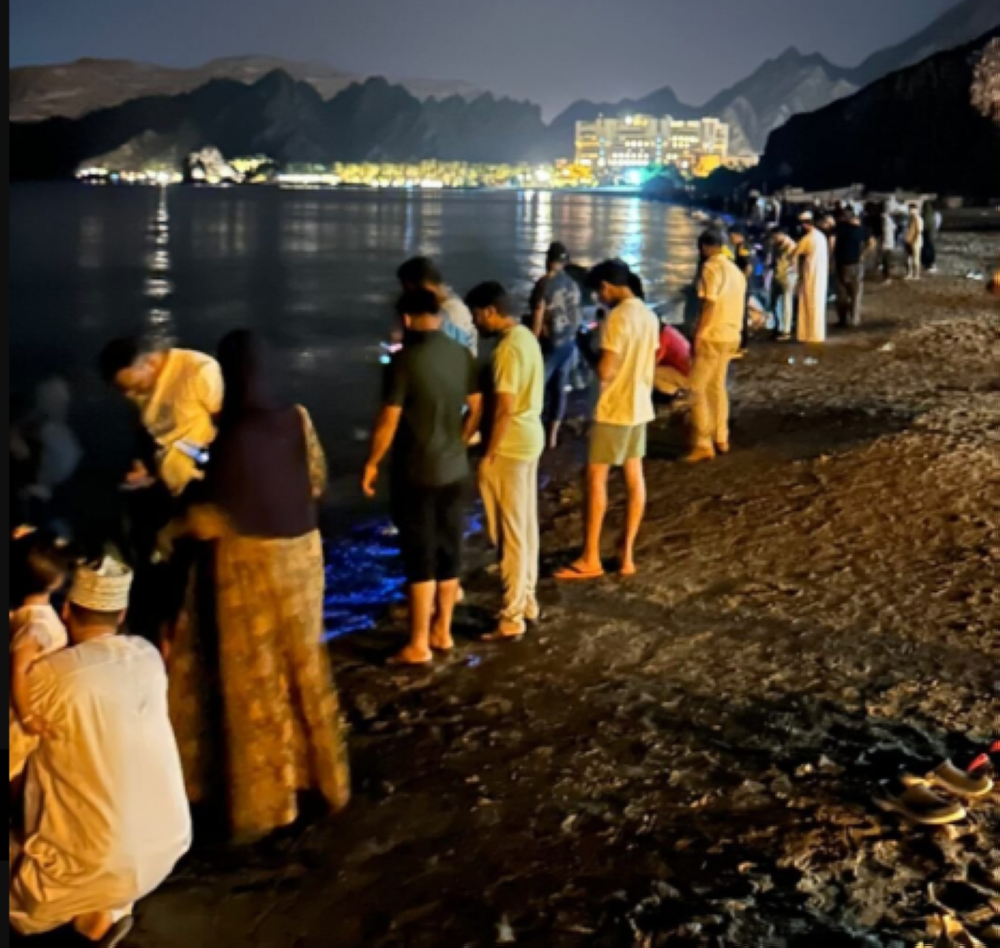
Muscat: Residents of the Muscat Governorate have been flocking to the Al Bustan beach inthe Al Khairan area to witness the rare phenomenon of bioluminescence.
As people started to flow to the area in their vehicles, the Royal Oman Police (ROP) had to step in to control the flow of traffic and ensure that the situation was under control, especially regarding parking woes and disturbances to the local population.
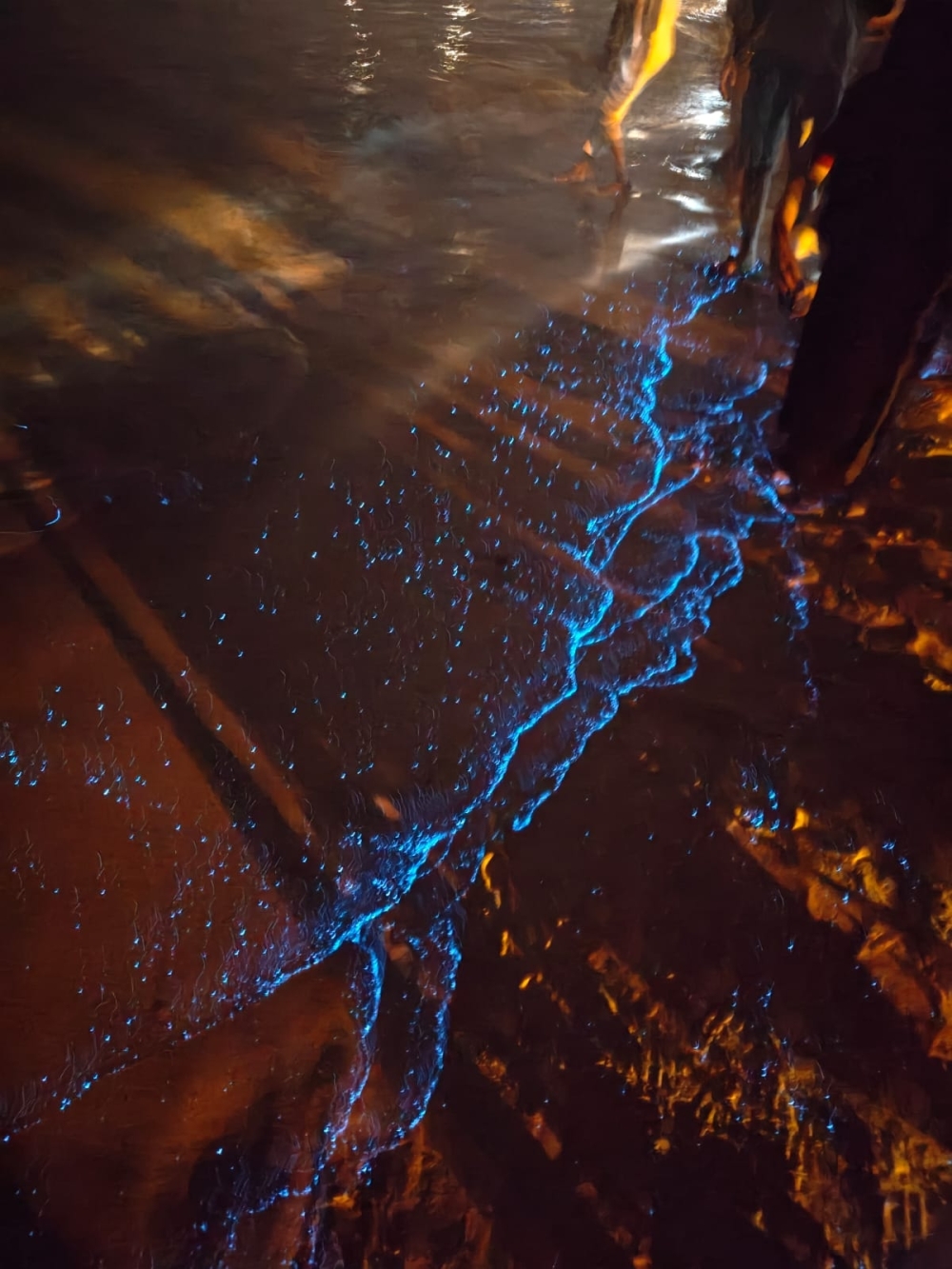
What is bioluminescence
Bioluminescence is caused by the dinoflagellate species Noctiluca scintillans. This organism produces light when agitated by movement, which is why the waves, boat wakes, or your own movements trigger the effect. While this plankton is not considered toxic, other kinds of algal blooms—including those that cause red tides—can be harmful to marine life and humans.
Bioluminescence is the production and emission of light by a living organism through a chemical reaction.
Unlike incandescent light bulbs, which generate significant heat, bioluminescence is “cold light” because less than 20% of the light produced is thermal radiation. While relatively rare on land, it is very common in the ocean, especially in the deep sea, where sunlight doesn't reach.
The glow is most visible when there is minimal moonlight, so it's best to go during a new moon.
If you see reddish-brown algae in the water during the day—an event known as a red tide—there is a chance the plankton may glow brightly at night.
Oman Observer is now on the WhatsApp channel. Click here