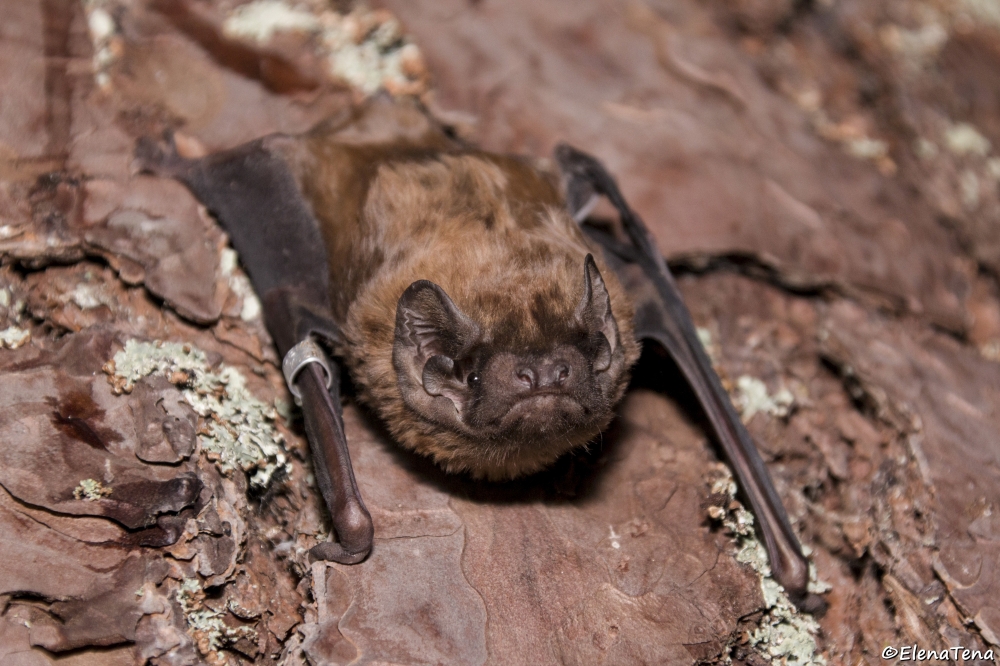





During spring and fall migrations, billions of birds take to the night skies. The high-altitude darkness protects them from predators. Well, most predators. New research shows that bats can successfully hunt these migrating animals.
In a new paper, researchers show how the largest bat in Europe, the greater noctule bat, nabbed a robin, before chewing and eating the prey in flight. This stands in stark contrast to the bats’ typical diet of insects. The idea that these bats sometimes eat birds had already been inferred from indirect data collected by a team led by Carlos Ibáñez, a researcher with the Doñana Biological Station in Seville, Spain. But until this paper, it remained unclear exactly how bats weighing around 50 grams — the size of a medium chicken egg — could catch birds approaching half their weight.
Ibáñez’s team combined a sensor’s audio, altitude, and accelerometer data to recreate one bat’s chase of what they determined was a European robin, based on the bird’s distinctive sounds. After locating the robin, at 4,000 feet up, the bat descended rapidly. More than 3,000 feet into the dive, the bat caught and killed the bird with a bite. Chewing sounds continued for 23 minutes as the bat remained flying.
From analysis of samples previously collected by Ibáñez near the roosts of greater noctule bats, researchers believe these bats rip off the wings of birds after catching them to reduce drag. While feeding, the bats appear to avoid any bones. — DOUGLAS MAIN
This article originally appeared in The New York Times.
Oman Observer is now on the WhatsApp channel. Click here