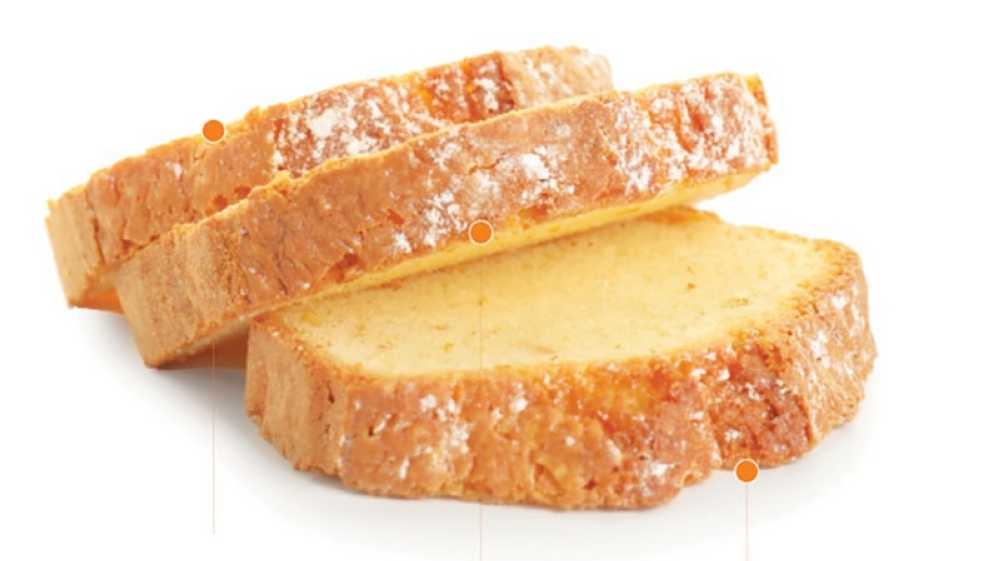





My early cakes always leaned unnaturally to one side. Their fillings oozed. The frostings were patchy at best and marred by sticky crumbs. But I never cared. I was a kid on a mission, excited to bake and eat with the people I loved. My family dutifully forked into thick slabs of those less-than-perfect confections — because even mediocre cake makes people happy. If you ask me, that’s the best thing about cake.
Since then, I’ve spent many years baking cakes, first as a magazine food editor and recipe developer, then working behind the scenes for television, judging dessert competition shows, food styling and writing cookbooks. I still believe cake is delightful, even when it’s not perfect. But there are a few things I’ve learned along the way to up my own cake game (I love you, salted European butter).
Here are three of the big ones.
1Use a scale (or just make sure you’re measuring flour correctly)
Unlike vanilla and salt, which I tend to eyeball when baking, the amount of flour in a cake recipe should be adhered to as strictly as possible. Too little flour could lead to a damp or gummy cake without enough structure and too much flour will make it dry.
Please don’t use a liquid measuring cup for dry ingredients. Liquid measuring cups are for liquid. Instead, a cheap digital kitchen scale is the easiest and most accurate way to measure. But if you don’t have one, there’s the “scoop and sweep” method. That is, use a spoon or a bench scraper to scoop the flour into the measuring cup until full, then sweep across the top to level. Don’t tap the cup and compact the flour.
Consider my chocolate peanut butter cupcakes. The recipe calls for only ¾ cup of flour and ¼ cup of cocoa powder. This ratio gives you light cupcakes with just the right amount of chocolate flavour. (They also fill the liners perfectly!) Too much cocoa or flour could make for crumbly and bitter cupcakes that exceed the liners.
2Mix your batter differently
We’ve all made cakes that start with “creaming” together the butter and sugar. That’s when you mix room-temperature butter (65 to 70 degrees) with sugar to cut in air and create pockets that trap gases that the leavener (baking powder or baking soda, or both) lets off when baked. Done properly, this leads to a light, tender cake. That said, I’ve certainly been guilty of using butter at the wrong temperature because I couldn’t be bothered to wait, or not actually creaming the butter and sugar together for long enough. (It can take 4 to 5 minutes). And, even if this step is done perfectly, overmixing the batter once the liquid is added may create too much gluten and lead to a sad, tough cake.
There is a better way!
Thank you, Rose Levy Beranbaum, who popularised the two-stage or reverse creaming method of mixing cake batter in her book “The Cake Bible”, in which room-temperature butter is first mixed with dry ingredients. This gives the fat the opportunity to coat some of the flour’s proteins and, as a result, stop too much tough gluten from forming. In other words, it helps create tender cakes with little fuss.
This yellow sheet cake, topped with a slightly tangy chocolate sour cream frosting, has you do something similar, mixing the fat into the flour, sugar, baking powder and salt.
After the flour is evenly coated and the butter is evenly dispersed, the rest of the fat and just enough liquid are added to make a homogenous mixture. I find that the technique results in a finer crumb, a lovely mouth feel and easier slicing — and turns humble, everyday cakes into something totally special. Try making your favourite cake recipe using Rose’s method and you won’t be sorry. But best of all, once the cake batter is ready, you have your choice: Make it as a simple sheet cake, or bake the batter in two buttered, floured cake pans for something lovely and layered.
3Know your oven (and work with it)
I would argue that this is secretly the most important step to baking anything at all. My oven is small and hot, which means that my cakes cook faster, dome more and brown too much. I’m not deterred. But I must adjust.
Think about your oven. Does it take 30 minutes, unlike the usual 15, to properly preheat? Does it run hot? Or cold? Does the temperature drop significantly when the door is opened, unleashing a blast of heat? Is it smaller than the average, which could mean that things brown and bake at a different rate? Does it have hot spots that necessitate rotating?
Start by getting an oven thermometer and trust it over the control panel on your oven. Once you know the true temperature inside, you can make changes: You may have to set your oven 25 degrees lower or higher. You may need to turn the oven off and back on after opening the door to bring the temperature back up faster.
You can also set slices of white bread in different spots and watch how they brown. Use that knowledge to bake and rotate as needed.
And lastly, consider the bake times in a recipe as a guideline. Set your timer for a little before the lowest time marker and take a look (without opening the oven, if possible). Test for doneness before it’s too far gone. The perfect bake, light golden brown (or even a smidge paler when it comes to a snowy white confetti cake) with a toothpick showing moist crumbs (not clean), takes a bit of care to achieve. You and your oven must work together. — NYT
Oman Observer is now on the WhatsApp channel. Click here