




PARIS — Police in France were racing against time as they searched Monday for four thieves who carried out a daring heist at the Louvre Museum in Paris, aware that the chances of recovering the stolen jewels risked diminishing with every hour.
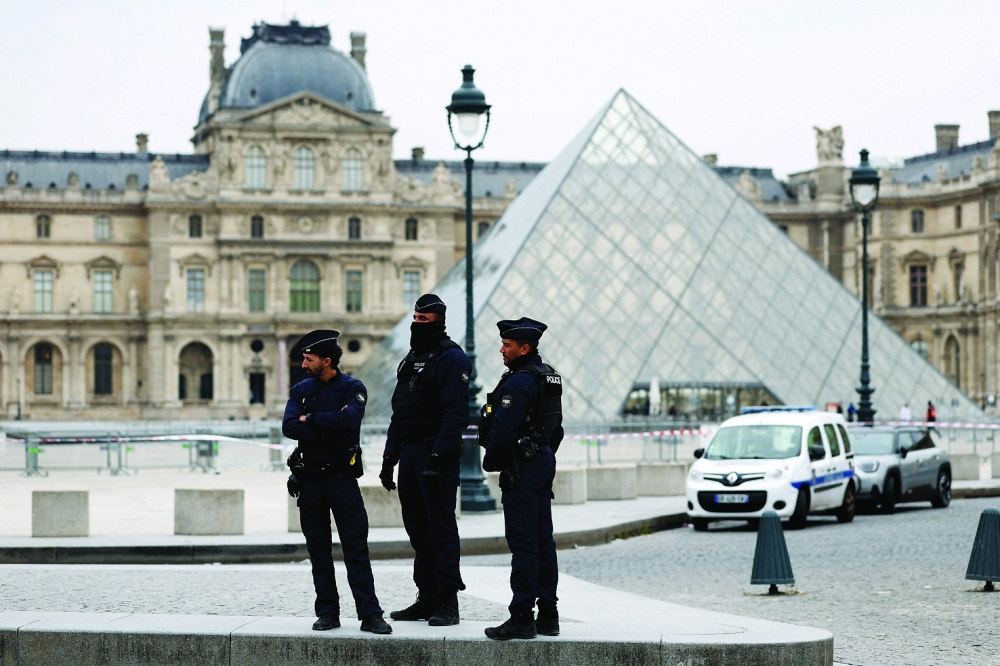
The robbery Sunday stunned France and has raised uncomfortable questions about security at one of the world’s most famous cultural institutions, which remained closed Monday.
Much about the heist remained unclear. But authorities said that organized crime was most likely involved and that investigators were looking into how the museum’s alarm systems functioned.
Many are now worried that the thieves, ignoring the jewelry’s historical value, might break the pieces apart to sell the stones on the black market and melt down their precious metals for sale.
“This morning, the French people, for the most part, feel as though they have been robbed,” Gérald Darmanin, the country’s justice minister, told France Inter radio Monday. “In the same way that when Notre Dame burned, it was our church that was burning — even if you weren’t Catholic — such an incredible jewelry robbery at the Louvre looks bad.

“We cannot completely secure all locations,” Darmanin added. “But what is certain is that we have failed.”
President Emmanuel Macron of France, already under pressure because of political turmoil and economic woes, vowed that the thieves would be caught. The French interior and culture ministers held a crisis meeting Monday about the robbery, underscoring how seriously the government was taking the situation.
Here’s what to know about the robbery and the search for its perpetrators.
How did the heist happen?
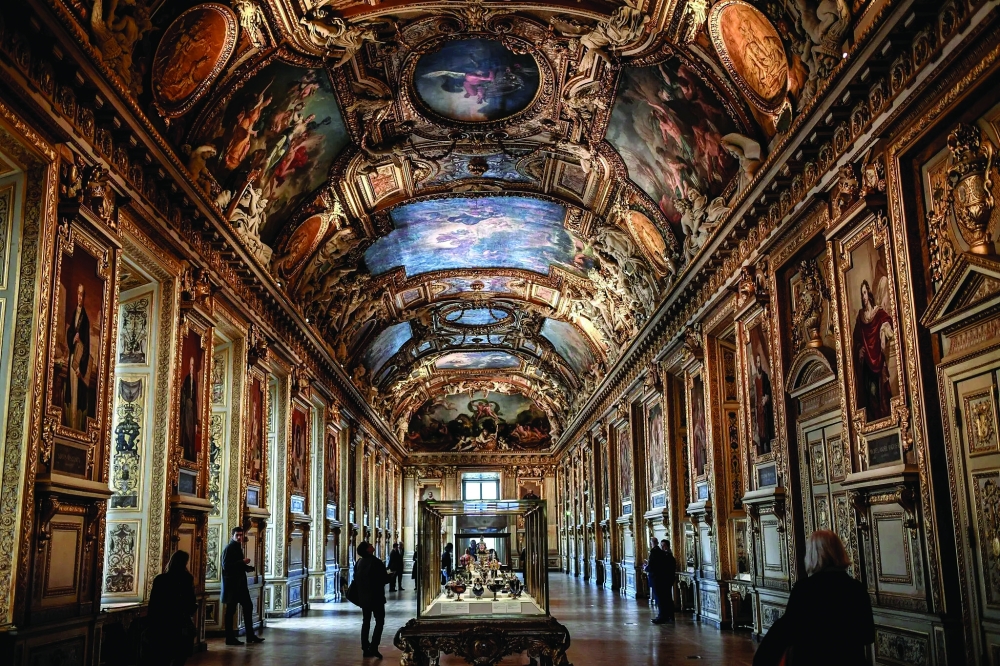
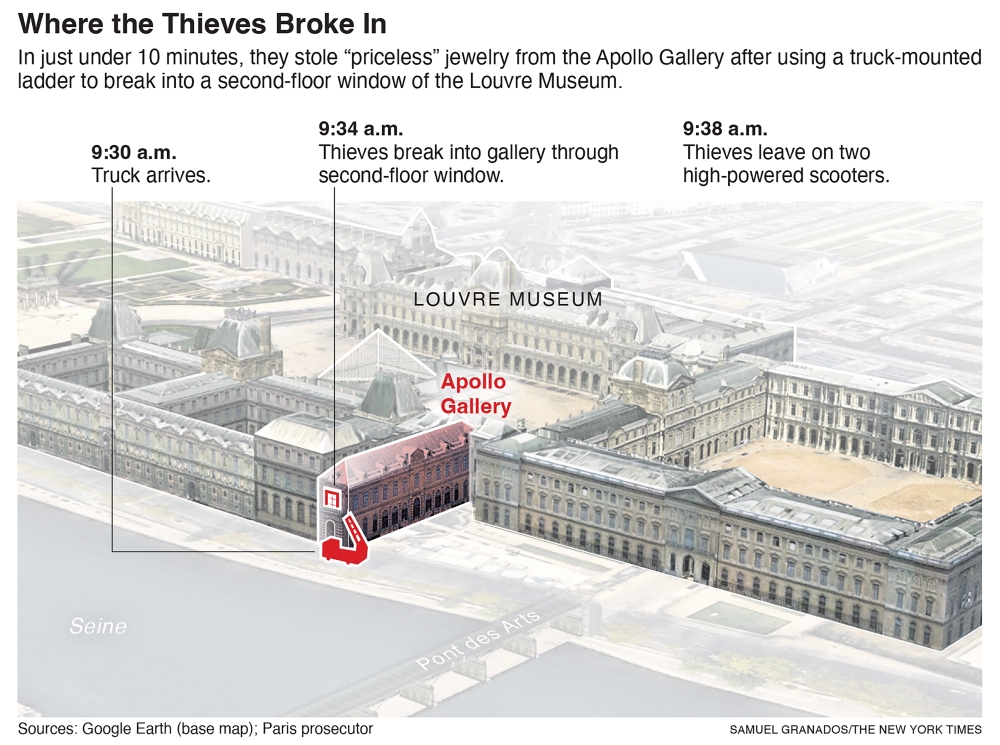
Officials said the robbery began at 9:30 a.m. Sunday, when four thieves arrived at a southern corner of the Louvre with an electric ladder mounted on a truck. Two of them, wearing yellow safety vests, rode the ladder to the museum’s second-floor Apollo Gallery, which houses France’s collection of crown jewels.
Working 30 minutes after the Louvre had opened, the two masked thieves used power tools to break through a window at 9:34 a.m.
Laure Beccuau, the Paris prosecutor, told the BFMTV channel Sunday that the thieves who entered the gallery did not appear to be armed but that they had threatened five of the museum’s security guards who were nearby. The guards quickly evacuated visitors who were already there.
The thieves cut into two display cases and grabbed some jewels before quickly exiting through the broken window. They tried to burn the bucket of the electric ladder that had carried them aloft and then fled on motorcycles.
By 9:38 a.m., they were gone.
What did the robbers steal?
They took eight precious pieces of jewelry, including a royal sapphire tiara, necklace and matching earring; a royal emerald necklace and its matching earrings; and a tiara and a brooch worn by Empress Eugénie, the wife of Napoleon III, France’s 19th-century ruler.
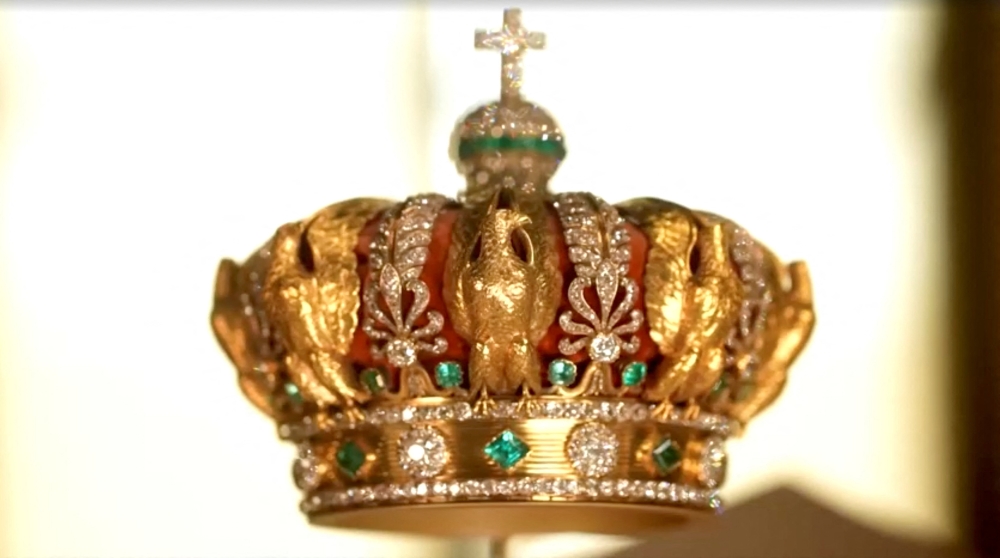
But they dropped a ninth item, which authorities recovered later: Empress Eugénie’s crown, which features 1,354 diamonds, 1,136 rose-cut diamonds and 56 emeralds.
“It is a tragedy because the room is amazing; the jewels themselves are mesmerizing,” said Gerard Hyslop, 55, a guide who was accompanying a tourist group to the Louvre on Monday and had to reschedule. “Unless they are retrieved, it will be a big loss for French culture.”
Officials have not provided an overall estimated worth for the stolen items.
But one of them, a decorative bow with jeweled tassels that also belonged to Empress Eugénie, is listed by the Society of Friends of the Louvre as worth 6.72 million euros, or about $7.8 million. The Society, a private sponsor that helps the museum buy objects of artistic or historical value, helped acquire the bow from the United States in 2008.
Why is the Louvre still closed?
The museum said Monday that it would stay closed “following yesterday’s robbery” and that visitors who had already booked tickets would receive a refund.
A spokesperson for the Louvre said the closure was “to allow museum management to discuss the situation with staff.”
The Paris prosecutor said Sunday evening that investigators had wrapped up most of their forensic work at the crime scene.
The museum will stay closed for another day — it is not typically open on Tuesdays.
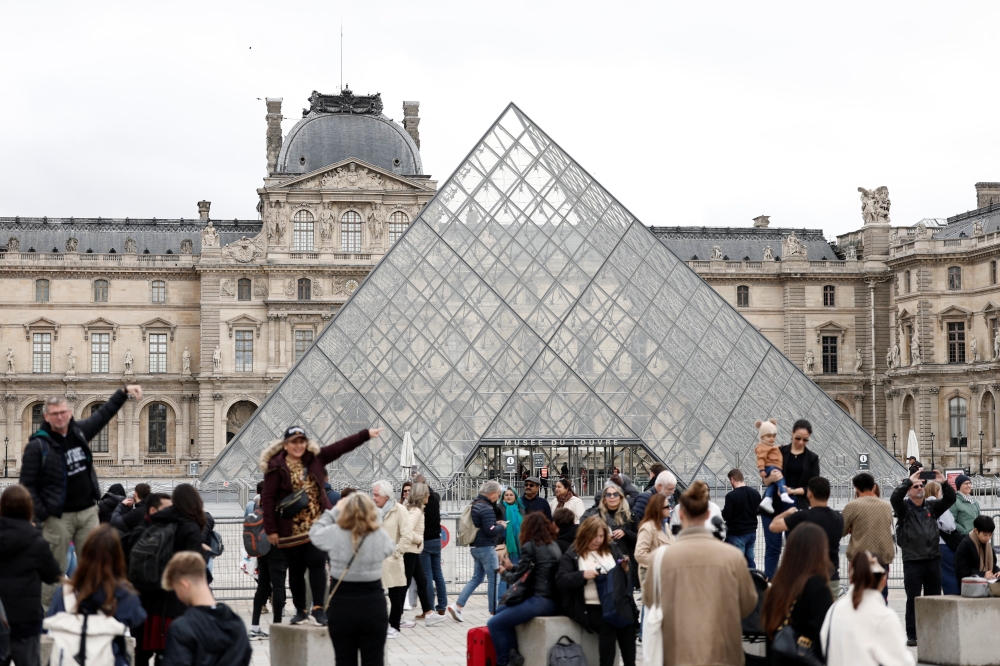
The Louvre, a former royal palace that was transformed into a museum after the French Revolution, attracts thousands of tourists every day and houses more than 33,000 works of art.
It drew about 8.7 million visitors last year, nearly 80% of them from countries other than France. Concerns about overcrowding and aging infrastructure prompted Macron to announce plans to renovate and expand the Louvre. This will include moving the Mona Lisa, the museum’s most famous piece, to a separate exhibition space.
What security systems does the museum have?
Politicians were quick to criticize the French government for failing to protect prized heritage from a robbery that occurred in broad daylight. Laurence des Cars, the head of the Louvre, is expected to testify about the theft Wednesday before the French Senate.
The Ministry of Culture said that two alarms — one on the window, another on the display cases — had rung and that security guards followed the proper security protocol, which is to protect visitors from harm and contact law enforcement. No one was hurt during the robbery.
Beccuau said in a statement Monday that investigators were looking into the “functioning of the alarm systems.” She did not elaborate.
The overhaul that Macron announced in January was already set to include “a new security framework that is beginning to be rolled out,” according to the culture ministry. That includes deploying new cameras and a new command post, the ministry said, but it was unclear how far along those plans were.
Are there any leads?
The Paris prosecutor’s office said Monday that investigators were not ruling out any hypotheses at this stage but that organized crime was a likely culprit.
The speed of the heist suggested the thieves were experienced, officials said. But it is unclear whom they might be working for and what they aimed to do with the stolen jewels.
A private collector could have ordered the theft, Beccuau told BFMTV. Criminals could also dismantle and sell or reuse the precious stones, pearls and metals in the jewelry, she added.
Beccuau said that 60 investigators were questioning witnesses, combing through forensic evidence and reviewing footage from surveillance cameras in the museum and on the street.
“At this stage, all leads are being explored,” Beccuau later said in her statement.
Have other museums been targeted lately?
Yes. In September, thieves using a blowtorch and power tools stole nuggets of raw gold worth about $700,000 from the National Museum of Natural History, a few subway stops from the Louvre in Paris.
That same month, two porcelain dishes and a vase worth about 9.5 million euros, or about $11 million, were stolen from the Adrien Dubouché National Museum in Limoges, France. And in 2024, thieves stole elaborate snuff boxes from the Cognacq-Jay Museum in Paris.
“For 40 years, no attention was paid to securing these major museums,” Rachida Dati, France’s culture minister, acknowledged on TF1 television Sunday. “We need to adapt these museums to new forms of criminality.”
The interior ministry said after Monday’s crisis meeting that instructions would be sent around the country to “immediately assess the security measures already in place around cultural establishments and to strengthen them where necessary.”
This article originally appeared in The New York Times.
Oman Observer is now on the WhatsApp channel. Click here