




The White House worked to hold together the Gaza Strip peace deal Monday as American officials said they were increasingly concerned that Israeli Prime Minister Benjamin Netanyahu could dismantle the US-brokered agreement.
Vice President JD Vance was headed to Israel, where he was to join Steve Witkoff, Trump’s Middle East peace envoy, and Jared Kushner, the president’s son-in-law, who were instrumental in brokering the deal.
At the same time, President Donald Trump warned that he would allow Israeli forces to “eradicate” Hamas if violence in the enclave continued.
“We made a deal with Hamas that, you know, they’re going to be very good. They’re going to behave. They’re going to be nice,” Trump told reporters at the White House on Monday. “And if they’re not, we’re going to go and we’re going to eradicate them if we have to. They’ll be eradicated. And they know that.”
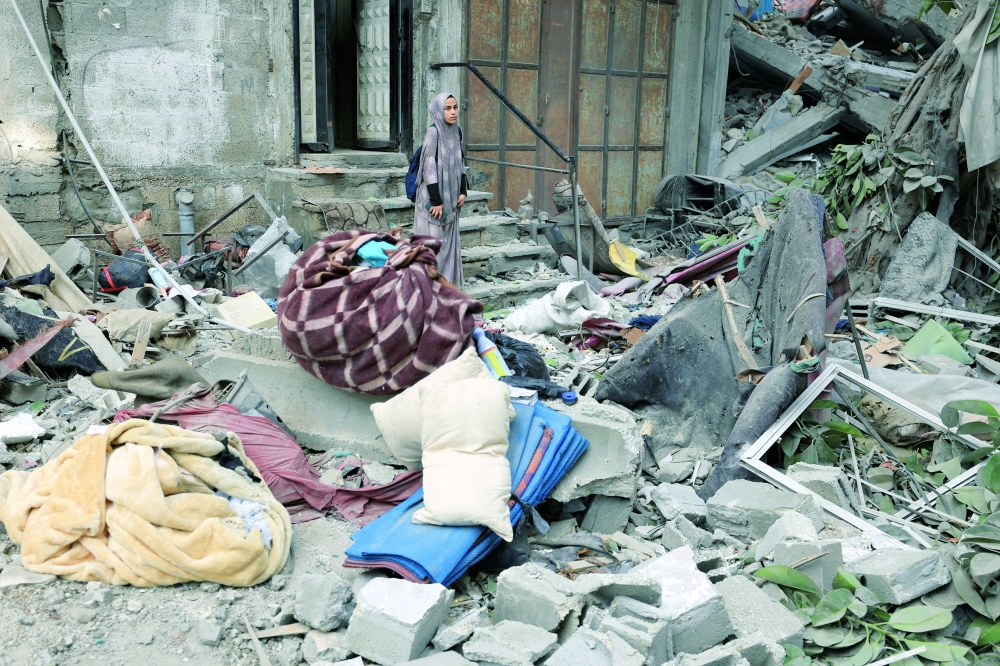
Vance’s expected arrival was meant to add an extra symbolic layer to illustrate the administration’s commitment to keeping the deal intact. The administration brokered a ceasefire this month in the two-year war between Israel and Hamas. But a new round of violence Sunday has highlighted the fragility of the 10-day-old truce.
Several Trump officials, speaking on condition of anonymity to discuss private conversations, said there is concern within the administration that Netanyahu may vacate the deal. The strategy now, the officials say, is for Vance, Witkoff and Kushner to try to keep Netanyahu from resuming an all-out assault against Hamas.
Israel and Hamas have accused each other of violating the truce after repeated flare-ups of violence in recent days. But both sides have said they were still committed to maintaining the truce.
For now, the president believes that Hamas leaders are willing to continue negotiations in good faith and that the attack on Israeli solders was carried out by a fringe element of the group, according to a White House official who spoke privately to convey the president’s thinking.
Indeed, Trump has bucked Israeli declarations that Hamas had violated the agreement. On Monday, he characterized the current fighting in Gaza as a “rebellion” in Hamas that was not representative of the organization’s leadership. He said that some Hamas fighters “got very rambunctious.”
“This is the moment that matters,” said Khaled Elgindy, a visiting scholar at the Center for Contemporary Arab Studies at Georgetown University. “This is what is going to set the tone for if and how this ceasefire holds, or what it even means. That’s all being established now.”
Asked Monday about the situation in Gaza, Trump argued that it was up to other nations to enforce the agreement. Currently, negotiators representing some of the Arab governments that helped broker the deal are meeting in Cairo, according to the White House official who spoke about the planning.
“Right now, it’s in the hands of others,” Trump said earlier Monday. “You know, we have 59 countries that agreed to the deal.”
Witkoff and Kushner acknowledge the situation is “very delicate” and the peace deal they negotiated is in danger of falling apart, according to a senior administration official. Their goals are to stabilize the situation, ensure the humanitarian aid is delivered in Gaza and make sure the remaining bodies of deceased Israeli hostages are returned to their families.
In an effort to find the bodies, the United States is working with Turkey to bring a team that has expertise in body retrieval because of the prevalence of earthquakes in Turkey.
Witkoff and Kushner are also working on some of the trickier areas that were left undefined in their initial deal, which successfully returned all living Israeli hostages. Those include the creation of a stabilization force to be led by Egypt and beginning the demilitarization of Hamas, for which no timeline has been set.
This article originally appeared in The New York Times.
Oman Observer is now on the WhatsApp channel. Click here