




SAUD AL ANSARI
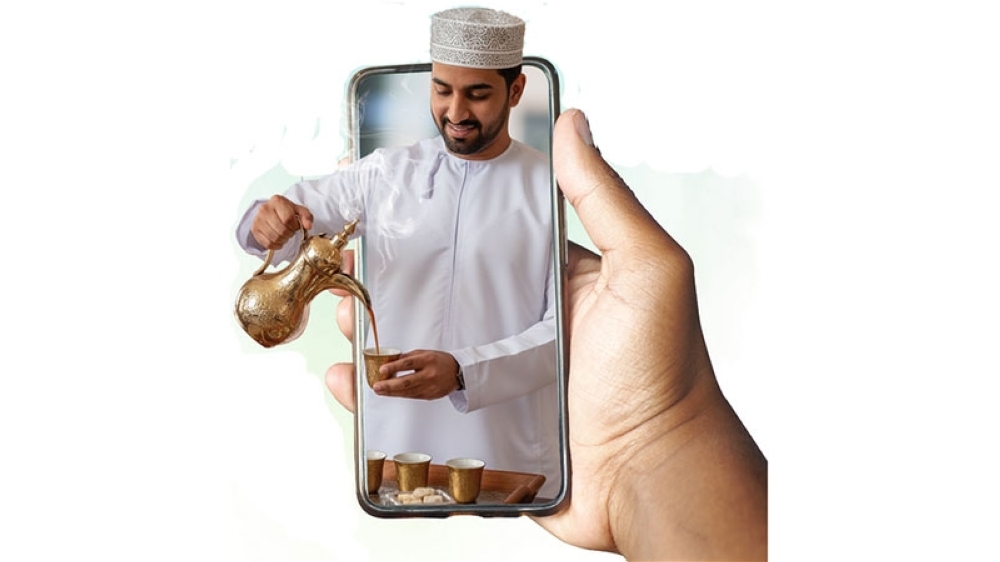
Once, the aroma of freshly brewed Omani coffee filled homes — a symbol of hospitality, generosity and togetherness. The clinking of cups, laughter of guests and unplanned visits were woven into daily life. Today, however, the scene has changed. With the rise of social media, real gatherings have grown rare, replaced by emojis, messages and online greetings that lack the warmth of genuine connection.
“In the past, coffee was made every day, and neighbours would drop by without notice — visits were part of life,” recalls Abdullah al Hadabi, a man in his sixties.
“Now, a phone message is enough for some people. They send congratulations by text and consider it a visit.”
He laments how social media has turned what was once a heartfelt daily ritual into a digital formality.
For Ali al Balushi, a university student, social media has made communication easier but colder.
“We talk a lot on WhatsApp and Snapchat, but we rarely meet,” he says. “Even when we do, everyone is busy taking pictures of the coffee instead of enjoying it.”
He feels that his generation experiences life more through screens than through real emotions, leading to shallow connections despite constant contact.
According to Ahmed al Badi, a sociologist, digital transformation has profoundly reshaped Omani social life.
“The traditional majlis was the foundation of Omani society — a space for discussion, exchange and connection,” he explains. “Today, that culture has faded as people become absorbed in virtual worlds.”
He notes that while family bonds may not necessarily weaken, their form and expression have shifted — from presence to pixels.
Amna al Salmi, a psychologist, adds that this shift affects emotional health.
“Social media keeps us constantly connected, but emotionally distant,” she says. “Humans need touch, tone and real conversation — elements a screen can never replace.”
She warns that excessive screen time can lead to social isolation and a growing sense of loneliness, even within families.
The change, says Nawal al Saidi, an elementary school teacher, has also influenced children.
“In the past, children played together outside. Now, each child is lost in their own digital world,” she observes. “Even among kids, real social interaction has disappeared.”
She urges families to revive shared activities, adding, “Phones cannot build relationships the way a conversation over coffee can.”
Despite these concerns, there remains room for optimism.
Said al Aghbari, a social commentator, believes that Omani coffee still holds the power to reconnect people — if its meaning is revived.
“Omani coffee remains a symbol of generosity and connection,” he says. “If we use social media to invite people to meet — not to avoid them — we can balance tradition with modernity.”
He stresses that the solution is not to reject technology, but to reshape how we use it, ensuring digital tools strengthen, not replace, our social values.
In an age ruled by screens and endless notifications, the scent of Omani coffee still whispers of a time when visits needed no invitation, conversations were spontaneous and hearts were closer.
We may not be able to stop the tide of technology — but we can choose how it shapes our lives.
The dallah that once brought people together can still do so, if only we make space for it again.
Oman Observer is now on the WhatsApp channel. Click here