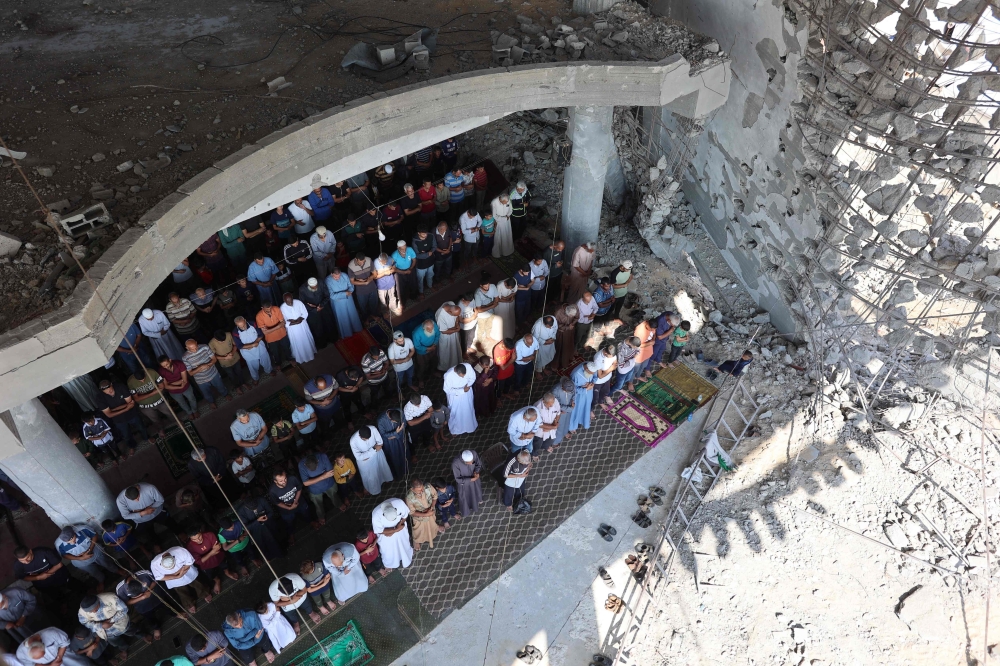





Gaza City: Thousands of worshippers returned on Friday to the Gaza Strip's few intact and many damaged mosques, where for the first time in months loudspeakers blared the Islamic call to prayer.
"God is the greatest, glory to God, Lord of worlds," echoed through mosques at roughly the same time Friday, one week after a ceasefire took place in the devoutly Muslim coastal Palestinian territory.
To be united for prayer again "is an indescribable feeling after two years of privation", Ghalid al Nimra told AFP at Gaza City's Sayed Hachem mosque.
Sayed Hachem, one of the oldest mosques in Gaza's largest city, was miraculously mostly spared during two years of air strikes and fighting between Israel and Hamas.
As he watched the hundreds of worshippers, Nimra was moved to see "such a large crowd gathered here" for the first time since Hamas's October 7, 2023 attack sparked the war.
As the prayer rang out, many hastened as they crossed the building's Ottoman-era door. Old and young, many of their faces solemn, prayed together inside, where even the minbar, the imam's raised platform, seemed intact.
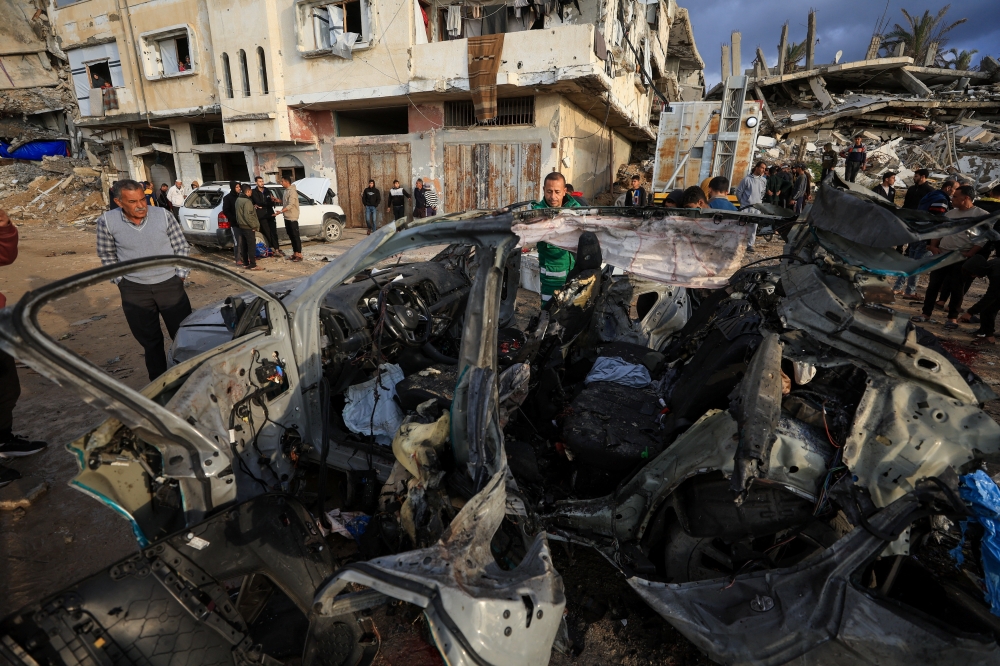
Out of Gaza's 1,244 mosques, 1,160 were partly or wholly destroyed, according to Hamas's media office in the Palestinian territory.
Several worshippers expressed a state of spiritual confusion.
"I feel like my soul is getting lost amid all this destruction," Abu Mahmud Salha told AFP.
The 52-year-old from northern Gaza still lives in a camp for the displaced in Al-Mawasi, on the other end of the Gaza Strip.
The UN said on Friday aid convoys were struggling to reach famine-hit areas of north Gaza due to war-damaged roads and the continued closure of key routes into the enclave's north despite a ceasefire between Israel and Hamas.
Around 560 metric tonnes of food had entered the Gaza Strip per day on average since the US-brokered halt to two years of devastating war but this was still well below the scale of need, according to the UN World Food Programme.
With famine conditions in the Gaza City region, UN humanitarian affairs chief Tom Fletcher said this week thousands of aid vehicles would have to enter weekly to tackle widespread malnutrition, homelessness and a collapse of infrastructure.
"We're still below what we need, but we're getting there... The ceasefire has opened a narrow window of opportunity, and WFP is moving very quickly and swiftly to scale up food assistance," WFP spokesperson Abeer Etefa said.
But the WFP said it had not begun distributions in Gaza City, pointing to the continued closure of two border crossings, Zikim and Erez, with Israel in the north of the enclave where the humanitarian debacle is most acute. — Agencies
Oman Observer is now on the WhatsApp channel. Click here