




MUSCAT: A new report by the Ministry of Transport, Communications and Information Technology (MoTCIT) has revealed that its flagship ‘Tahawul’ programme to drive government digital transformation has so far delivered 25 digital projects and initiatives, with a further 11 in the final stages of completion.
Tahawul — officially known as the National Programme for Government Digital Transformation — represents a landmark initiative by the Omani government, led by the MoTCIT, to enhance public service efficiency, integration and accessibility in alignment with Oman Vision 2040 goals for a modern, digital economy.
In a post, Thuraya al Harthy, Director of the Government Unified eServices Portal at MoTCIT, commended the broad success of the Tahawul programme, now in the final stages of its five-year implementation strategy.
Of a total of 36 digital projects and initiatives conceptualised for implementation under the programme, 25 have been fully delivered, she said. “These projects represent a qualitative leap in the digital government services system and contribute to building an integrated smart government based on efficiency, transparency and user experience”, the official added.
Oman’s national digital transformation strategy encompasses a wide spectrum of interlinked initiatives designed to modernise governance, enhance efficiency and improve the citizen experience. At its core is the Unified Government Services Portal, a central digital gateway that consolidates all government services into one accessible platform, complemented by the Unified Mobile Application for Smart Services, which delivers a consistent and seamless user experience across devices.
The National Open Data Platform furthers transparency by providing open access to government data, while Innovation in Shared Digital Solutions and Systems drives cost reduction and institutional efficiency through shared technological infrastructure.
To guide and standardise implementation, the Guideline Framework for Implementing Government Digital Transformation serves as a comprehensive operational model, supported by the Guideline Framework for Digital Service Design, which ensures inclusivity and quality in digital service creation. The National Digital Trust Services Project (Thiqah) underpins secure transactions through robust authentication services, while the Digital Readiness and Digital Service Maturity Measurement System monitors progress and alignment with national priorities. In parallel, the Guideline and Activities for e-Participation Development ensures that citizens remain active partners in shaping digital services, reinforcing the participatory ethos of transformation.
Efficiency and performance are further advanced through the National System for Planning, Evaluation and Performance Monitoring, which provides integrated data for decision-making; and the Simplification and Re-engineering of Government Service Procedures, aimed at streamlining processes for faster service delivery.
Supporting this are the Development and Enablement of Core Central and Shared Digital Solutions, which introduce enterprise systems to strengthen institutional planning; and the Central Smart Chatbot Platform, designed to provide automated support across service channels.
Strategic enablers include the Strategic Partnership for Implementing Government Digital Transformation, which fosters collaboration to accelerate key projects and the Government Digital Transformation Change Management Strategy, which prepares institutions for technological adaptation and improved performance.
Public engagement is bolstered by the National Communication and Awareness Plan for Promoting Smart Services, which encourages adoption and digital literacy, while the Classification, Indexing and Management of Government Services system ensures comprehensive documentation and accessibility of all public services.
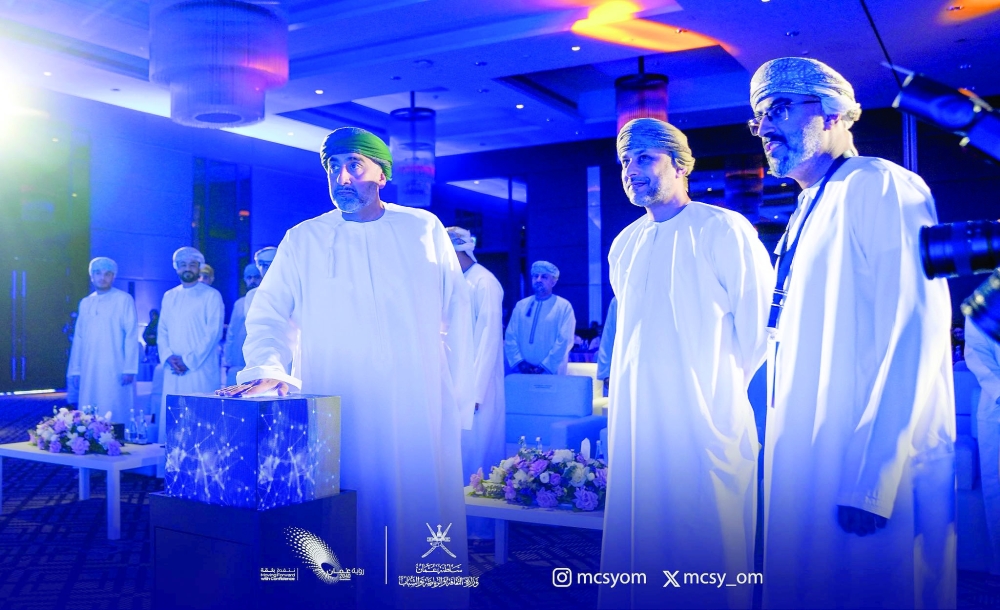
Anchoring these efforts are flagship initiatives such as the Oman Digital Transformation Forum, which serves as an annual platform for sharing innovation and best practices; and the Development of Government Mobile and Smart Applications, empowering users with mobile-first solutions integrated across agencies.
Finally, the Digital Content Strategy enhances the quality and connectivity of information across platforms, particularly within the Unified Government Services Portal, ensuring a cohesive, user-centric digital ecosystem.
Oman Observer is now on the WhatsApp channel. Click here