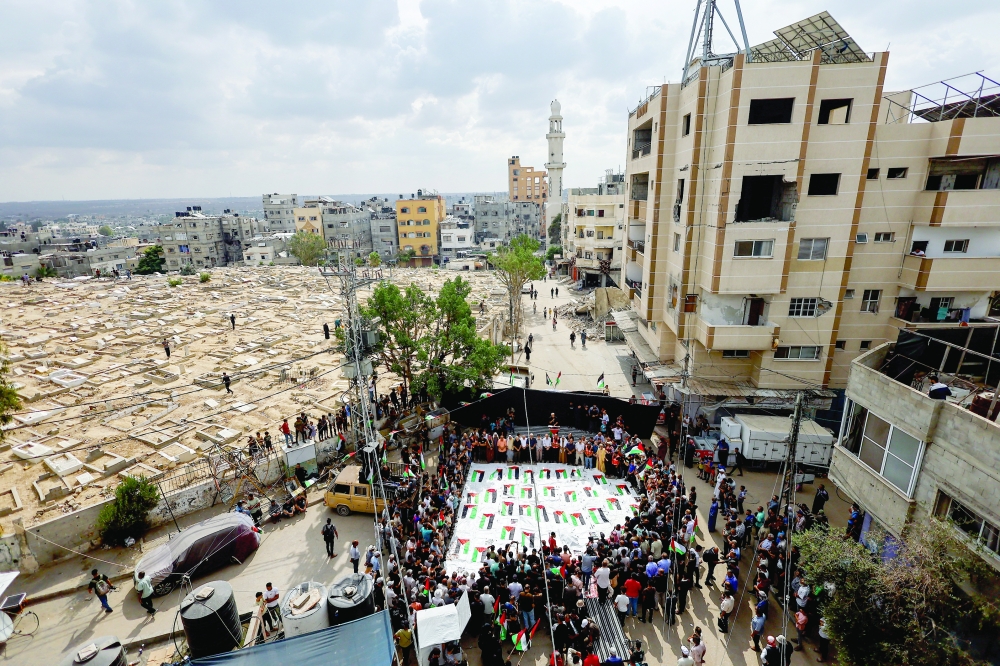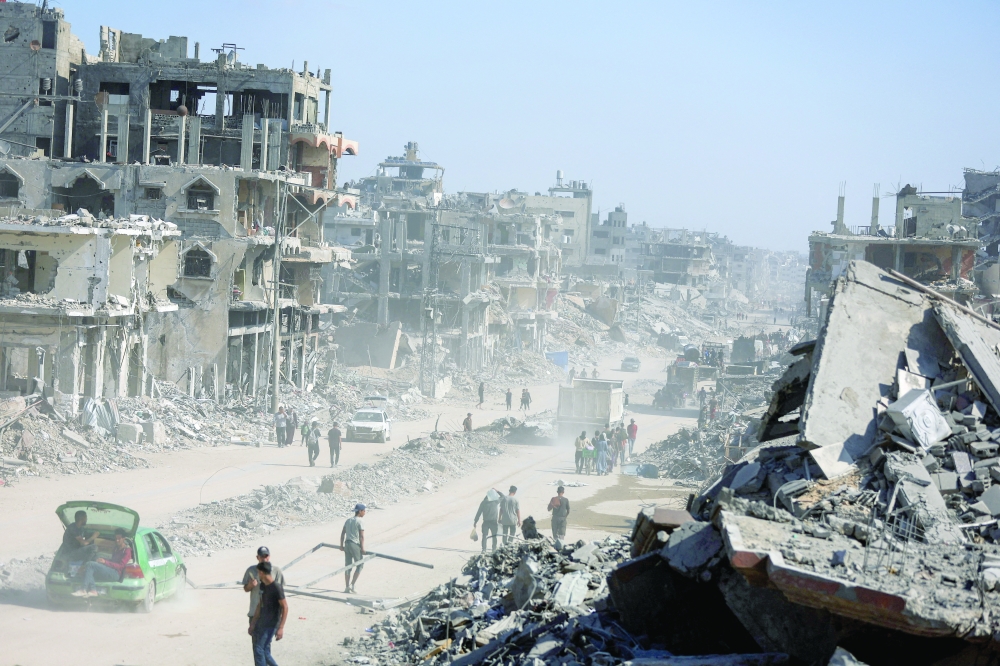





RAMALLAH: The Palestinian Authority's prime minister met on Thursday with UN and diplomatic officials to present a plan for Gaza's reconstruction, despite uncertainties over his government's role in the war-shattered territory's future.
"I would like to believe that 12 months from now, the Palestinian Authority will be fully operational in Gaza," Mohammad Mustafa said, days after a US-brokered ceasefire came into effect in Gaza.
The Palestinian Authority (PA) has not had a role in Gaza's governance since its rival Hamas seized control of the territory in 2007, though it still provides some services in the territory.
The Gaza peace plan set out by US President Donald Trump does not rule out a Palestinian state, and also suggests allowing a role for the Palestinian Authority once it has completed a set of reforms.
But Israeli Prime Minister Benjamin Netanyahu has vowed to fight the establishment of a Palestinian state and has all but rejected the option of the Ramallah-based PA ruling over post-war Gaza.
Mustafa said the PA had crafted a five-year plan for Gaza that would unfold over three phases and require $65 billion for 18 different sectors such as housing, education, governance and more.
"Our vision is clear," he told an assembly of Palestinian ministers, UN heads of agency and diplomatic heads of mission from his office in Ramallah, in the Israeli-occupied West Bank.
"Gaza shall be rebuilt as an open, connected and thriving part of the State of Palestine," Mustafa said.
He also said that technical discussions were ongoing with the European Union over "secure crossing operations, customs systems and integrated policing units".
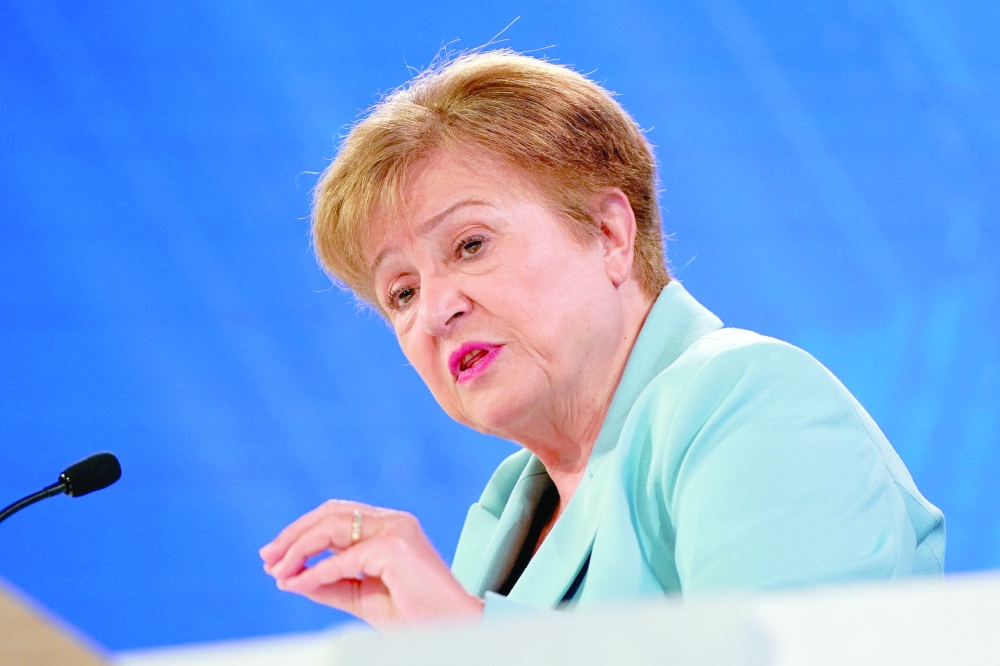
International Monetary Fund Managing Director Kristalina Georgieva on Thursday urged all parties to continue moving in the direction of a sustained, lasting peace following a ceasefire in Gaza, saying it would benefit the entire region. Georgieva, speaking during the annual meetings of the IMF and World Bank in Washington, said she was relieved when the recent ceasefire was reached for the sake of all the people affected by the two-year war in the Palestinian enclave.
She said lowered tensions would be good news for the economies of Egypt and Jordan, where the IMF has programmes, and Lebanon and Syria, which have asked for help and support from the global lender. "It is important because everybody concerned encourages this direction of sustaining a lasting peace, and yes, it would benefit the region," she said. "There will be a peace dividend for everybody." Georgieva said the IMF was working with Lebanon, which had requested a loan programme. "I hope we will be able to come up with a programme," she said, without providing further details.
Syria has asked for IMF support to rebuild its central bank and other institutions, and an IMF team had already been in the region. "So when there is peace, there is also this benefit that those who are there to support you, it is easier, more viable for this support to come," she said.
The country is struggling to emerge from a severe economic crisis following decades of profligate spending by ruling elites that sent the economy into a tailspin in late 2019, with depositors locked out of accounts as debt-laden banks shut down. — Agencies
Oman Observer is now on the WhatsApp channel. Click here