The ink on the ceasefire agreement has barely dried. For many, the sounds of artillery have been replaced by an uneasy quiet. But those of us who have walked the thin lines between conflict and post-conflict know this moment well: the deceptive stillness after destruction, before the ghosts of war reawaken. The question is not whether fragility exists—it does—but whether we have the vision and resolve to prevent this moment of reprieve from being just another lull before the next eruption.
Ceasefires are tools of de-escalation, not peace. Without addressing the structural asymmetries—military, political, economic—between Israel and Palestine, any pause in violence is, hence, inherently temporary. On the one hand, Israel continues to dominate the strategic terrain with the backing of powerful allies and superior infrastructure. On the other hand, Palestine, particularly Gaza, remains shattered, governed by a fragmented leadership, with limited mobility, dependency on external aid, and internal fissures aggravated by blockade and factional divides.
Fragility here is multilayered. Firstly, vertical fragility between the state and its citizens (e.g., Hamas’ legitimacy in Gaza, Fatah in the West Bank). Secondly, horizontal fragility between factions and communities (e.g., intra-Palestinian tensions). Thirdly, geopolitical fragility as regional and global powers instrumentalise the conflict for energy, ideology, or electoral capital.
There is a silver lining: a discernible recalibration of international postures along two intersecting lines. Firstly, Israel’s long-standing impunity is being challenged. Global public opinion, legal cases at the ICJ and ICC, and recognition of Palestinian statehood by several European and Global South nations reflect a loss of moral high ground for Israel, especially under Netanyahu’s hawkish leadership. Secondly, Trump’s transactional pragmatism may offer unexpected room. If motivated by the optics of a Nobel Peace Prize, geopolitical influence, or access to gas fields off Gaza’s coast, Washington might back a transition framework under new rules of engagement—so long as Israel’s existential security is assured.
This moment, though far from ideal, may represent a rare convergence of moral outrage and strategic recalibration. The window is narrow—but it is open.
A fundamental mistake in past transitions (eg, post-Oslo and MEPP) was postponing social reconstruction and reconciliation in favour of premature “state-building” or security reform. This must be reversed. First and foremost, immediate, localised psychosocial interventions are needed, especially for over 17,000 orphaned children in Gaza. These children are the future peace or the next war—depending on what the world chooses now. Second, cultural continuity projects. Archives, oral history, local museum networks, and storytelling circles must be supported, and national memory must be preserved. Without a space to mourn, remember, and narrate, collective trauma festers. Third, cross-factional Palestinian dialogue must begin with dignity-based frameworks—not donor-led political engineering. The objective is to prevent the recurrence of civil fragmentation among Palestinians.
A long-overdue initiative that Palestinians could benefit from is the establishment of a Palestinian Reconciliation and Renewal Council—inclusive of non-factional actors, women, youth, religious leaders, and returnee diaspora. At the same time, deploying regional conflict mediation teams (eg, Oman, Jordan, Indonesia) to stabilise inter-factional tensions, with embedded ceasefire monitors. Once the aforementioned two steps are underway, investing in local economic recovery zones with employment tied to reconstruction and joint civic engagement would be achievable and necessary.
The offshore gas fields near Gaza’s coast — estimated to hold billions in natural gas — will become a flashpoint. If monopolised by Israel or global companies, this will reignite conflict. But if structured through equitable regional partnerships, the gas sector could fund reconstruction bonds for Gaza, provide regional energy corridors linking Gaza to Egypt, Jordan, and beyond, and facilitate the establishment of joint Palestinian-Israeli-Egyptian trust funds governed by international stakeholders (eg, UNDP, World Bank, Islamic Development Bank). Palestine’s economy must move from dependency to dignity.
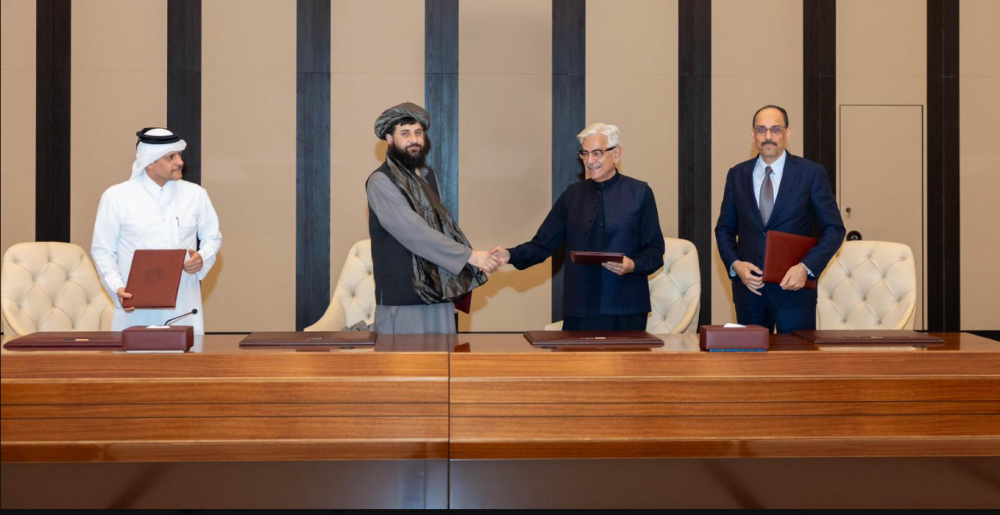
The war in Gaza has rekindled the Palestinian Plight and tested the world’s moral spine. The ceasefire is a start, not a solution. The challenge ahead is to turn stillness into structure, and memory into momentum. Political accords must be matched with civic repair. Reconstruction must be cultural, not just contractual. And above all, peace must become a shared inheritance — not just a diplomatic handshake between men in suits.
It is time we built a peace that lives not just in treaties, but in the streets, hearts, and futures of those who endured the war.
Ahmed al Mukhaini
The author is a policy analyst
Oman Observer is now on the WhatsApp channel. Click here