Every summit begins with vision statements. This one began with a ledger. The IUCN Conservation Congress treated conservation as a balance sheet of species, coastlines, and political will. The week prioritised practical questions over inspiration and focused on determining outcomes. Who is funding restoration? Who is protecting depth? Who is enforcing rights? The ocean stood on the agenda as an asset that demands governance.
A decisive action was taken to make the shift evident. Members supported the protection of the mesopelagic zone through approval of Motion 035. The twilight zone from roughly 200 to 1,000 metres holds vast biomass and moves carbon each day with the rise and fall of small fish.
The motion calls for a precautionary approach to any new activity in that layer until science and governance can keep pace. For us in the Arabian Sea, these lands are close to home. It touches food security and climate stability, opening a path for regional leadership in a field with few maps.
A second decision set rules for innovation. Members adopted a policy on synthetic biology for conservation through Motion 087. It allows innovation with safeguards. At the Environment Society of Oman, we engaged deeply in this debate because marine restoration is accelerating across our coasts. Coral, mangrove, and seagrass projects bring promise and hard questions about the limits of intervention. The policy gives countries room to judge tools case by case and to build the expertise needed for informed consent so communities understand risks and benefits before pilots begin.
The Congress also widened the role of non-state actors. California and Massachusetts announced their intention to join IUCN at the state level. This initiative offers a model for our side of the world. Port cities, governorates, and coastal authorities in Oman and the region can seek direct participation in global conservation forums. Imagine Muscat, Suhar, and Salalah with well-defined programmes, transparent public reporting, and targets that are in harmony with national plans.
Finance moved in step with this agenda. Major development partners have signalled that capital is returning to ecosystems. The call was simple. Develop projects that are ready for implementation and integrate restoration with livelihoods, enabling the region to benefit from the redirected finance. Aligning finance, policy, and science has become fundamental for establishing credibility.
In Oman, the pathway is no longer abstract. The ingredients exist in science, policy, and the growing recognition that nature and economy are part of the same system. What is needed now is orchestration that connects land and sea, research and industry, planning and community. The country has the knowledge and the projects, but their power lies in coherence. Data must move freely, guiding where investment flows and how results are measured. Monitoring should be treated as infrastructure, not as an afterthought, with open information that builds trust and accountability. Evidence driving spending and measuring outcomes in restored ecosystems, resilient jobs, and stronger communities makes progress visible. That is how stewardship turns from ambition into practice, and the environment becomes both foundation and future.
Across the region, the same truth takes root. Leadership will not come from proximity alone, but from the discipline to build systems that endure. It begins with standards that hold, data that can be trusted, and collaboration that reaches across coasts and ministries. Depth, in this sense, is not only about the ocean. It is a way of working: deliberate, evidence-driven, and connected to both people and place. As the decade’s midpoint passes, the ocean at our doorstep continues to test our resolve, asking whether we will stay on the surface of ambition or move deeper into practice.
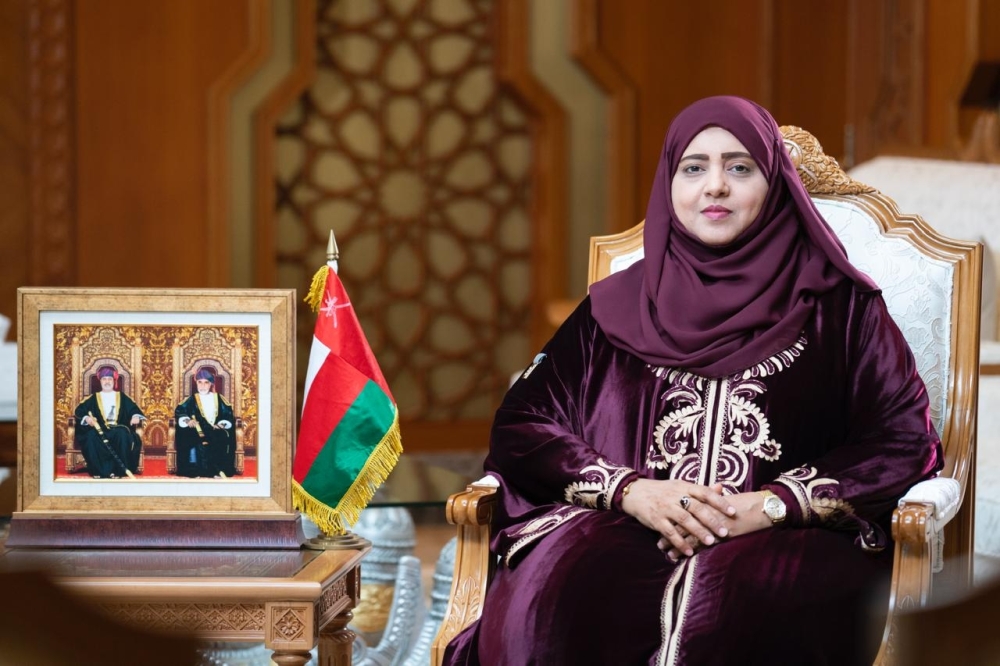
Rumaitha al Busaidi
The writer is an environmental strategist and advocate for sustainable development.
Follow her on LinkedIn @rumaithaalbusaidi
Oman Observer is now on the WhatsApp channel. Click here