




In Dhofar’s misty highlands, teacher Ahmed al Maashani turns farmer, merging tradition with science to grow a sustainable future.
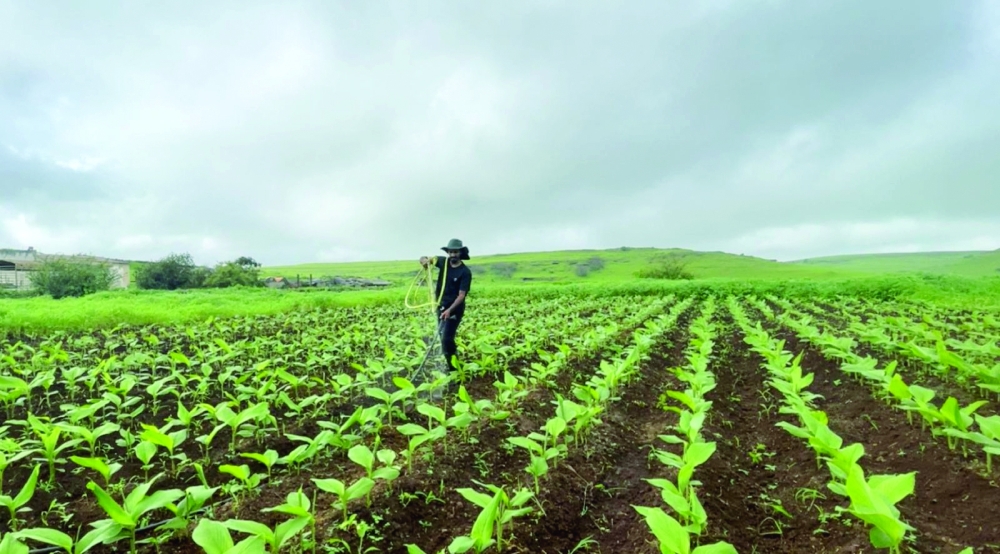
The school bell rings off the Salalah coast and by mid-afternoon, Ahmed bin Saeed al Maashani has exchanged lesson plans for pruning shears. He walks the drip lines of his compact plot, checking valves, brushing dust off a young mango and lifting mulch to feel the soil’s moisture.
“I don’t farm for volume”, he says. “It’s about reading this place and matching crops to it”.
A teacher by profession and a farmer by passion, Al Maashani represents a quiet shift in Dhofar where household plots are finding renewed purpose. The governorate’s unique rhythm — Khareef Dhofar Season’s cool mist (June–September) followed by Sarb’s clear, mild spell (late September–December) — creates an agricultural cycle unlike anywhere else in the region.
After school, Al Maashani takes a short rest before heading to his field.
His daily routine involves flushing filters, scouting for pests, tightening ties on banana pseudostems and logging growth notes.
During holidays, he doubles his hours — preparing beds, repairing tools and rescheduling plantings to align with Sarb’s favourable weather.
His crop mix blends tradition and practicality: cowpea (lobiya) and local maize (Mseybli) for staples, with banana, mango, orange and jackfruit thriving on the coastal plain’s humidity. Vegetables like tomato, cucumber, pepper and aubergine rotate through cooler months. This year, he’s trialling turmeric — betting on post-Khareef soil moisture and a rising demand for local spices.
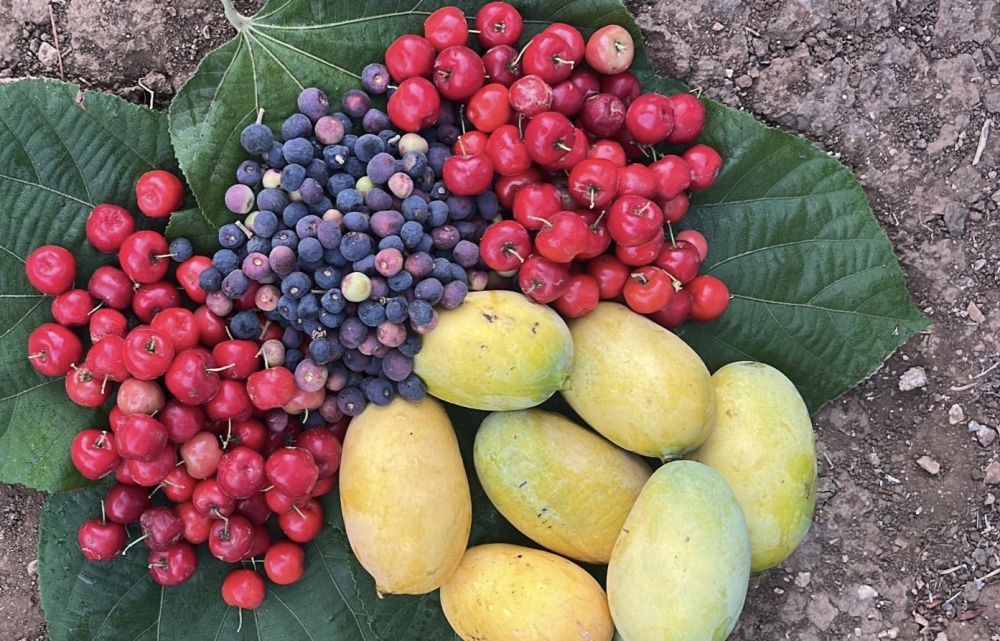
“Success here is less about inputs and more about fit”, he says. “Coast, mountain, or inland — each demands its own timing and crops”.
Dhofar’s farming rhythm is written in its geography. The Salalah coastal plain supports tropical fruits; the Qara mountains capture Khareef’s drizzle, refreshing pastures and aquifers; the inland Najd remains drier, favouring hardy crops and disciplined water use. Across these zones, traditional timing — when to plant, when to prune, when to pause — still guides farmers.
Al Maashani’s methods reflect this wisdom. He uses short-pulse drip irrigation, organic mulch to retain moisture and modest shade nets for seedlings. “When you manage water well, summer becomes a challenge to plan for — not a wall you can’t climb”, he says.
For Al Maashani, the farm doubles as a teaching tool. He documents leaf symptoms, turns pest scouting into observation exercises and compares irrigation data with Khareef rainfall logs. “It’s a school either way”, he says with a smile. “In the morning, I grade papers; in the afternoon, the field grades me”.
After Khareef, fig stem borers and soil-borne worms can surge. Al Maashani counters them through integrated pest management — clean fields, rotation, pruning and minimal, approved treatments only when needed.
Summer heat and evaporation are constant tests. His solution: tighter schedules, irrigation during cooler hours and thicker mulch around heavy feeders like banana. The seasonal shift from Khareef to Sarb brings another challenge — sudden changes in humidity and temperature. He adapts by staggering sowing dates and choosing hardy varieties.
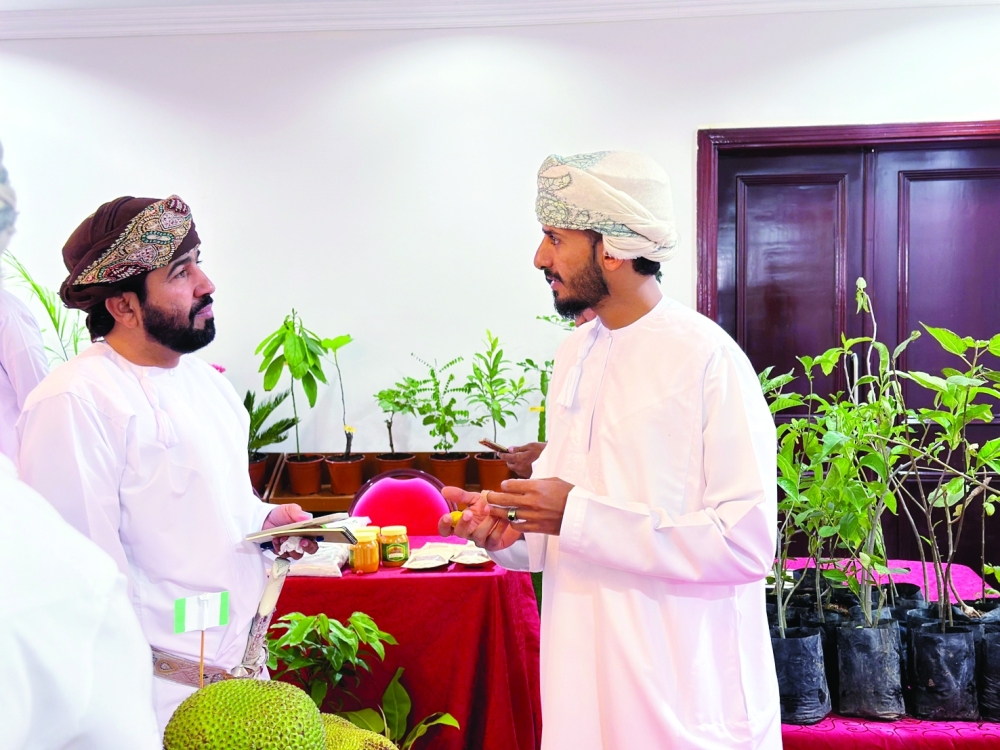
“You can’t fight the season”, he says. “You arrange yourself around it”.
Small-scale farms like Al Maashani’s don’t chase export markets. Their value is local — strengthening food security, creating small value chains (dried fruits, spice blends, mountain honey) and offering young people entry points into green entrepreneurship.
“Not everyone needs hectares”, he says. “You need a plan, patience and crops that belong to your zone”.
For those starting out, he advises a basic soil test, filtered drip irrigation and mulching immediately after transplanting. The late-Khareef to early-Sarb window is the most forgiving — soils are moist, sunlight gentle and pests fewer. Preventive care always beats late cures and simple written records beat memory.
Al Maashani’s daily rhythm — from classroom to field, observation to adaptation — captures a deeper Dhofari truth: that climate, geography and tradition can sustain small-scale farming even as water grows scarce. It’s not nostalgia, nor novelty — it’s resilience rooted in knowledge of place.
As he pauses at the end of a row, the soft tick of a pressure regulator punctuates the silence. “Understand your place”, he says, “and your crops will understand you”.
Oman Observer is now on the WhatsApp channel. Click here