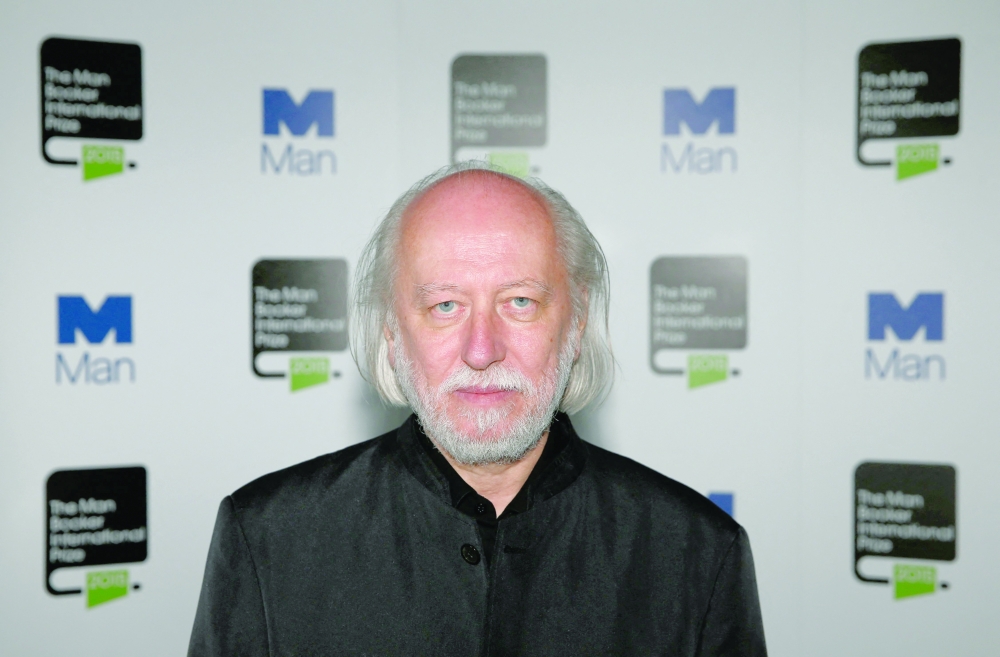





STOCKHOLM: The Nobel Prize in Literature was awarded to Laszlo Krasznahorkai on Thursday, considered by many as Hungary's most important living author, whose works explore themes of postmodern dystopia and melancholy.
The Swedish Academy honoured him "for his compelling and visionary oeuvre that, in the midst of apocalyptic terror, reaffirms the power of art."
"I'm very happy, I'm calm and very nervous altogether," the author told Swedish broadcaster Sveriges Radio from Frankfurt. "It is my first day as a Nobel prize winner," he said.
The Academy highlighted Krasznahorkai's first novel, published in 1985, "Satantango", which brought him to prominence in Hungary and remains his best-known work.
The Academy called it "a literary sensation".
Krasznahorkai is "a great epic writer in the Central European tradition that extends through Kafka to Thomas Bernhard, and is characterised by absurdism and grotesque excess," the Academy said.
"But there are more strings to his bow, and he also looks to the East in adopting a more contemplative, finely calibrated tone."
"The result is a string of works inspired by the deep-seated impressions left by his journeys to China and Japan," it said.
Krasznahorkai was among those mentioned as a possible winner in the run-up to the announcement.
The Academy noted the author's flowing syntax with long, winding sentences devoid of full stops.
"While it is Krasznahorkai's weighty, rolling syntax that has perhaps become his signature as an author, his style also allows for a lightness of touch and a great lyrical beauty," Academy member Steve Sem-Sandberg said.
Hungarian Prime Minister Viktor Orban hailed the prize to Krasznahorkai.
"The pride of Hungary, the first Nobel Prize winner from Gyula, Laszlo Krasznahorkai. Congratulations!" Orban posted on Facebook, referring to the town in southeastern Hungary where Krasznahorkai was born.
He has drawn inspiration from his experiences under communism and the extensive travels he undertook after first moving abroad in 1987 to West Berlin for a fellowship.
His novels, short stories and essays are best known in Germany — where he lived for long periods — and his native Hungary.
Critically difficult and demanding, his style was described once by Krasznahorkai himself as "reality examined to the point of madness".
American critic Susan Sontag crowned Krasznahorkai the "master of the apocalypse" after having read his second book, "The Melancholy of Resistance”, the Academy said.
His "War and War" novel (1999) was described by the New Yorker magazine critic James Wood as "one of the most profoundly unsettling experiences I have ever had as a reader".
He is the second Hungarian to win the prize, after the late Imre Kertesz won it in 2002.
The Nobel Prize comes with a diploma, a gold medal and a $1.2 million prize sum. — AFP
Oman Observer is now on the WhatsApp channel. Click here