




MUSCAT, OCT 9
A first-of-its-kind large-scale initiative by the Oman Agriculture Development Company (OADC) – a subsidiary of the wholly state-owned Oman Food Investment Holding Company (Nitaj) – to cultivate commercially valuable jojoba trees promises to deliver not only significant economic and environmental benefits but also contribute meaningfully to Oman’s carbon sequestration goals.
Dubbed the ‘Rima Project’, the initiative centres on the cultivation of 150,000 jojoba trees across a 1.2 million m² desert landscape at Rima in the Wilayat of Haima, within the Block 6 concession of Petroleum Development Oman (PDO). Partners in the project include the Ministry of Agriculture, Fisheries, and Water Resources and PDO.
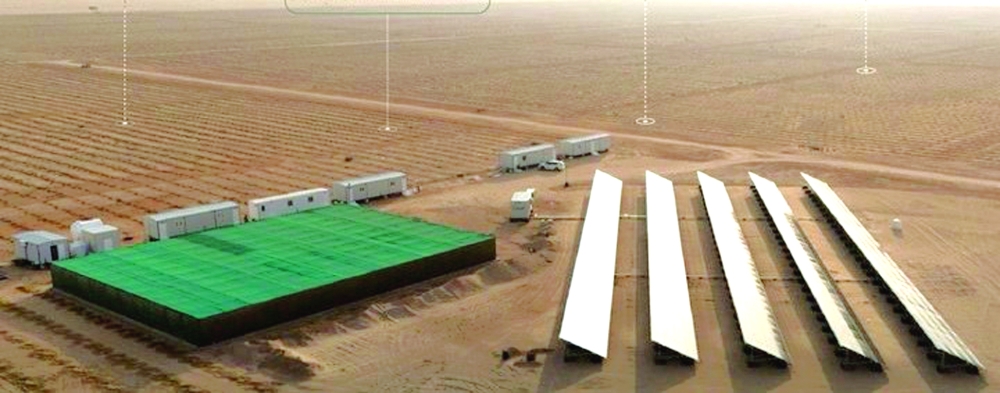
Commenting on the significance of this landmark undertaking, OADC (rebranded from Nakheel Oman Development Company) stated in a recent post: “The Rima Project is advancing Oman’s carbon sequestration efforts with 150,000 jojoba trees cultivated across more than 1.2 million square meters of arid land. Powered by a solar-based irrigation system, it is a pioneering model of climate-resilient agriculture and sustainable innovation.”
For the Sultanate, jojoba cultivation offers substantial commercial and economic advantages, particularly within its expanding focus on sustainable desert agriculture and green industry diversification. Native to arid regions, the jojoba plant (Simmondsia chinensis) produces seeds rich in a unique liquid wax—commonly known as jojoba oil—that enjoys strong global demand across the cosmetics, pharmaceuticals, and bio-lubricant industries. Jojoba plantations can create new value chains encompassing processing, oil extraction, and derivative industries, thereby generating rural employment and supporting SMEs.
From a climate and environmental standpoint, jojoba is exceptionally well suited to Oman’s semi-arid and desert conditions, thriving in poor soils with minimal water requirements once mature. Its deep root system enhances soil stability, combats desertification, and contributes to carbon sequestration. Its integration into large-scale greening or carbon credit programmes—such as those promoted by PDO and the Environment Authority—could help Oman offset emissions while fostering biodiversity and sustainable land use.
Underscoring its sustainability-driven foundation, well-known Omani clean energy specialist Nafath Renewables has been contracted to deploy a solar-powered irrigation system spanning the entire project site. In a post, the company described this system as a “pioneering model for smart and sustainable agriculture.”
Significantly, the Rima Project joins a growing list of agricultural and environmental initiatives across Oman designed to generate carbon credits while promoting long-term sustainability.
Among the most notable is the Oman Blue Carbon Project, a partnership between the Environment Authority and MSA Green Projects, which aims to plant 100 million mangrove trees across roughly 20,000 hectares in Al Wusta Governorate. The initiative focuses on restoring tidal wetlands and coastal ecosystems—serving as both a biodiversity haven and a powerful carbon sink. Once fully implemented, it is expected to remove around 14 million tonnes of CO₂ and generate an estimated US$150–160 million in carbon credit revenues under the Verra Verified Carbon Standard.
Complementing this large-scale effort are a number of nature-based carbon sequestration projects led by the private sector. Notably, OADC, in partnership with PDO, has launched a project in Dhofar to cultivate 30,000 Omani lemon trees, combining carbon absorption benefits with agricultural revitalization. Similarly, the Green Alliance, formed between the Environment Authority and OPAL, brings together multiple private entities to expand afforestation using indigenous tree species across various regions of the Sultanate.
Oman Observer is now on the WhatsApp channel. Click here