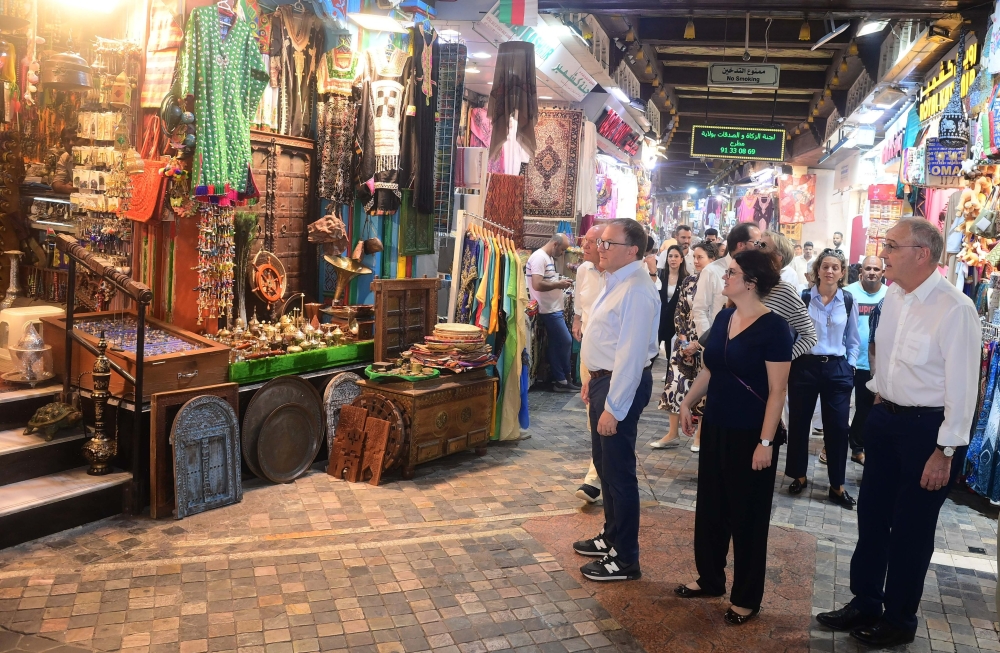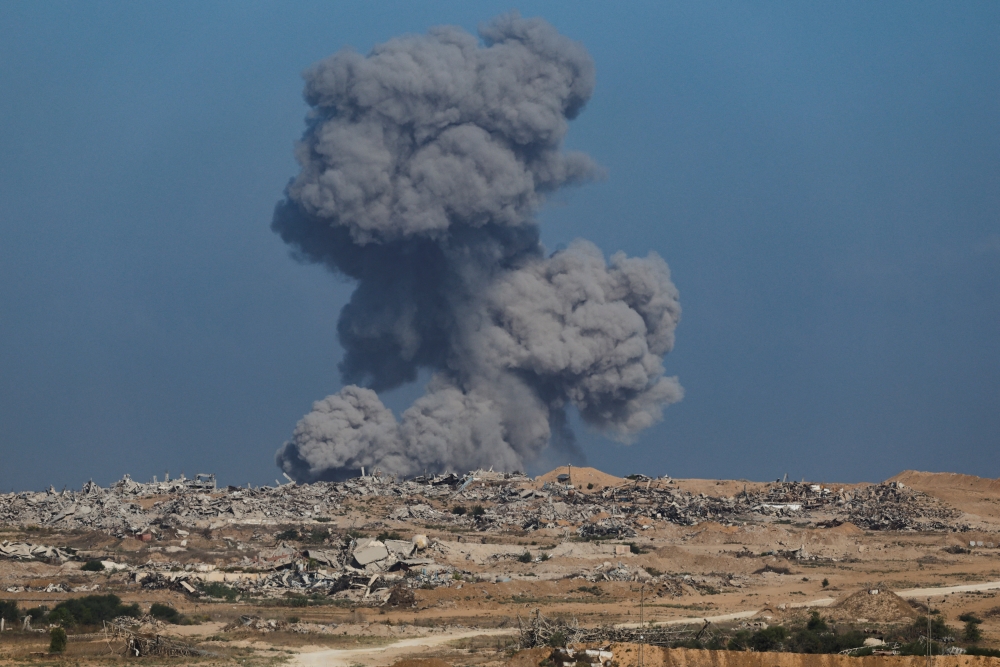





A breeze rustles through Muttrah Souq. The scent of frankincense and rosewater, pickled with the aroma of herbs and spices, drifts above waves. There is calm. A sense of continuity, of rootedness. But not far across the region, Gaza bleeds. The contrast is haunting. The quietness in Oman’s alleys becomes more than a sensory moment.
This distance is not just geographic. It is ethical, emotional and political. It is the moral distance that allows unfolding atrocities to become background noise. It is the kind of silence that whispers complicity, not because people are cruel, but because they are overwhelmed, exhausted, unsure how to resist the machinery of impunity.
Gaza is now the site of more than war. It is a spectacle of genocide, and a graveyard of dreams, of homes, of childhood. It is also a vault of memory — an unbroken thread of songs, stones and stories. It is this heritage, not just the people, that is under assault. The question now is not only how to end the violence, but how to heal from it — and whether the world has the moral stamina to begin again.
This past week marked the Jewish New Year. Traditionally, a time of introspection, of ethical self-accounting, of the renewal of vows to justice and humility. But this year, the air is thick with contradiction. For generations, Jewish suffering has witnessed the importance of compassion, of never denying dignity, of recognising injustice even when veiled in legality. Those lessons were hard-won — from exodus to exile, pogrom to displacement.
Zionism, however, has hijacked that memory. It has transformed generational pain into a tool of entitlement. It has wrapped policies of erasure in the language of national security. The memory of suffering has become institutionalised in a state whose military might now enforces the very dispossession its people once decried.
This is not a denial of Jewish trauma. It is a call to prevent that trauma from becoming the blueprint for another people’s suppression. The Palestinian narrative must no longer be ignored or reduced to resistance alone. It must be recognised as a full human story: of villages wiped, keys preserved in exile, lullabies passed down in tents, and now, thousands of children orphaned in war.
The October 7 attack was a rupture; an explosion of fury, desperation and tragedy. For many, it signalled the need to double down on security and suffering. But Israel’s response, spearheaded by Prime Minister Netanyahu, has not been patriotic — it has been deeply egotistical. It has revealed a leader prioritising political survival over national healing, over proportionality, over the long arc of peace.
Thousands of bombs have since fallen. Hospitals have been targeted. Aid flotillas intercepted. One such ship, the Global Sumud Flotilla, was seized in international waters, and its mission to bring food, medicine and hope was terminated. Israel claimed legality; others called it cruelty. But beyond the legal arguments lies a human one: how do we respond when children are starving, even if the law is ambiguous?
The war in Gaza has not only taken lives — it has erased futures. More than 17,000 children are now orphaned, according to recent humanitarian estimates. Each of them is a repository of interrupted love, of a lullaby cut short. Each of them holds the possibility of either becoming a force for reconciliation or, conversely, a mirror of the trauma imposed upon them.
The Palestinian story must not be framed solely in terms of resistance or retaliation. It must be seen as a struggle to preserve a culture, a homeland, a memory in the face of calculated disappearance. This is about continuity.
Reconstruction cannot be just concrete and rebar. It must include schools that teach truth, museums that preserve memory, homes that feel safe and archives that tell the Palestinian story from the mouths of its own people.
Oman has long been a voice of measured diplomacy, of balance between principle and pragmatism. But in moments of historic rupture, silence is not neutrality. It is abandonment. Oman, and others in the region, can lead not by choosing sides, but by championing the architecture of reconciliation.
This includes hosting international summits focused on reconstruction, supporting Palestinian cultural preservation, launching regional orphan rehabilitation initiatives, and sponsoring independent truth commissions to document and honour all loss — not just political grievances, but the loss of rhythm, of language, of childhood.
In parallel with reconstruction, there is a political window — fragile, yet not closed. The growing international recognition of the Palestinian state has revived faint hope in the two-state solution, not as a perfect outcome, but as a dignified beginning. For decades, this vision has faltered under the weight of settlements, impunity and bad faith. Yet now, in the wake of such devastation, it re-emerges as a moral imperative rooted in justice and coexistence. Oman and like-minded nations can amplify this moment by urging a renewed commitment to a viable, sovereign Palestinian state alongside Israel — grounded in rights, not domination.
The Palestinian cause has become the testing ground for whether humanity can survive political convenience. If heritage is allowed to burn, if memory is denied, if orphanhood becomes generational, then the world has lost far more than geopolitical standing. It has lost its ethical spine.
We must not only stop the war. We must begin the healing. This means recognising Palestinian suffering not as a footnote, but as a central moral compass, similar in many ways to apartheid and slavery. The age of selective memory must end. The reconstruction of Palestine at large and Gaza in particular must be cultural as much as material. And the quietness in the souq must turn into policy, into solidarity, into the patient work of justice.
Let Palestine not become the place where our morality failed. Let it become the place where we choose, finally, to rebuild something sacred — together.
Oman Observer is now on the WhatsApp channel. Click here