With its expansive seas and powerful waves, Oman stands at the threshold of a new era in renewable energy: the harnessing of wave power. As the Sultanate of Oman strives to diversify its energy mix and meet the ambitious goals of Oman Vision 2040, blue energy offers both opportunity and challenge in equal measure.
OMAN’S UNTAPPED COASTAL ADVANTAGE
Oman’s geography confers a unique advantage. The nation’s coastline, stretching 2,092 km along the Sea of Oman and the Arabian Sea, is one of its most valuable natural assets. Studies place the mean wave power at around 7.5 kW per metre, with a theoretical potential of nearly 138 terawatt hour (TWh) per year. More conservatively, the applicable potential is about 7 TWh annually — enough to cover roughly 24% of Oman’s 2016 electricity consumption (28.92 TWh) if harnessed fully. These figures underline the scale of Oman’s blue energy potential, transforming what was once seen as an untapped resource into a pillar of future sustainability.
FROM POLICY TO PILOT PROJECTS
Wave energy is no longer just an academic interest. Oman is already transitioning from research to practical applications. Utilities Middle East has reported that government-linked logistics groups, in partnership with international wave-energy firms, are laying the groundwork for pilot projects. This transition from planning to deployment marks a critical step in demonstrating the viability of wave energy technologies in Oman’s waters.
CLIMATE RESILIENCE AND FUTURE GROWTH
One of the common concerns around renewable energy is its long-term reliability under climate change. Encouragingly, high-resolution climate modelling for the Sea of Oman indicates that wave power potential may increase by 21–45% by the late 21st century under a high-emission scenario. Moreover, the research highlights the importance of temporal stability in wave energy resources: locations with slightly lower average power but higher stability may ultimately deliver more dependable energy. This insight will be crucial for Oman as it selects sites for its first pilot projects.
SYNERGIES WITH GREEN HYDROGEN
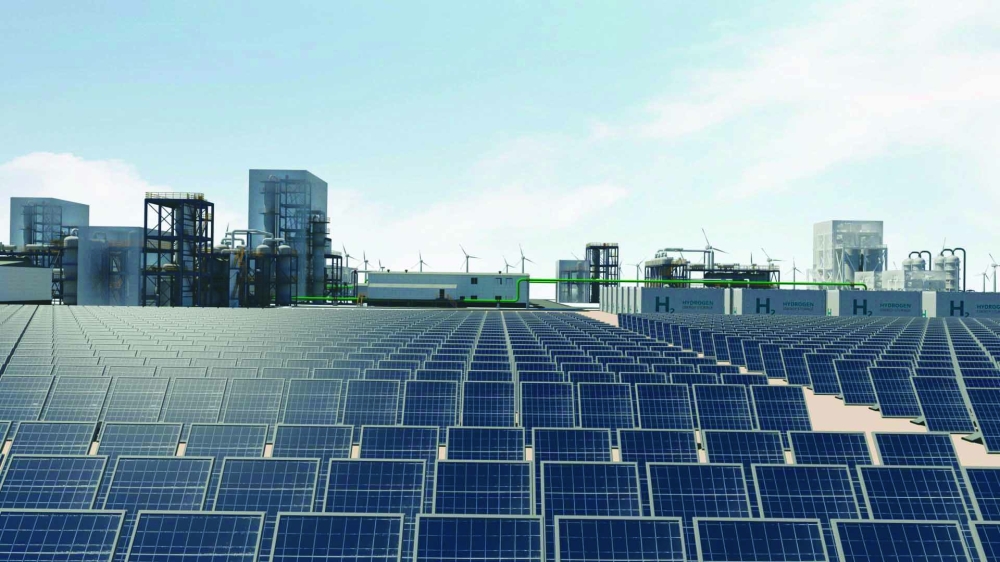
Wave energy is not just about supplying electricity directly to the grid. It can also be a vital enabler of Oman’s green hydrogen ambitions. For example, if the 7 TWh/year applicable resource were directed into electrolysis at a conversion requirement of roughly 50 kWh per kilogramme of hydrogen, Oman could theoretically produce around 140,000 tonnes of hydrogen per year. While only illustrative, such calculations underscore wave energy’s role in positioning Oman as a competitive player in the emerging global hydrogen economy.
CHALLENGES ON THE HORIZON
Despite the promise, significant challenges remain. Wave energy technologies are still emerging, with issues of durability, cost and maintenance in harsh marine environments requiring further innovation. Integration into Oman’s existing energy infrastructure will also demand strategic planning and investment. However, with supportive policy, targeted research and public-private collaboration, these challenges can be transformed into opportunities.
CHARTING A SUSTAINABLE FUTURE
Oman’s commitment to renewable energy is clear and wave power is now firmly on the national agenda. By leveraging its natural coastal advantage, fostering partnerships and aligning blue energy with broader green hydrogen and sustainability goals, the Sultanate of Oman is poised to turn waves into watts. In doing so, Oman not only advances its own Oman Vision 2040 targets but also sets an example of innovation and resilience for the wider region.
Oman Observer is now on the WhatsApp channel. Click here