




Text & Photos by Yahya Al Salmani
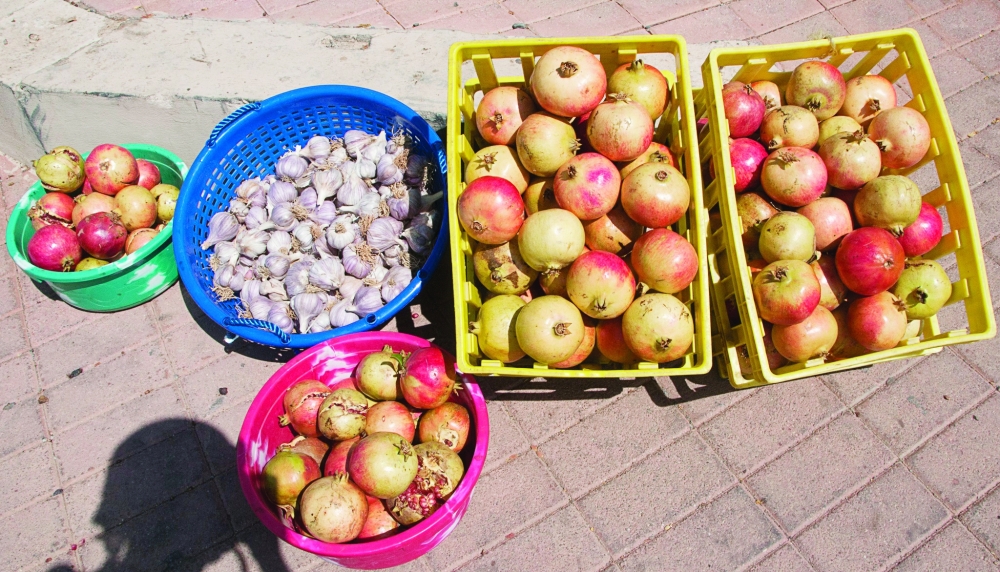
Since mid-August, farmers in Al Jabal Al Akhdhar have been busy harvesting pomegranates in what is being hailed as one of the best seasons in recent years. Pomegranates hold pride of place among the mountain’s agricultural treasures, symbolising both prosperity and heritage.
Visitors to the mountain now find its terraces transformed into a tapestry of green trees studded with ruby-red pomegranates. From sunrise, farmers — young and old — head to the orchards to pick the ripe fruits, which are then transported along winding mountain roads to nearby villages and major markets such as Nizwa.
According to data from the Ministry of Agriculture, Fisheries and Water Resources, the region is home to around 27,000 pomegranate trees thriving across the mountain terraces, with each tree yielding an average of 170 fruits. The season’s success is attributed to the plentiful summer rains, which helped eliminate pests and replenish groundwater levels, ensuring sufficient irrigation for the orchards.
Renowned for their taste and aroma, Al Jabal Al Akhdhar’s pomegranates enjoy a strong reputation across Oman and the Gulf region. Each year, the harvest attracts thousands of visitors who come not only to enjoy the cool mountain climate, but also to purchase the fruits directly from the farmers.
Scientific studies identify three main varieties of pomegranates grown in the area. The ‘sweet pomegranate’, known for its juicy texture and delightful flavour, dominates with nearly 25,000 trees. The ‘Qasam’ variety, though less watery, is equally cherished for its taste, while the ‘Al Qabsi’ type — introduced from Tunisia — is recognised by its deep red peel and striking appearance.
The trees are distributed across various villages: Seeq (5,500 trees), Al Shuraijah (5,000), Hail Al Yaman (2,500), Wadi Bani Habib (2,500), Al Manakhir (1,500), Al Aqar (900), Al Ain (900), Al Qash’a (1,000), Salut (300) and Al Suwgra (700). Additionally, about 6,200 pomegranate trees are cultivated in home gardens, serving as both a food source and a means of income for local families.
Beyond its agricultural fame, Al Jabal Al Akhdhar also offers a wealth of geological wonders. The region’s towering peaks, rising nearly 3,000 metres above sea level, bear witness to millions of years of Earth’s history. Layers of ancient limestone reveal fossils of coral, sea sponges, oysters and fish bones — evidence of a time when these mountains were submerged under shallow seas.
Among the notable fossil sites are the Coral Park in Seih Qatna and others featuring marine snails, sponges and fish remains. Geological studies further suggest that Oman once had a humid, tropical, and even glacial climate before tectonic movements shaped the landscape into its current majestic form.
Today, Al Jabal Al Akhdhar stands not only as an agricultural haven but also as a natural laboratory — an open book of history where scientists continue to study the geological layers that mirror those deep beneath Oman’s oil fields.
Oman Observer is now on the WhatsApp channel. Click here