




BUSINESS REPORTER
MUSCAT, OCT 5
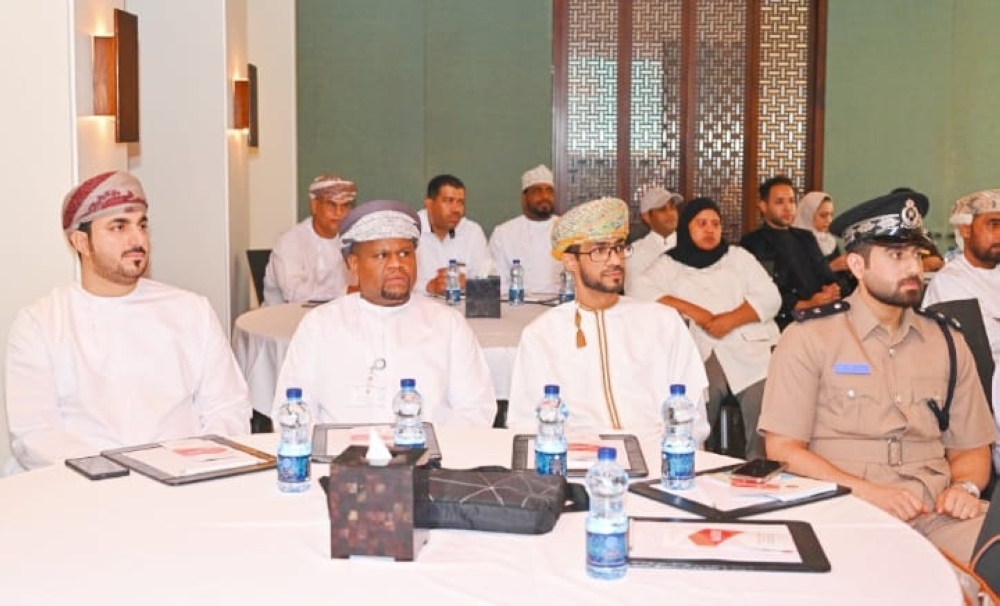
The General Federation of Oman Workers (GFOW) wrapped up its field programme entitled, 'Mechanisms for Reducing Human Trafficking Crimes in Tourism Establishments'.
The programme was organised in cooperation with the National Committee for Combating Human Trafficking (NCCHT), the Ministry of Heritage and Tourism, and the Sectoral Union for Tourism, in a step that reflects institutional integration and partnership in confronting this crime.
The programme included a number of tourism establishments, targeting both worker and employer representatives. It aimed to raise participants' awareness of the indicators of human trafficking crimes and methods of prevention, and to equip them with practical mechanisms for monitoring practices associated with human trafficking and addressing them within legal frameworks. This ensures a safe and fair working environment that protects both workers and visitors to tourism establishments alike.
In this regard, Jasim bin Hamood al Maliki, General Manager of the GFOW and member of the NCCHT, stated: "Omani legislation has been keen to protect workers' fundamental rights, particularly those relating to the freedom to choose work, ensuring workers are not compelled to work, protecting wages from unjustified deductions, regulating the maximum daily and weekly working hours, and guaranteeing the workers' right to access justice. However, recent international reports indicate a growing phenomenon of labour exploitation, which has become a danger to all societies, taking on new forms of victim exploitation. Forced or compulsory labour is a type of human trafficking, meaning the coercion of a person to perform a certain task under the threat of penalty, duress, or inhumane treatment, in order to restrict their freedom and drain their energy for the illicit gain of others.
From this standpoint, the role of trade unions is pivotal in monitoring the compliance of labour relations with legislation, in advising workers, in submitting complaints on behalf of workers who are afraid to do so themselves, and in their role of raising worker awareness and supporting national statistics. "This is the foundation from which the GFOW proceeds in implementing this programme, by strengthening the role played by trade unions in this matter as the first line of defence in combating forced labour and all forms of human trafficking," he said.
He added, "The GFOW plays a central role in combating this crime through integration with the national effort to counter the crime, supporting and participating in the plans of the relevant committees, organising awareness campaigns, participating in the drafting of legislation that guarantees labour rights, promoting concepts of decent work and disseminating good practices in labour relations, engaging in international cooperation with trade unions in countries that send foreign workers, exchanging relevant information, advocating for fair legal contracts, and training specialist trainers from among the workers in the field of combating human trafficking to be part of the essential awareness-raising process for private sector workers."
Accordingly, the GFOW was keen to implement this field programme and expand its scope, translating the shared commitment to protecting people and safeguarding their rights within the framework of the National Plan for Combating Human Trafficking.
Oman Observer is now on the WhatsApp channel. Click here