




WASHINGTON — A group of unions, higher education professionals, religious organizations and others sued the Trump administration Friday over its decision to charge a $100,000 fee for visas granted to skilled foreign workers.
The suit, which appears to be the first major challenge to the new fee for H-1B visas, argued that the change was unlawful because the president had no authority to unilaterally impose taxes or other requirements to generate revenue through the program, a power that is granted to Congress.
The plaintiffs also said the administration did not go through the required regulatory process to institute the fee, which they called “arbitrary and capricious.” And they asserted that the federal government failed to consider how the steep fee would harm hospitals, churches, schools, small businesses and nonprofits across the country.
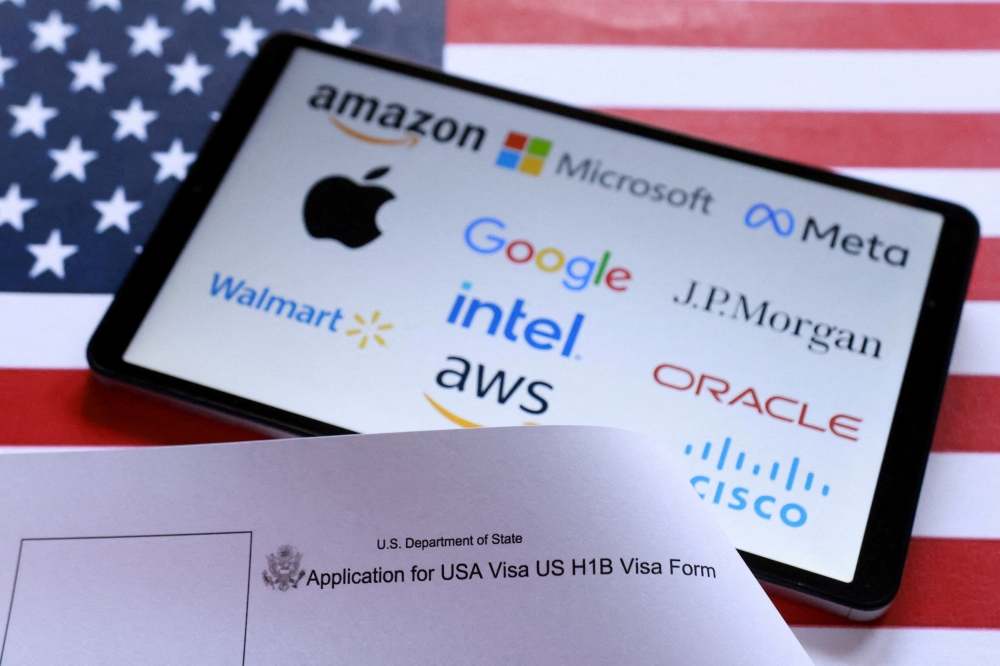
The suit, which was filed in the Northern District of California, comes after President Donald Trump signed a proclamation last month imposing a $100,000 fee for each new H-1B visa. The change set off immediate confusion and chaos, with many companies urging workers outside the United States to return before the change went into effect. The White House later clarified that the fee applied only to new visas, and that existing visa holders would not be affected.
The Trump administration has argued that the visa program has historically harmed domestic workers, and federal officials say the new fee will help discourage companies from using H-1B visas to replace Americans with foreign workers. Some policy experts and immigration hard-liners have applauded the change, which they say will make companies prioritize which foreign workers they want to hire.
But tech startups, higher education leaders, and school districts have criticized the new fee, which they say will hurt their ability to fill critical roles and stay competitive. Health care associations have also said the fee would exacerbate physician shortages and worsen patient care.
Several immigration lawyers and advocacy groups, including the Justice Action Center, Democracy Forward and the South Asian American Justice Collaborative, represented the plaintiff group.
The Department of Homeland Security, which was named as a defendant along with Trump, referred questions to the White House. The White House did not respond to a request for comment Friday (an automatic reply noted that there were staffing shortages during the government shutdown).
The suit also argued that the president’s ability to restrict entry under the Immigration and Nationality Act did not allow Trump to impose the fee. Under the law, the president can suspend the entry of migrants if that would be “detrimental” to the interests of the United States. But the groups argued that the power was meant to “regulate and influence conduct abroad,” and that the proclamation “makes clear that it is concerned with domestic policy.”
It also contends that the change would harm the plaintiffs and the broader public.
The plaintiffs include the American Association of University Professors and UAW International, a union that represents thousands of workers, including in higher education. They also include Global Nurse Force, a business that is primarily based in California and helps hospitals fill vacancies for nurses, and Global Village Academy Collaborative, which provides services to its member charter schools in Colorado.
Nonprofit religious organizations that depend on H-1B visas to hire foreign workers with specialized language skills also brought the suit, including the Society of the Divine Word’s Chicago Province.
Global Nurse Force’s business model for its U.S. operations, for instance, depends on the H-1B visa program and the ability of health care facilities to afford the visa fees. The company places thousands of nurses at hospitals around the world, including in states like Washington, Ohio, Louisiana and California.
Most of the firm’s clients cannot afford to pay the new fee for each nurse, meaning the impacts have been immediate for the company, the suit says. If the fee remains in effect, the company will have to close its U.S.-based operations, which would result in the loss of millions of dollars in revenue, according to the suit.
“Without access to international nurses, their clients will be forced to reduce capacity in ICUs, emergency rooms and surgical units,” the suit says. “Wait times will increase and patient outcomes will worsen.”
The fee would also hurt K-12 school systems, resulting in the risk that districts lose “valuable teachers in both urban areas suffering from staffing shortages and in rural districts where teachers are difficult to recruit,” according to the suit.
And the groups contend that researchers and academics would be hurt by the policy change. Some workers have received offers from universities that have now placed the processing of their H-1B visas on hold indefinitely because of the new fee, the suit says.
Karen Tumlin, the founder and director of the Justice Action Center, underscored that the H-1B visa program was not used just by tech companies, but also by many other industries that rely on foreign workers.
“This is how we get French speakers for our high schools and nurses in areas of chronic shortages,” Tumlin said.
Some groups have applauded Trump’s reforms to the H-1B visa program, including the Center for Immigration Studies, a think tank that favors restricting immigration.
“For too long, loopholes in the H-1B program have allowed corporations to undercut American workers and depress wages under the guise of a labor shortage,” Elizabeth Jacobs, the center’s director of regulatory affairs and policy, said in a statement last month. “By imposing this new fee, the Trump administration is signaling that U.S. workers must come first, but meaningful legislative reform is still urgently needed.”
This article originally appeared in The New York Times.
Oman Observer is now on the WhatsApp channel. Click here