




Idris al Balushi
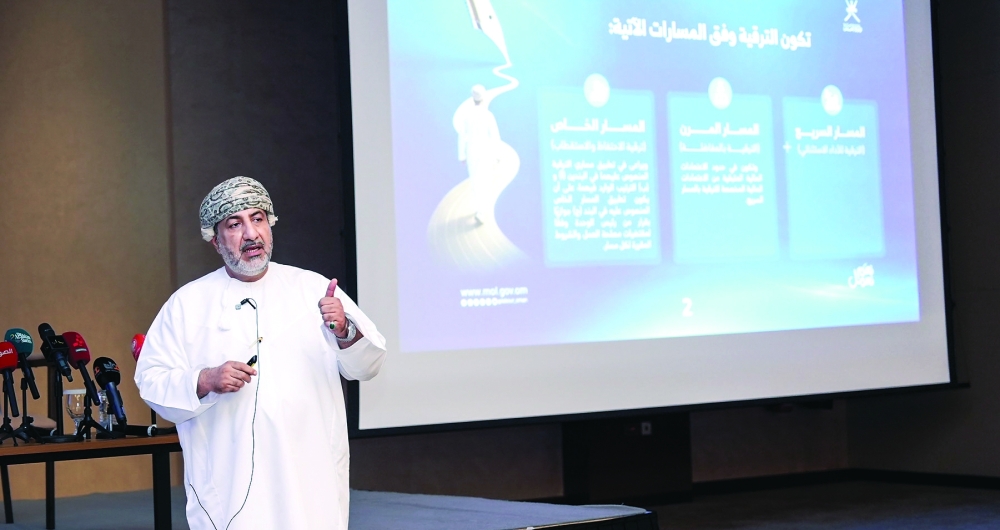
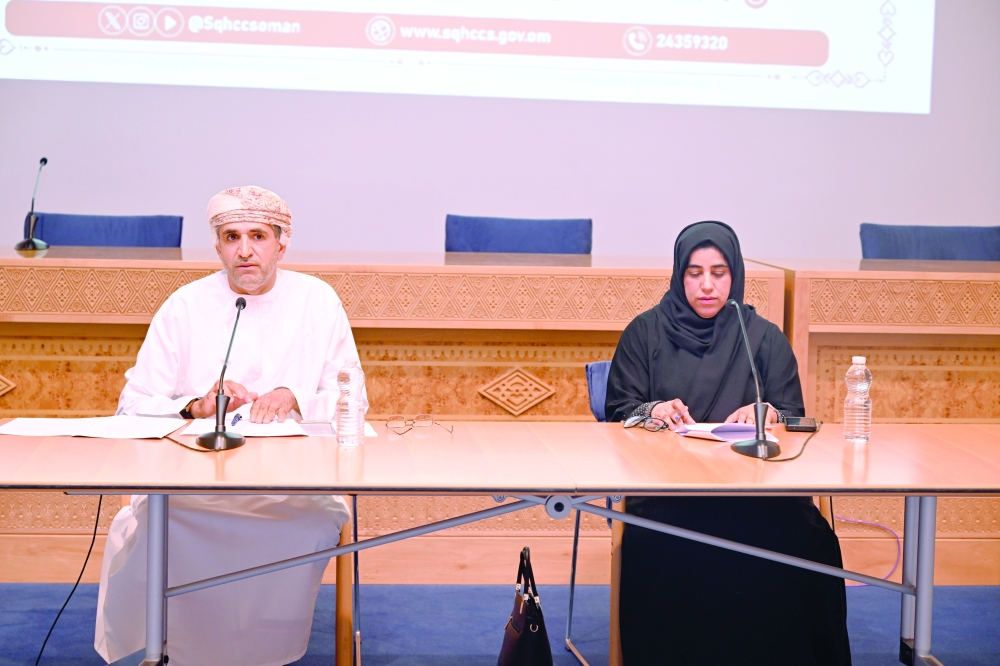
Muscat: Sultan Qaboos Higher Centre for Culture and Science recently held a dialogue session titled 'Oman in the Writings of European Travelers' presented by Dr Ibrahim Yahia al Busaidi, Assistant Professor in the Department of History at Sultan Qaboos University, and moderated by Dr Khulood Hamdan al Khatri from the University of Technology and Applied Sciences.
Dr Al Busaidi touched upon the significance of travel literature, European travelers’ motives as well as their focus on Oman’s political, economic, and social aspects along with examples of prominent European travelers. He explained that travel and movement have been central to human life since time immemorial. He noted that travel literature is not merely a record of discovery but also a vital source of knowledge for historians, physicians, jurists, and social scientists.
Dr Al Busaidi stated that European interest in Oman was driven by multiple motives—political, religious, cultural, and economic. "Politically, Oman’s location on the route to India and its role in trade across the Gulf and East Africa made it a focal point of competition between European powers, particularly Britain, France, and earlier, the Portuguese," he said, pointing out that religious motives were tied to the age of geographical discoveries and missionary activity.
On the cultural side, Dr Al Busaidi mentioned that colonial powers aimed to study Omani society more closely. He referred to the laying of telegraph lines in 1864 as one substantial advantage that helped accelerate Britain’s surveys of Oman and the Gulf.
He noted that engineers and geographers were sent to map the land, document its geography, and publish their findings in prominent geographic societies. "Economic motives played a key role. Oman’s trade, including its role in the coffee trade, drew European attention. In modern times, he added, oil exploration became central, with figures such as Edward Henderson from Petroleum Development Oman and Ian Skeet from Shell Petroleum documenting their exploratory journeys across the country," he said.
Oman Observer is now on the WhatsApp channel. Click here