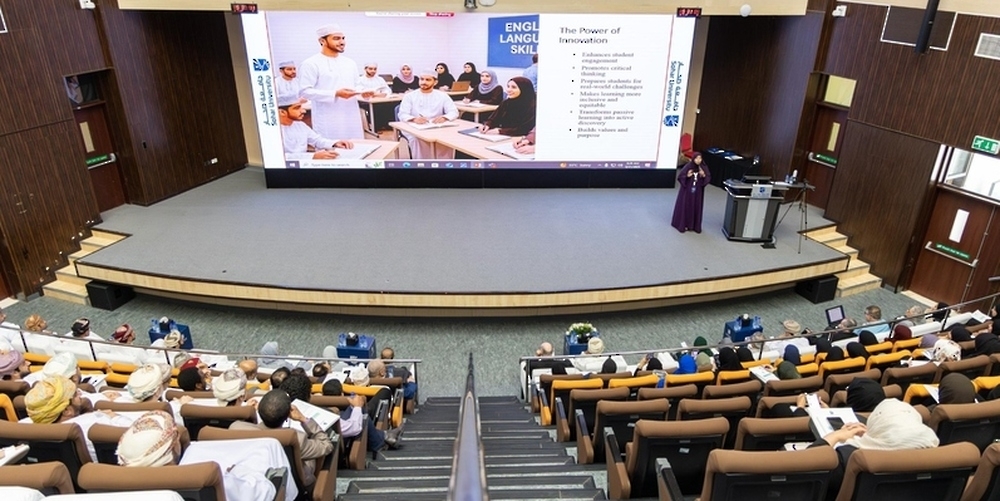
“Would you relate music to economics?” I asked my university students one morning while teaching economics. The classroom grew silent for a moment. One of the students sitting near the window looked at me with surprise, as if I had mixed two worlds that do not belong together. “Do you listen to music?” I asked again. “Yes, we do,” they replied in chorus. “I need your support,” I told them. “What support do you want?” they asked. “I want each of you to write a very short essay of sixty words on music and the economy.” They were not very fond of writing, but eventually, they accepted the challenge. At that moment, I realised that this was one of the ways to let students think about economics in a creative and unconventional way.
The thought of music and economics together did not come to me by chance. It came after I watched a recorded presentation by Dr Rajish Nayak, the training director of the College of Banking and Financial Studies, who spoke about how music and musicians generate business, revenues, and profits.
It made me wonder; how does a song, just three or four minutes long, end up generating millions of dollars? How is that economic process constructed? To create a song, you first need lyrics, a poem written with meaning. You need a good voice, which means you need a talented singer. To give it life, you need a musician and instruments. And then comes the economics, the invisible hand that transforms a melody into a product for the market.
The theory of production explains it clearly. Land, labour, capital, and entrepreneurship are the four factors that produce goods and services. In music, the studio becomes the land, the singer is the labour, the instruments and technology represent capital, and the producer or director embodies entrepreneurship. When these forces combine in harmony, the result is a song ready for consumption.
Yet the creation alone is not enough. A song without listeners has no market value. This is where demand and supply come in. Economics tells us that when prices fall, demand increases. But in the world of music, demand is shaped more by culture, preferences, and emotions than by price.
A free song on the Internet may be ignored, but a concert ticket worth RO 50 might sell out in minutes if the singer is popular. Utility, not price alone, becomes the driver of demand.
One of my students asked during that session, “Sir, if music belongs to economics, then what market structure does it operate in?” I smiled and replied, “Think of monopolistic competition. There are countless singers, albums, and genres, all competing, but each one tries to be unique. The product is similar but differentiated, just as Coca-Cola competes with Pepsi, singers like Adele compete with Beyoncé, and in our region, local singers create their own cultural niches.”
Music streaming platforms like Spotify and Apple Music add another dimension. They are part of the platform economy, where value is not just in the song itself but in connecting millions of listeners with thousands of artists. The more users join the platform, the more valuable it becomes. This is the network effect, a phenomenon that economists study closely today.
“Can music really drive the economy?” another student asked with doubt in his tone. “Of course,” I replied. “Think of Michael Jackson’s 'Thriller'. It not only sold millions of records but created jobs for producers, dancers, designers, advertisers, concert organisers, and even the vendors outside the stadium selling T-shirts. That is the multiplier effect of one song.”
Keynesian economics comes alive here; spending generates income, and income generates more spending. A single concert ticket does not only pay the singer; it pays the sound engineer, the light technician, the hotel staff, and the taxi driver who takes you to the venue. It is the circular flow of income made visible through music.
Economics and music also meet on the global stage. South Korea has built an entire industry around K-pop, exporting it worldwide. The United States has been exporting jazz, rap, and pop for decades.
These countries have used their cultural comparative advantage to maximise revenues and global influence. Even behavioural economics finds its place here. Music influences emotions, and emotions influence choices. A cheerful jingle in an advertisement can make consumers buy a product. A patriotic anthem can move people to support local brands. Music, in this sense, becomes an invisible force in shaping economic behaviour.
When my students submitted their short essays, they were surprised at how closely music and economics are linked. Some wrote about how concerts generate employment, while others explained how streaming platforms reshape the way we consume songs. The more they wrote, the more they realised that economics is not just about numbers and graphs, but about people, culture, creativity, and even emotions. Music is not simply a background to life; it is an industry, an employer, and a driver of economic growth.
Let’s remember, economics is the study of life under scarcity, but life itself is never complete without rhythm and melody. Music is not separate from economics; it is part of it. When you buy a ticket, download a song, or even hum a tune that later drives you to buy a product, you are participating in the great orchestra of the economy. One gives you numbers, the other gives you harmony, but together they create balance.
Mohammed Anwar Al Balushi
The author is with Middle East College
Oman Observer is now on the WhatsApp channel. Click here