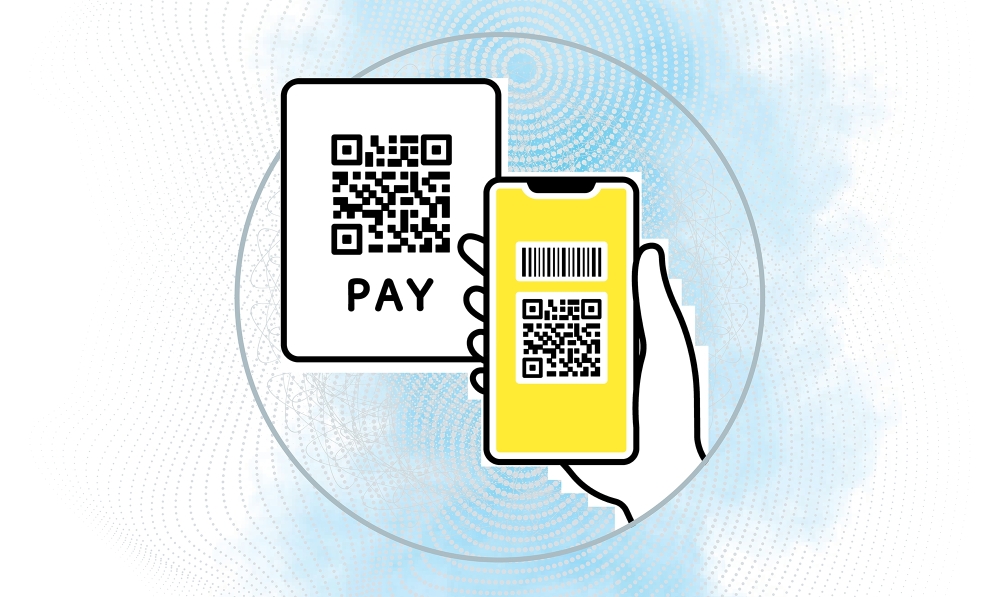





Muscat: In the bustle of Muscat’s coffee shops and supermarkets, there is one thing you rarely see anymore: cash. With a quick tap of a phone, a scan of a QR code, or a swipe of a card, payments are done in seconds. Money is no longer felt in our hands – it has turned into digits glowing on a screen.
For many Omanis, this shift is convenient, even liberating. For others, it quietly changes something deeper – the way we perceive the value of money itself.
“I don’t even think about carrying cash anymore,” says Maryam al Hadabi, a young professional who pays for everything from her morning karak to her child’s school fees through apps. “It’s fast, it’s clean and I feel safer. But sometimes, I wonder if I’m spending more than before, because I don’t ‘see’ the money leaving.” Her story is echoed across generations. Teenagers grow up ordering food with a swipe. Older generations, who once held banknotes tightly folded in their wallets, are gradually adapting to a cashless routine. “At first, I resisted,” admits Salim, a retired teacher in Nizwa. “But now, when my grandchildren show me how easy it is to pay my electricity bill on my phone, I can’t deny it saves me time,” Zuwaina al Balushi, a social psychologist, explains this subtle shift.
“When you hand over cash, you feel a physical loss. Your wallet becomes lighter. But with digital payments, it happens in silence. The brain doesn’t register the same sense of parting with money, which can lead to overspending.” Studies, she says, confirm this: people are up to 20 per cent more likely to spend more when paying digitally compared to using cash. “Convenience can blur our awareness of financial boundaries,” she notes.
The benefits of digital payments are undeniable. No more queues at the bank, no stress about carrying exact change, no delays in sending money abroad. For workers sending salaries home or families paying school fees, the new system saves time and energy.
Yet, as economist Ahmed Abdullah points out, “Convenience often comes with a hidden cost. When spending becomes too easy, financial discipline can weaken. That is why people need to set limits – budgets, alerts, or digital reminders – to keep track of their expenses.” Beyond money, there is also the question of community. Shopping used to be a social ritual – strolling through Muttrah Souq, chatting with vendors, bargaining for a better price. Today, much of this has shifted to silent clicks on a phone screen. While efficient, it can also feel isolating.
Of course, digital life has its risks. Fraud, phishing and online scams are concerns worldwide. In Oman, banks and telecoms are investing heavily in security, but as cyber expert Salem al Yahyaei stresses, “Technology is only as safe as the user. Sharing passwords, using weak PINs, or logging in on public Wi-Fi – these are the real dangers. Awareness is the best shield.” So, where does this leave us? The reality is clear: Oman, like the rest of the world, is moving towards a cashless future. Vision 2040 itself highlights digital transformation as a pillar for economic growth. The question is not whether this shift will happen – but how we, as individuals, will adapt to it.
Amina Said suggests starting at home. “Teach children early that every tap has value. Link their pocket money to a digital wallet so they can ‘see’ how their balance changes. This way, technology becomes a tool for awareness, not mindless spending.”
Meanwhile, Al Yahyaei advises families to treat apps as partners, not traps. “Use the budgeting tools, set monthly ceilings and get notifications. These small steps can make a huge difference.” In the end, the story of digital payments is not just about technology. It is about our relationship with value, choice and discipline. Money has always been more than paper or coins – it is trust, effort and memory. When it turns into mere digits, we risk forgetting what it really stands for.
But with awareness, we can ensure that the future of money does not take away our sense of responsibility. Convenience should not mean carelessness.
Because even in a cashless world, a rial is still a rial – and what matters most is how we choose to spend it.
Oman Observer is now on the WhatsApp channel. Click here