


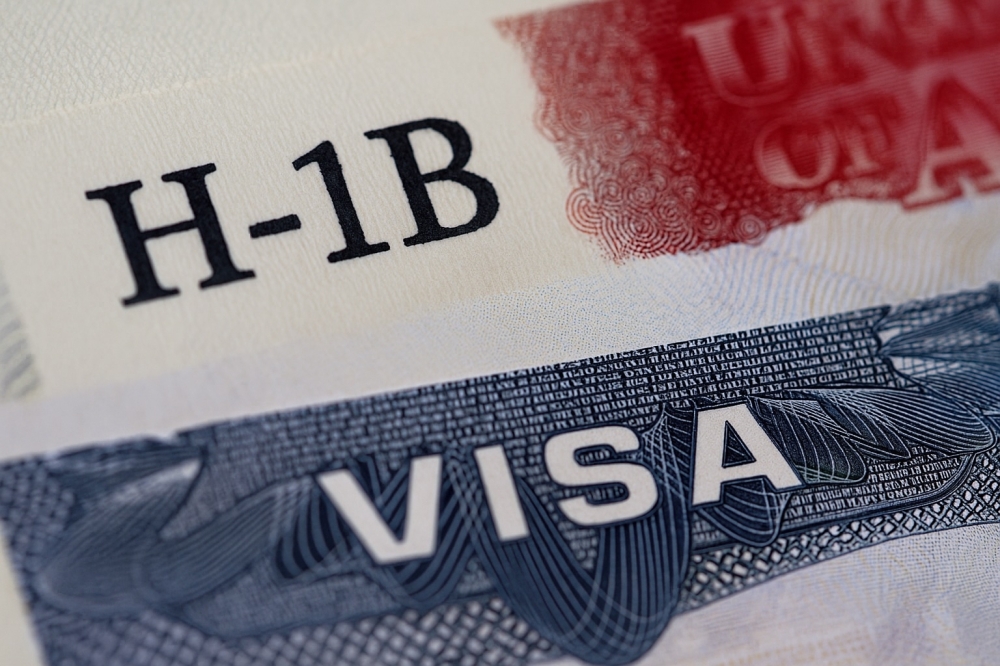





On September 19, 2025, the Trump administration issued an order imposing “restrictions on entry of certain non-immigrant workers”. A one-time fee of $100,000 will be levied on employers applying for a new H-1B visa petition. About three-quarters of a million US workers use the H-1B visa to provide high-skilled foreign labour in specialty occupations. This visa category requires a minimum of a bachelor’s degree or its equivalent. The law came into effect on September 21, 2025. The fee does not apply to existing or renewal cases; it specifically applies to new H-1B visas filed after September 21, 2025.
During his first term in office, President Donald Trump drastically reduced H-1B visa approvals, with a denial rate of 24% in FY 2018. Before this, in 2016, he explicitly stated, “I will forever end the use of H-1B as a cheap labour programme”. He also said that he would institute an absolute requirement to hire Americans first for every visa and immigration programme. Strangely, in a 2025 statement, he expressed support for the H-1B visa and the influx of highly skilled individuals coming to and settling in the US. This shift in stance is most likely linked to his alignment with tech companies, which supported him during his second term. American voter perceptions have also shifted gradually. According to The Hindustan Times in 2024, 60% of American voters believe that the US does not need more H-1B visas, while 26% favour hiring foreign workers.
Currently, the annual quota of 85,000 H-1B visas is distributed through a random lottery system. The US government also plans to reform the lottery by prioritising wages, ensuring that only high-skilled workers are retained. The new rule increases the H-1B fee from $2,000 to $100,000. More than 5,200 small companies may suffer if the new H-1B programme is implemented. The proclamation has created confusion and uncertainty, with many awaiting clarifications. Legal challenges may also arise due to its lack of clarity.
There are approximately 5.2 million Indian Americans and the Indian diaspora represents a significant presence in the US, particularly in the tech industry. Approximately 71% of H-1B visas are held by individuals from India. Indians account for 31% of the Silicon Valley workforce. In 2024 alone, 283,000 Indians received H-1B visas. Indians contribute 5–6% of the total US income tax, paying an estimated $250–300 billion in 2024. Sixteen Fortune 500 companies have Indian-origin CEOs, who employ 2.7 million Americans and generate over $1 trillion in revenue. About 40% of Google’s workforce is Indian. There are 59,000 Indian doctors in America, making up 22% of immigrant doctors. Since 2018, Indians have founded 72 of the 358 US unicorns. Despite these contributions, sentiment within the White House and among many Americans has fuelled fear, instability, anxiety and confusion about the legal status and future of the Indian diaspora in the US.
The reactions from other countries, however, are more welcoming. German Ambassador Philipp Ackermann stated that Germany welcomes highly skilled Indians and has assured them that its immigration laws are modern, reliable and predictable, without plans for fundamental changes. Canada is offering multiple skilled migration pathways. The UK, through its “Global Talent” programme, is considering abolishing visa fees for highly skilled professionals in select fields. Similarly, alternative destinations such as China and Australia are poised to benefit from the potential outflow of talent.
This H-1B rule marks a historic turning point in global skill migration, with far-reaching implications that will continue to unfold over time.
Oman Observer is now on the WhatsApp channel. Click here


