




Walk along the stone paths of Al Baleed at first light and you can almost hear the old port at work. Long ago, traders weighed frankincense and dates here. Scribes counted the goods. Wooden dhows waited for the wind to carry Dhofar’s products across the sea.
These remains are not only ruins; they are clear proof that Salalah sat on a wide trade network. Trees in the mountains gave up resin. Caravans crossed the plateau. Storehouses on the coast kept supplies safe until the monsoon brought the right winds. A local harvest became a global exchange.
Drive a short distance and the old rhythm returns in a new form. Containers rise like neat city blocks. Cranes move in careful patterns. Ships follow routes planned by digital systems rather than stars. Yet the purpose is the same as before. Salalah’s place on the Arabian Sea, close to Africa, the Indian subcontinent and the Gulf, still links people and markets. The words have changed — from bales and jars to pallets and TEUs — but the meaning is familiar. Goods arrive, goods depart and families build their lives around steady movement that creates jobs and income.
Salalah’s logistics story is larger than the port itself. Roads run inland, much like the old caravan paths. Farmers, quarry operators and small factories use these routes to reach customers far away. The airport adds another bridge to the world, turning a regional city into a meeting point for business, tourism and family travel. Systems matter: smooth customs, reliable warehouses, cold chains for fruit and fish; and strong training for young workers. Al Baleed once needed careful storekeeping and skilled harbour masters. Today, the city is a modern version of the same skills. Logistics is not only a business field; it is a public craft that keeps a city healthy.
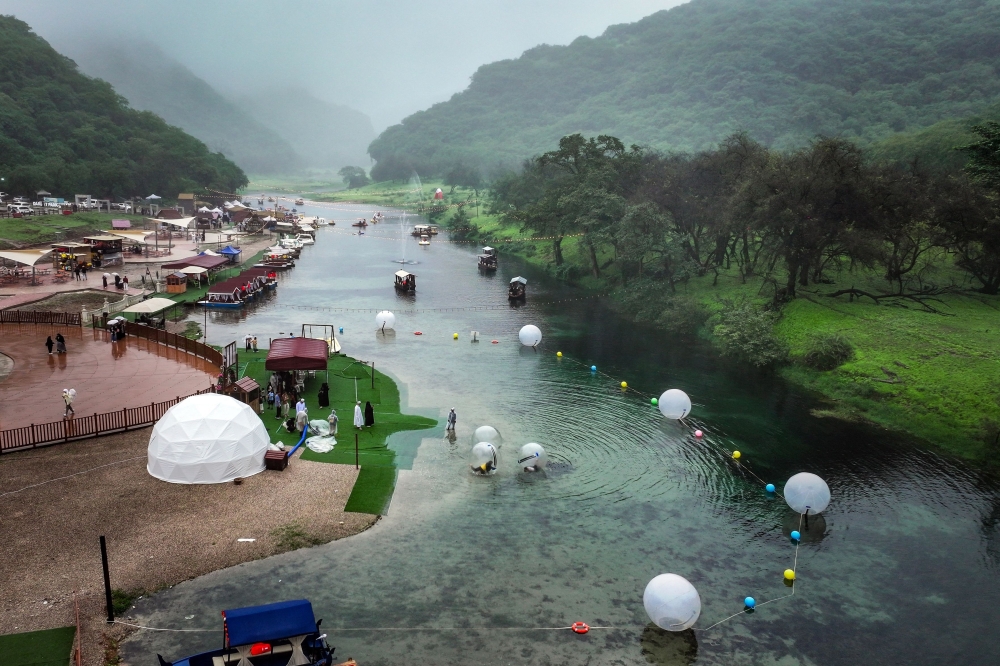
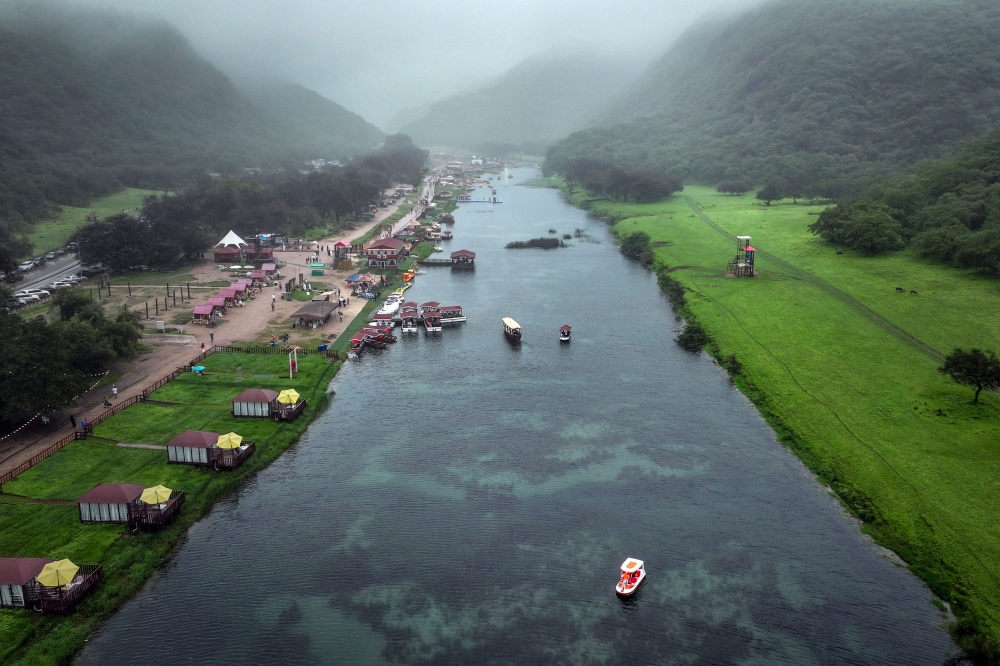
Then comes the season that shapes local life: the Khareef Dhofar Season. From late June to September, the southwest monsoon brings cloud and soft rain. The mountains turn green. Wadis fill. Waterfalls appear and become weekend plans. Temperatures drop and the air feels kind. Visitors come from across Oman and the region. They do not come only for photos in the mist; they come for the comfort of a climate that invites you to slow down and stay. During Khareef Dhofar Season, an extra economy grows, street stalls, small cafés, family rentals and hotel balconies lined with drying umbrellas. It is weather and culture working together.
Looking ahead, Dhofar Governorate is already moving on three major extensions aligned with Oman Vision 2040: the Port of Salalah’s capacity upgrade; the “New City Salalah” waterfront masterplan that will add a more walkable shoreline and public beach; and the dualisation of the Raysut–Al Mughsail road to smooth port–city–tourist flows during Khareef Dhofar Season. Together, these projects create a robust backbone for a marked walking route from Al Baleed to the harbour, seasonal pedestrian streets and joint port museum programmes focusing on cleaner fuels, digital tracking and logistics careers for Dhofari youth.
This mix of ancient port, modern hub and seasonal retreat gives Salalah a strong guide for the future. Heritage is not decoration; it proves that real diversification is possible and credible. Al Baleed and the Museum of the Frankincense Land demonstrate to students and visitors how trade influenced language, faith and craft on many shores. The working waterfront shows that these lessons still pay off when we turn them into efficiency, reliability and smart, green infrastructure. Between past and port lies the city itself: friendly neighbourhoods, long beaches and daily routines that keep transport, hospitality and services running even when the festival lights are gone.
Salalah’s charm is that nothing here feels forced. History is not locked in glass; it moves with the tide. Logistics is not an abstract diagram; it is the daily rhythm of shifts, berths, and backroads. Weather is not a backdrop; it is a main actor that scripts a generous season. Stand on the causeway at Al Baleed when the breeze rises and one line becomes clear: from a medieval port’s foundations, to the arc of modern cranes, to the hills drawing down the cloud. Along that line, Salalah repeats its promise, ancient passage, modern connection and a beauty that keeps calling people back.
Oman Observer is now on the WhatsApp channel. Click here