I have long been fascinated by how words carry weight beyond their letters — the way “veto” can mean paralysis, “victim” can become identity, “victory” can loom just beyond reach and “vanish” can describe the erasure of lives, rights, or memory. In the Israel-Palestine conflict today, these words are not rhetorical flourishes but tools of diplomacy and accusation. When a UN resolution is vetoed, when statehood is recognised, when genocide is verified — each term changes not just how the world talks, but how it acts or should act.
On September 21, 2025, the UK, Canada, Australia and Portugal joined over 140 other countries in formally recognising the State of Palestine. The count has reached 157 countries thus far. These decisions were driven by mounting frustration over the humanitarian crisis in Gaza, widespread civilian suffering and a sense that the two-state solution is slipping from feasibility into obsolescence.
But recognition has not been without controversy. Israel condemned the move as rewarding violence, undermining prospects for peace, and rejecting hard realities on the ground. Critics argue that recognition in the absence of enforcement — or demands for accountability — risks being seen as performative rather than transformative. These warnings underscore that affirming “victory” in word does not necessarily yield rights or change in deed.
Almost in parallel with moves towards recognition, the US again used its veto at the UN Security Council to block a resolution demanding an immediate, unconditional and permanent ceasefire in Gaza, lifting of aid restrictions and release of hostages. Fourteen of fifteen members supported the draft. The US defended its veto by insisting that the resolution lacked explicit condemnation of Hamas’s actions and did not sufficiently affirm Israel’s claimed right to self-defence.
For many around the world, this veto was not just an act of diplomacy; it was a statement about whose suffering is acknowledged. Palestinian envoy Riyad Mansour decried the veto as a failure of the Council to protect civilians in the face of what many UN bodies and independent investigators now say are atrocity scale harms. The act of veto, thus, becomes more than a procedural block — it becomes a political shield for action that many believe is morally and legally questionable.
This was the sixth such veto by the US in this conflict. The pattern suggests not occasional restraint, but structural shielding of Israeli actions despite near-universal Council support for a ceasefire. It is a green light for Israel’s “campaign of annihilation.”
In recent reports, including a UN Human Rights Council commission established to examine the war, findings have identified evidence that Israel’s conduct in Gaza meets the criteria under the Genocide Convention. This includes claims of killing members of the protected group, inflicting conditions of life aimed at physical destruction, and preventing births.
Israel and its defenders reject the term. They argue that intent — a requirement under international law — is not proven, and emphasise Hamas’s role in the conflict, the asymmetry of warfare, and the complexity of distinguishing legitimate military targets from civilians in dense urban environments. Yet the calls for accountability are growing louder: protests, legal complaints and diplomatic rebukes. The term “genocide” may once have been unlikely, but it no longer feels beyond the realm of possibility.
Recognition of Palestine is important not just for symbolism; it opens legal and diplomatic doors. Recognising states can enter treaties, dialogue, and possibly increase pressure on Israel to adhere to international law. But without deeper measures, arms embargo, sanctions, or binding international mechanisms, it risks becoming a word rather than a tool. The US vetoes, meanwhile, demonstrate that power often trumps principle in international forums, particularly when legislation or resolutions threaten strategic alliances.
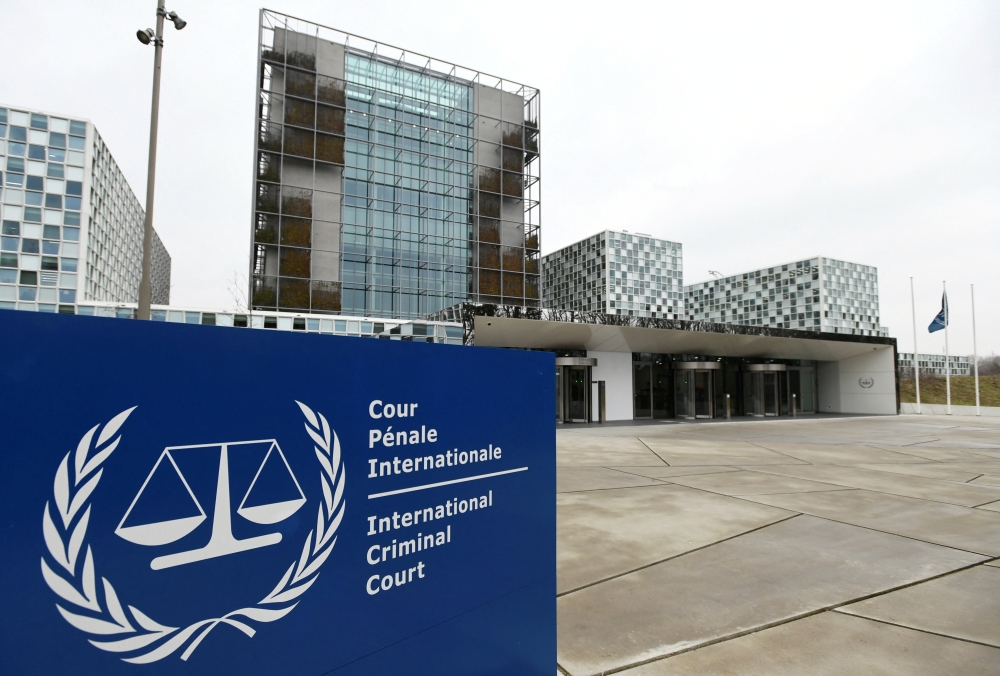
Accountability mechanisms must be strengthened: independent investigations, ICC referrals, greater scrutiny at the ICJ and transparency about civilian impact. If allegations of genocide are to be meaningful rather than rhetorical, evidence must be admitted, intent scrutinised and policies questioned.
Diplomacy, too, must adapt. States recognising Palestine should coordinate their policies, perhaps linking recognition to conditions: ensuring humanitarian access, ending settlement expansion, or protecting civilian infrastructure. Public opinion — now intensely anti-war in many Western countries — can be leveraged not just for pronouncement, but to build pressure for diplomatic consequences.
In short, veto, victim, victory — each word now carries implication and consequence. The recognition of Palestine by Western powers, the US’s repeated vetoes, and increasing affirmations of genocide mark moments when diplomacy, moral outrage and international law collide.
Israel has already hinted it will retaliate, via more annexation, expansion of settlements, diplomatic downgrades, or punitive measures against states that recognised Palestine. If such reprisals proceed and are left unchecked, we may see not just a collapse of diplomatic restraint but a deeper fracturing of the rules-based order.
If the world allows vetoes to silence suffering, victims to vanish and norms to erode, then recognition alone cannot save the Palestinian people. Israel’s actions — if allowed to proceed without meaningful checks — risk not just rendering the concept of statehood hollow for Palestine, but eroding the very integrity of international law. And when law falters, words rise to fill the void — not as neutral symbols, but as weapons, shields, and sometimes lifelines. They become the battleground where legitimacy is forged or denied, where victims are remembered or erased, where futures are imagined or foreclosed.
In the absence of enforceable justice, it is language that dictates who is seen, who is silenced, and who endures. That is both the danger and the possibility: words can entrench impunity, but they can also become the first stones laid on the path back to accountability. Yet therein lies a silver lining: this moment could also catalyse a new system — one where recognition carries real weight, where the impulse to shield aggression is countered by legal and political consequences, and where the possibility, however tenuous, of a more accountable world order might begin.
Oman Observer is now on the WhatsApp channel. Click here