




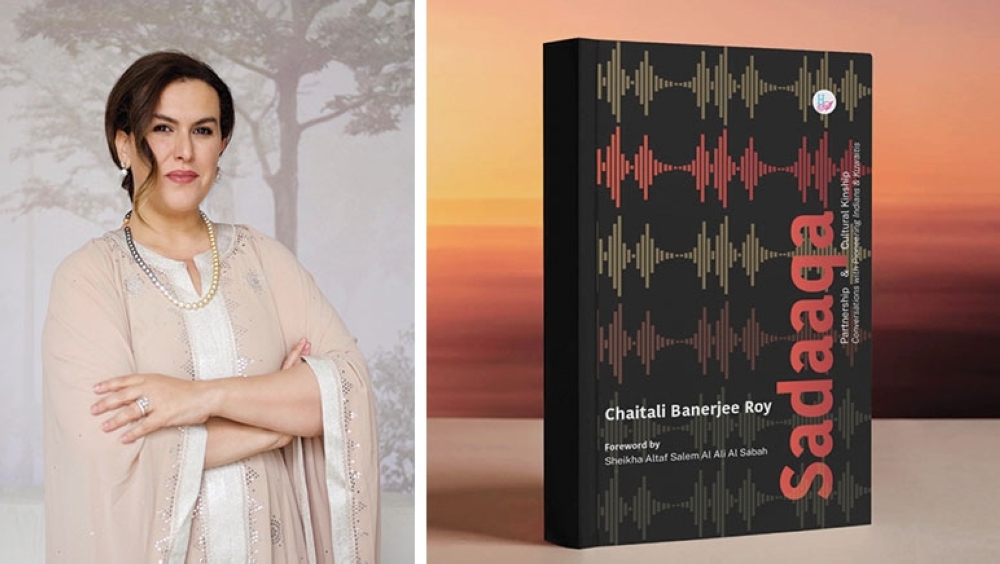
Long before oil reshaped the Gulf, Oman and India shared enduring connections through trade, migration and cultural exchange. These ties are vividly reflected in Sadaaqa: Partnership & Cultural Kinship by veteran cultural journalist Chaitali Banerjee Roy, a book that captures the spirit of friendship across the Gulf Cooperation Council (GCC).
The Arabic word Sadaaqa, meaning friendship, is not just a title but a philosophy that Chaitali weaves through her narrative. “In Oman, as in Kuwait, Indian families became trusted partners in trade and social development,” Chaitali explains. “Their stories of trust, adaptation and kinship echo across the region and continue to shape contemporary Gulf societies.”
For centuries, Muscat and Muttrah thrived as hubs for Indian merchants from Gujarat, Kerala and Sindh. They played a pivotal role in the spice trade, textiles and pearls, binding Oman and India in an enduring partnership. Even today, Omani souqs echo this shared legacy, with Indian fabrics, spices and jewellery adorning the stalls much like Kuwait’s historic Mubarakiya market.
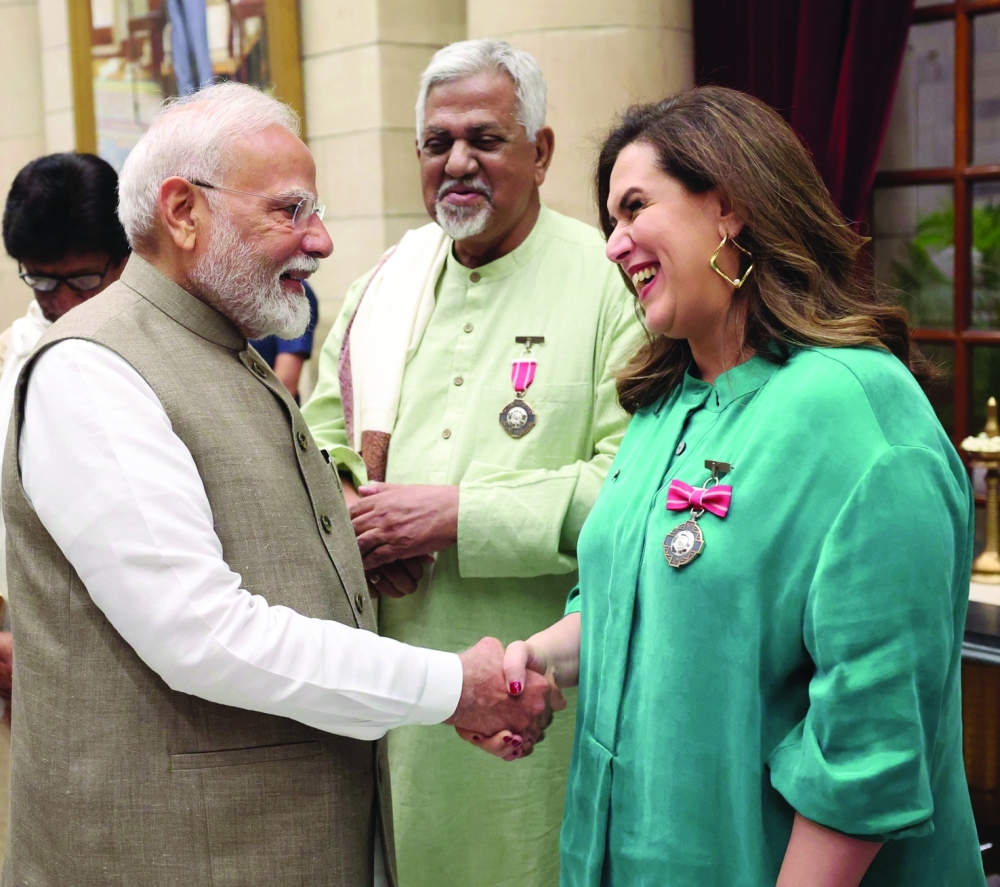
Chaitali narrates how, across the Gulf, popular culture has bridged worlds — from Kuwaiti singer Mubarak Al Azmi, dubbed ‘Kuwait’s Kishore Kumar’ for his flawless renditions of Hindi classics, to Sheikha Shaikha Al Sabah, Kuwait’s first Padma Shri recipient, who pioneered yoga’s integration into society. “Her journey mirrors the growing popularity of yoga in places like Oman, where Indian wellbeing traditions have become part of daily life,” Chaitali observes.Chaitali’s earlier work, Women of Kuwait: Turning Tides (2016), broke ground by chronicling the lives of Kuwaiti women. With Sadaaqa, she widens the lens to the entire GCC, preserving oral histories, family narratives and personal recollections that might otherwise be lost. “Heritage,” she writes, “is not a relic of the past but a living, evolving partnership.”
The foreword by Sheikha Altaf Salem Al Ali Al Sabah underscores this vision, situating Sadaaqa within a broader regional movement to celebrate cultural kinship.
Oman’s historic connections with Zanzibar further enrich the narrative. Just as Kuwaiti families recall summers in Bombay, many Omani families remember their ties to Mombasa and Dar es Salaam — a reminder that Gulf identity has always been global, woven through trade routes and human relationships.
As Oman advances its Vision 2040 and the GCC embraces cultural diplomacy and economic diversification, Chaitali’s book resonates powerfully. “In today’s Gulf, friendship is not a sentiment of the past,” she remarks, “but a foundation for the future.”
Ultimately, Sadaaqa: Partnership & Cultural Kinship is more than a book about Kuwait. It is a mirror reflecting Oman’s own narratives and a guide for future generations to understand that friendship across cultures is not an exception but the norm.
Beautifully designed by Anupa Dasgupta and published by Har Anand Publications of New Delhi, the book will soon be available on Amazon. For more information, contact chaitalibroy@hotmail.com.
The book draws parallels with Kuwait by profiling pioneering Indian families such as the Jashanmals, Oberois, Kohlis and Wadhawans, whose enterprises spanned multiple Gulf states, including Oman. The Jashanmal family, for instance, extended its Basra-founded enterprise to Oman, Bahrain and the UAE. “These are not just business stories,” Chaitali emphasises, “but living testimonies of friendship and resilience that knit together communities across the Gulf.”
Sadaaqa also highlights cultural bridges that resonate strongly in Oman. Wellbeing practices rooted in Indian traditions are becoming mainstream, while Omani–Indian intermarriages and the presence of Hindu temples in Muttrah stand as visible reminders of a shared cultural fabric.

Oman Observer is now on the WhatsApp channel. Click here