




Britain, Australia, and Canada all said Sunday that they now recognize a Palestinian state, widely expected moves that mirror similar plans by other US allies.
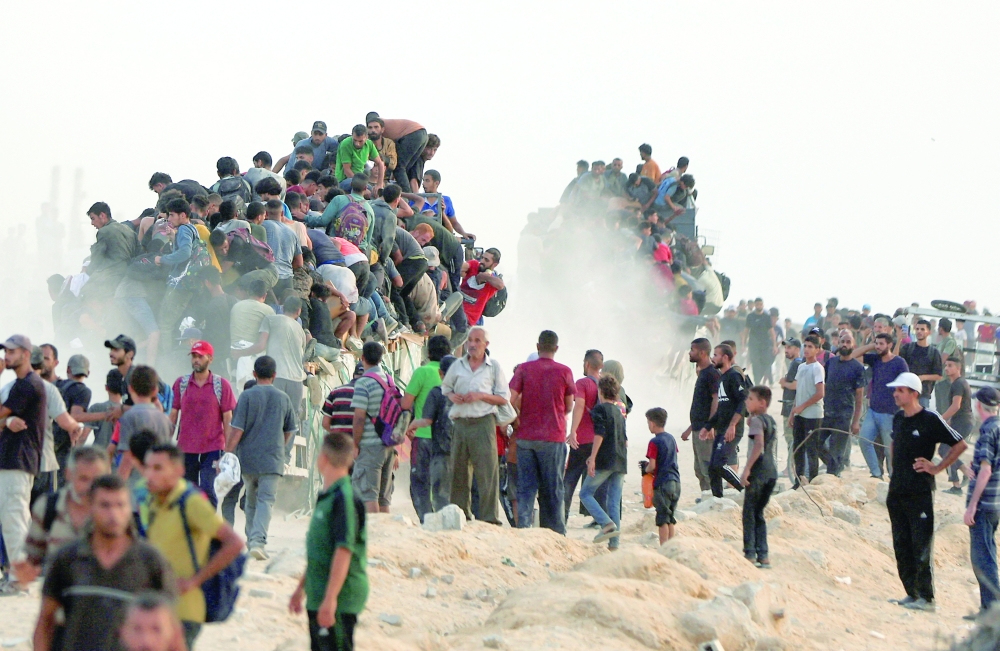
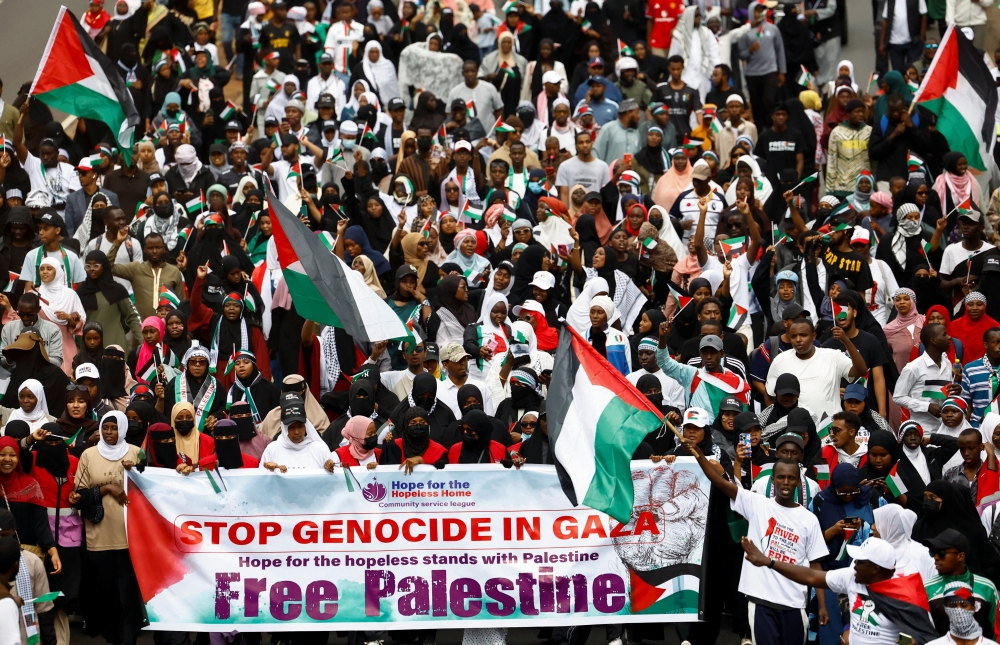
The development comes amid global outrage over Israel’s war in Gaza, which has killed tens of thousands of Palestinians and left much of the enclave in ruins. Last week, a United Nations commission investigating the war said Israel was committing genocide against Palestinians.
The announcements were made just before the annual U.N. General Assembly in New York, a gathering during which France and Portugal are also expected to vote for recognition of Palestinian statehood. The moves raise questions about what recognition of a Palestinian state means and what it can accomplish.
What is a state?
The criteria for statehood were laid out in an international treaty in 1933.
They include four elements: a permanent population, defined territorial boundaries, a government, and an ability to conduct international affairs.
Recognition is official acknowledgment that a would-be state broadly meets those conditions. It can occur even if an element, such as territorial boundaries, is in dispute.
Like all legal questions, “interpretation matters,” said Zinaida Miller, a professor of law and international affairs at Northeastern University.
The criteria for recognizing a Palestinian state have been met at a basic level, many experts on international law say.
A permanent population and land exist. The borders, while disputed, are broadly understood to be in Israeli-occupied territories, including the West Bank and Gaza, which were seized in 1967 in a war; as well as east Jerusalem, which Israel has effectively annexed.
The Palestinian Authority is a government body that administers part of the West Bank and represents Palestinians. Its creation was authorized by the Palestine Liberation Organization, which represents Palestinians internationally.
While there are limits to what the Palestinian Authority can do, given the Israeli occupation of the West Bank and Hamas’ control of Gaza, foreign recognition of a Palestinian state would mean the establishment of direct diplomatic contact between the Palestinian Authority and the recognizing nation.
Recognition would also send diplomatic and political messages. It would acknowledge the Palestinian right to self-determination and reject the positions and actions of the Israeli government that undermine that right, Miller said.
‘A basis for added pressure.’
A major consequence of recognizing Palestinian statehood is that it provides a basis for “a complete revision of bilateral relations with Israel,” said Ardi Imseis, an associate professor at Queen’s University Faculty of Law in Ontario and a former U.N. official.
A country that recognizes Palestine has to review agreements with Israel to make sure they do not violate its obligations to the Palestinian state. This would include political and territorial integrity, as well as economic, cultural, social, and civil relations, he said.
For example, if an aspect of trade assists Israel in violation of the rights of a Palestinian state, then the recognizing nation would have to cease that exchange.
“Practically speaking, recognition would provide a basis for added pressure to be brought to bear by civil society and lawmakers in the recognizing state” to change policies and align them with other requirements, Imseis said.
A recognizing nation would not have to stop all trade with Israel, said Paul Reichler, a lawyer who represents sovereign states and has argued for the state of Palestine at the International Court of Justice.
But if, for example, a country that recognizes a state of Palestine imports agricultural products from farms belonging to settlers in occupied territories, those agreements would be aiding and abetting the commission of a wrongful act, he said.
International law experts note that an advisory ruling from the International Court of Justice last year concluded, among other things, that the Israeli occupation of Palestinian territories violated a prohibition on territorial conquest.
A U.N. majority for recognition already exists.
Most countries in the United Nations — 147 out of 193 — already recognize a Palestinian state.
Since late July, five more countries — all U.S. allies — have announced their intention to join their ranks. First, on July 24, France announced that it would recognize a Palestinian state at the U.N. General Assembly this week. In the weeks that followed, Britain, Canada, and Australia announced that they, too, were prepared to follow suit. Then came Belgium, whose foreign minister announced that he would also recognize a Palestinian state at the U.N. meeting.
On Sunday, Britain, Canada and Australia all announced they were from that moment forward formally recognizing Palestinian statehood.
Britain and France carry particular heft because they are permanent members of the U.N. Security Council, with the power to veto any substantive council resolution, including on the admission of new member states.
The two countries would be strengthening the stance taken by most other nations and sending a political message, but their shift would also have a practical effect. They would join China and Russia in recognizing a Palestinian state and leave the United States as the sole permanent member of the Security Council with veto power that is holding out.
The state of Palestine currently has observer status at the U.N.; that will not change so long as the United States maintains its opposition to full membership.
What is the goal of recognition?
Some countries have made stipulations around recognition of a Palestinian state. Belgium’s is conditioned on the release of hostages and on Hamas no longer having “any role in managing Palestine,” the country’s foreign minister, Maxime Prevot, said on social media.
Britain had said it would move forward if Israel did not agree to a ceasefire with Hamas in Gaza by September. On Sunday, the country’s prime minister, Keir Starmer, said that “Today, to revive the hope for peace for the Palestinians and Israelis, and a two-state solution, the United Kingdom formally recognizes the state of Palestine.”
The Canadian government noted the Israeli government’s actions in Gaza and in the West Bank in its statement announcing recognition Sunday. Canada “offers our partnership in building the promise of a peaceful future for both the State of Palestine and the State of Israel,” Prime Minister Mark Carney said in the statement.
Although the declarations of Palestinian statehood may appear symbolic, “small steps” like recognition “make a contribution” to the goal of establishing two states, Reichler said.
“The only solution is two states, and it so happens that is what international law requires and is reflected in U.N. resolutions and in determinations of the ICJ,” he said.
Some nations, like Norway, once held off recognizing a Palestinian state in the belief that recognition would eventually emerge from a negotiated peace process. With that prospect looking dim and outrage over Israeli policies growing, some countries have put recognition first in the hope that it would lead to a peace process.
This article originally appeared in The New York Times.
Oman Observer is now on the WhatsApp channel. Click here