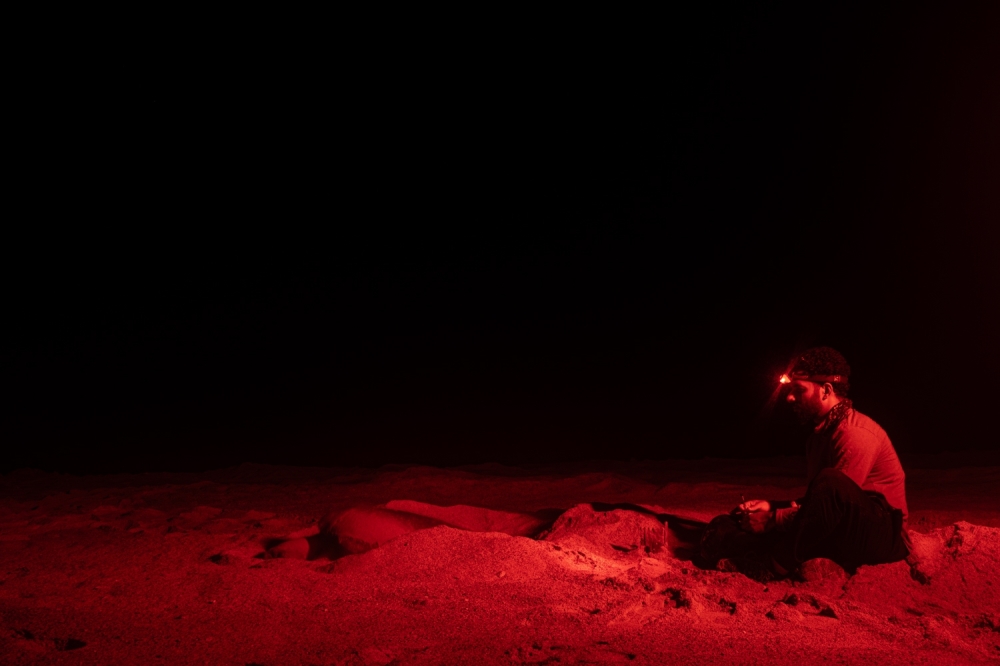
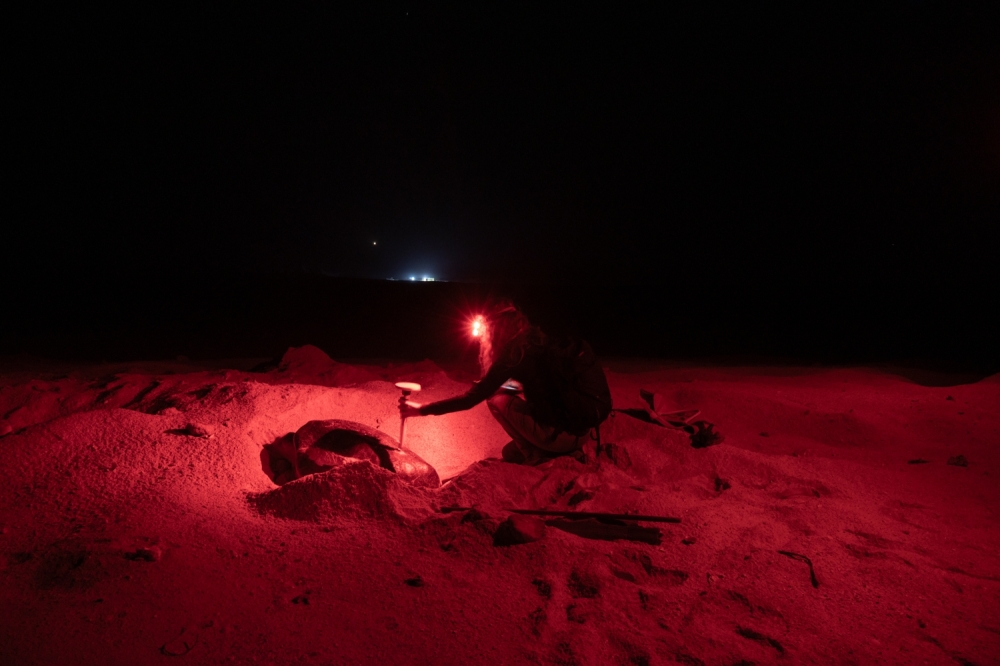





Under the moonlit skies of Masirah Island, Ammar and Antonia walk quietly along the shoreline, red torches in hand, scanning the sand for signs of life.
To them, these long nights are not just fieldwork but a calling — to protect Oman’s loggerhead sea turtles, creatures that have been nesting on these beaches for millennia.
Loggerheads once nested here in extraordinary numbers. “Back in 1977, Masirah accounted for 55% of the global nesting population,” Antonia recalls.
“Now it’s down to around 30–35%. The decline is dramatic.” Both researchers know the challenges are immense — plastic pollution, entanglement in fishing nets, light pollution, and coastal erosion — but they have chosen to face them one turtle at a time.
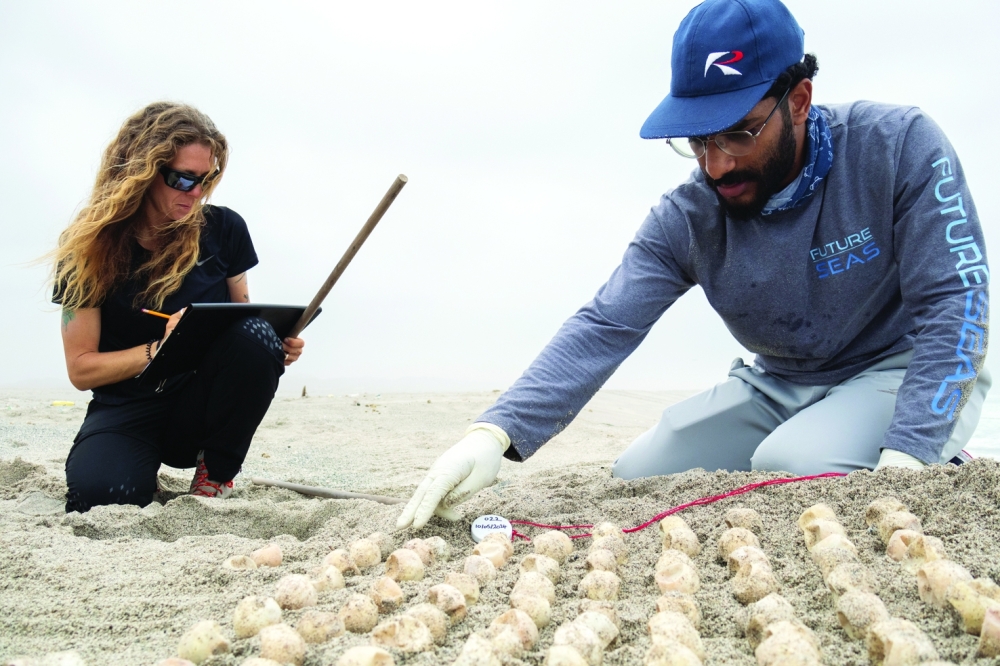
For Ammar, he patrols the beaches, recording nests with high-resolution GPS. “Every nest tells a story,” he says. “Sometimes all eggs hatch, sometimes none. Other times, a few make it. Our job is to learn why and to give more hatchlings a chance to reach the sea.” His role combines hands-on conservation and scientific research, a dual responsibility he fully embraces.
Antonia has spent several seasons working on Masirah and finds herself deeply connected to its rhythms. “July and August are the busiest months,” she says.
“We work through the night on the beach, then excavate nests at dawn. It’s exhausting, but when you see a hatchling make its way to the water under sunrise, every sleepless hour feels worth it.”
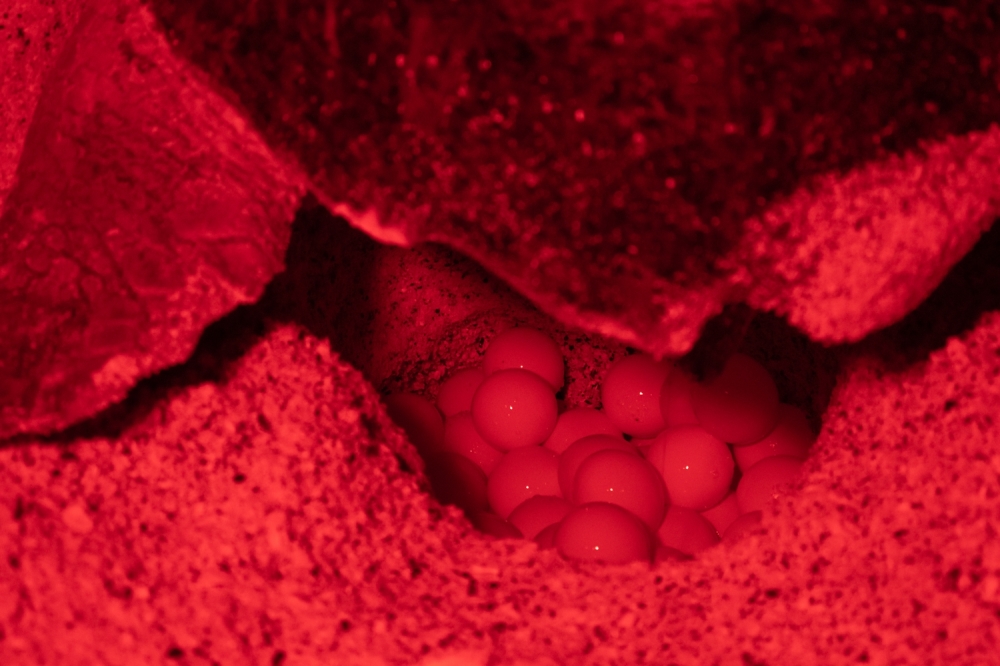
Together, Ammar and Antonia divide Masirah’s 83-kilometre eastern coast into six key study sites, returning to each nest after 60–65 days to document success rates.
They also measure nest temperatures, knowing that gender is determined by heat — warmer nests producing females, cooler ones males. “Climate change could skew this balance dangerously,” Antonia warns, highlighting the subtle but serious effects of rising global temperatures.
But their work isn’t limited to turtles. Through Future Seas, a local company, and with support from Ocean Ecology Network, they collaborate with Omani students, train ranger teams from the Environment Authority, and engage with the local community. Ammar puts it simply: “Ultimately, this has to be a shared effort and responsibility.”
Funding has come from international organisations like the National Geographic Society and Fondation Segré, but for Ammar and Antonia, success is measured less in grants and more in hatchlings.

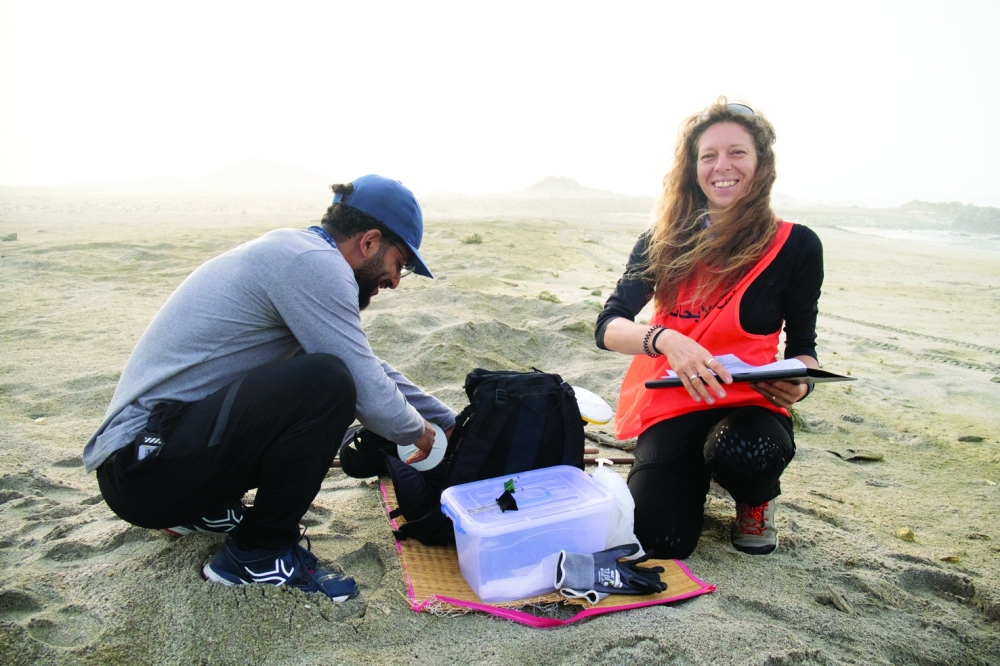
Still, outreach remains essential. “More people are hearing about Masirah’s turtles and visiting in greater numbers every year,” Antonia continues.
“That human presence can disturb nesting females, compact sand with vehicles, or even disorient hatchlings with bright lights. We need better awareness — signs on beaches, education for visitors — so the turtles are not put at further risk.”
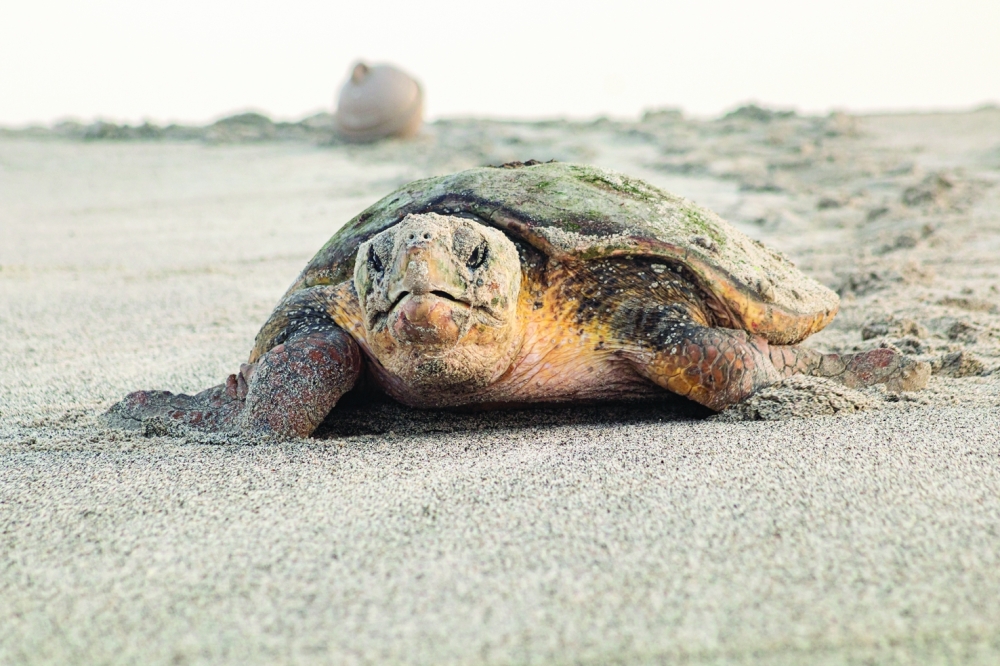
Despite the challenges, hope endures. Crouching low in the sand behind a cluster of rocks, Ammar whispers as he describes watching a turtle crawl back to the sea after laying her eggs: “They don’t eat during nesting season. One female will nest three to five times, returning every two weeks. You see them grow thinner, but they keep going. It’s inspiring.”
For Antonia, the lesson is simple but profound. “This isn’t just about turtles — it’s about coexistence. Finding ways for humans and wildlife to share this island.”
And so, under the silver light of Masirah’s moon, Ammar and Antonia continue their vigil; guardians of an ancient ritual, ensuring the turtles’ journey continues for generations to come.
Photos by: Tara Atkinson
Oman Observer is now on the WhatsApp channel. Click here