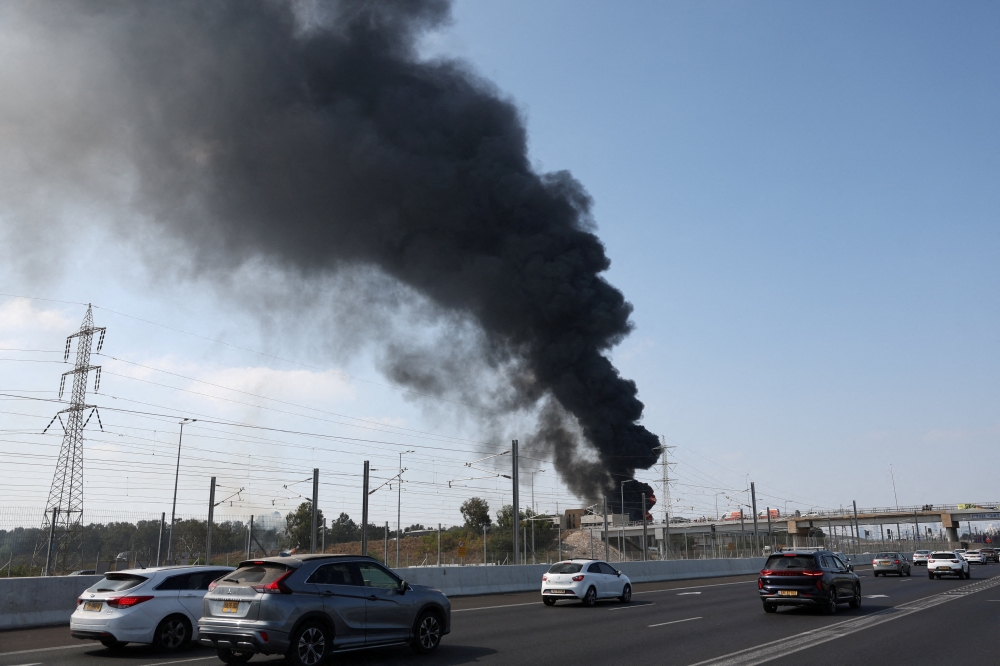
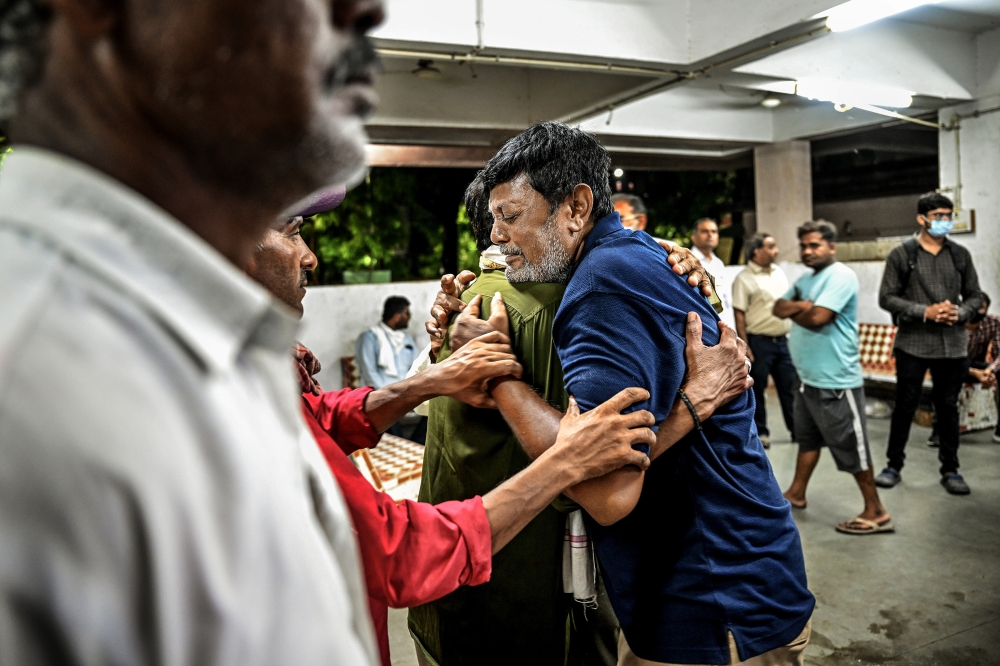
War is not merely the clash of armies on the ground or the roar of fighter jets in the sky. War runs deeper than maps, tanks, and battlefields. It is etched into the faces of people who have been forever changed, in the souls that no longer resemble who they once were, in the tears that do not dry even after leaders sign treaties declaring that the war has ended.
We did not live through the First or Second World War, yet their shadows linger in our collective memory. We know them through the heavy pages of history books, through grainy black-and-white photographs, and through the haunting reels of documentaries.
But one essential question remains: did those wars truly end the moment peace treaties were signed?
The great historian Eric Hobsbawm once described the 20th century as the “Age of Extremes,” because wars left no room for life to return easily to its ordinary rhythm. And the philosopher Hannah Arendt reminded us that the aftermath of war is never a simple return to what once was. Instead, it is a passage into a new life, one burdened by the memory of pain, a memory that refuses to fade.
Today, we witness faces that echo those old stories, except if they are not distant, they are here, in our time. From the Gulf War to Afghanistan, from Syria to Gaza, the world has been repeatedly scarred.
These are not just headlines flashing briefly on screens, nor statistics on casualty charts. They are real human stories, lived by mothers, fathers, children, and entire communities. We, in our comfort, often write, analyze, and philosophize. Yet we frequently forget the hidden dimension called: life after war.
Think, for a moment, of the woman who lost her husband, fiancé, or beloved. For her, the war does not end when the ceasefire is announced. It begins anew each morning when she wakes up alone. Ernest Hemingway, who experienced war firsthand, once wrote: “War does not end when the fighting stops. It ends only when the heart ceases to remember.” For countless women, remembrance is not a choice, it is their daily reality.
And what about the child who has lost his family? Who will guide his hand to school, who will read him a bedtime story? Psychologists describe this trauma as “survivor’s syndrome,” where children feel a strange and cruel guilt for having lived while their loved ones perished.
In literature, we see this in Cormac McCarthy’s The Road, where a father tries to preserve meaning for his son in a post-apocalyptic wasteland. Such fiction mirrors the truth faced by children in Aleppo, Kabul, or Gaza, children whose games have been replaced by nightmares.
The real war, then, is not only the one fought outside us but also the silent war within. Sigmund Freud, in Civilization and Its Discontents, argued that after war, humanity wrestles with an inner battle between the instinct to survive and the impulse to destroy. Even when guns fall silent, the psyche remains a battlefield.
Rebuilding cities, therefore, is never the end of the story. A house may be rebuilt with stone and concrete, but a broken heart resists easy repair. Walls can rise in months; souls may take decades or may never heal at all.
The French philosopher Albert Camus observed that “after catastrophe, man must discover a new meaning to live, otherwise he will lose himself even in times of peace.”
Every bullet fired does not simply kill one person; it extinguishes a universe of possibilities. A life that could have been lived, dreams that could have blossomed, stories of love, friendship, and childhood laughter that will never be told.
Leo Tolstoy captured this tragedy in War and Peace: the deepest loss of war is not only bloodshed, but the erasure of lives that might have been.
Yet, despite it all, life does go on. People return to their jobs, children are sent back to school, and governments begin reconstruction projects. Cities rise again but let us not confuse this with healing. For the human heart cannot be rebuilt with cranes and cement. Life after war demands courage greater than war itself, the courage to love again, to speak honestly, to build communities that stand beside the broken and bereaved.
We write endlessly about the politics of war, about its causes, alliances, and strategies. But how often do we write about the human being left behind? About the widow who longs for an embrace that never comes, the orphan who waits for a hand that will not return, the old man who dies with eyes fixed on the door, still hoping to see his son again.
The aftermath of war is, in truth, the ultimate test of our humanity. Do we learn from it? Do we change? Or do we simply repeat the same mistakes, scripting new chapters of pain? Perhaps we cannot stop all wars. But we can, at the very least, speak about them truthfully. We can remember that the deepest wound of war begins after the fighting ends.
And perhaps, if the world one day comes to understand this, it will finally realize that the greatest treasure in this life is neither power nor weaponry, but the human being.
Mohammed Anwar Al Balushi
The author is with Middle East College
Oman Observer is now on the WhatsApp channel. Click here