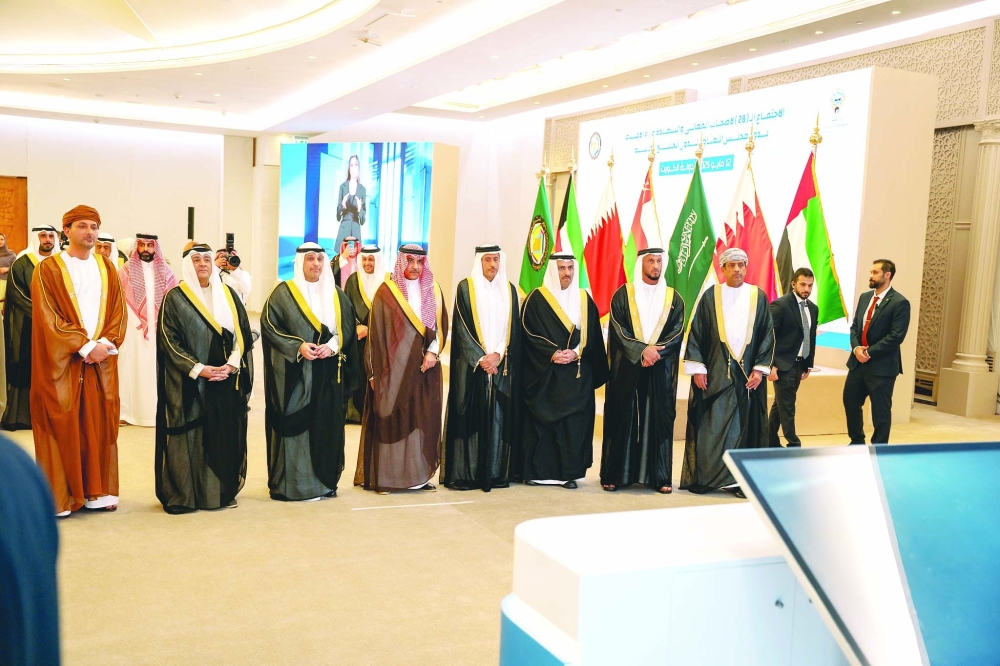
A recent event has brought new attention to the security of our Gulf region. On September 15, 2025, leaders of the Gulf Cooperation Council (GCC) met in Doha. This followed an Israeli attack in Qatar on September 9. At the meeting, Qatar’s leaders called for a “concrete” response. As a result, the GCC announced it will consider activating its joint defence mechanism. This important decision requires careful thought. It is necessary to understand what this step means for the future of our region’s stability and for the Sultanate of Oman.
First, we should understand the joint defence agreement. The Gulf Cooperation Council is a political and economic union of six member states: Bahrain, Kuwait, Oman, Qatar, Saudi Arabia and the UAE. In the year 2000, these countries signed a Joint Defence Agreement. This agreement states that an attack on one member is an attack on all members. The military part of the GCC is called the Peninsula Shield Force, which was created in 1984. Activating the defence agreement means this force, and other national forces, could be used to defend a member state that is under attack.
The discussion to activate this mechanism now is a direct result of the Israeli attack in Doha. The GCC called the attack a “brutal Israeli aggression” and a “direct threat to joint Gulf security”. This is the first time in many years that the GCC has so seriously considered using its joint defence powers. The goal is to show a united front and to deter any future attacks on a member state. This shows a strong message of solidarity among the Gulf countries at a time of high tension in the wider Middle East.
For Oman, this development has special importance. Our country has always followed a path of peace and dialogue in foreign policy. We believe in diplomacy to solve conflicts. Activating a military agreement must be balanced with our tradition of de-escalation. However, the security of our region is also a top priority. A stronger, more unified GCC defence posture could help protect important maritime routes in the Gulf, which are vital for our economy and for global energy markets. In my view, Oman can play a role in shaping how the defence mechanism is used, making sure it is for deterrence and not for starting new conflicts.
A collective defence system in the Gulf has wider effects. For our allies, like the United States, it could mean a stronger regional partner. For our rivals, it sends a clear message that the GCC states will protect each other. However, there are also risks. Any military action could lead to a bigger conflict, which would be bad for everyone. There is a danger of miscalculation. This is why it is very important for the GCC to create clear rules of engagement. The use of force must be a last resort, and it must follow international law.
Of course, some people may worry that activating this defence agreement will pull the GCC into conflicts that are not its own. They might argue that it is better to focus only on diplomacy. This is a reasonable concern. A military alliance can sometimes create more tension. However, diplomacy is always stronger when it is supported by a credible defence. The goal is not to seek war, but to create a security situation so strong that no country would dare to attack a GCC member. A strong defence can be the best way to keep the peace.
Looking ahead, the GCC states must move forward with calm and careful planning. The decision to activate the joint defence mechanism should be part of a larger strategy. This strategy must include continued investment in diplomacy and conflict resolution. It is important that the member states agree on the exact situations where the mechanism will be used. They must coordinate closely and keep channels for dialogue open with all parties in the region.
The move towards activating the GCC’s joint defence is a serious and necessary response to a changing security situation. It is a step towards greater self-reliance for our region. For Oman, it is a moment to combine our traditional wisdom of peace with the practical need for strong deterrence. If managed with care and foresight, a united GCC defence will not lead to war. Instead, it can be a foundation for a more stable and secure future for all the people of the Gulf.
Badr al Dhafri
The writer is head of proofreading and translation at Oman Daily Observer
Oman Observer is now on the WhatsApp channel. Click here