I spent last week in Hong Kong at the Belt and Road Summit, a gathering that feels like a living map. You can hear trade routes in the hallway, see ports and rail lines in a speaker’s hand gesture, and feel supply chains tilt policy.
On the margins, I witnessed the launch of Oman’s first Energy Transition Fund, a partnership that signals long-term confidence in clean energy. For a country anchoring the Indian Ocean’s crossroads, it felt like a milestone that speaks.
On stage, I drew a line between Muscat and Victoria Harbour, showing how a city built for deal-making can bridge green capital to projects. The conversation was practical. What does it take to move money with purpose? What proof gives investors courage? How do we thread climate goals through the fabric of trade?
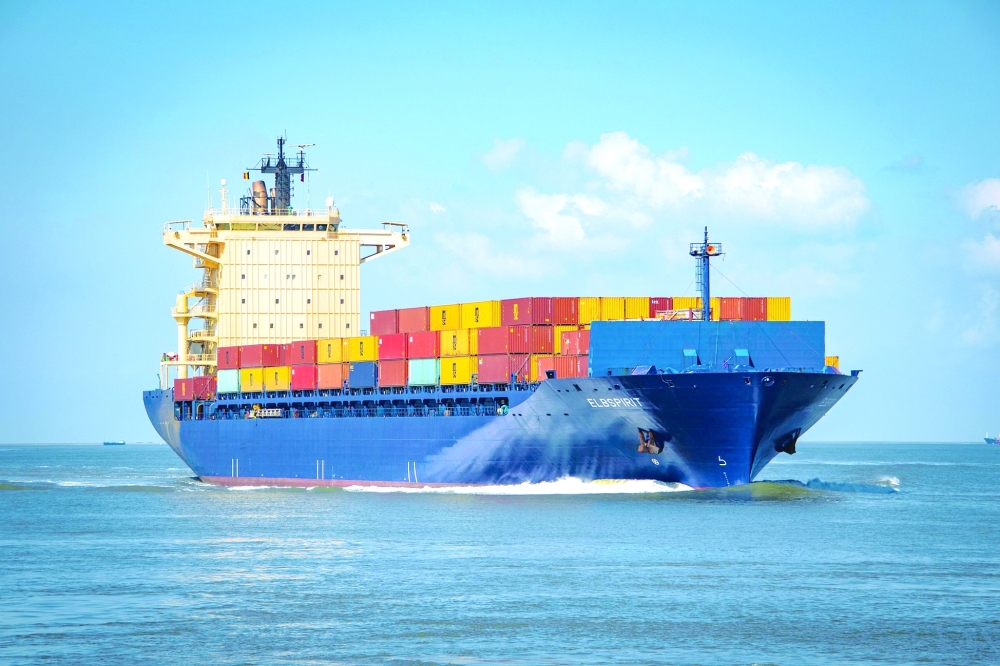
From that warm harbour on the South China Sea, my thoughts drifted north to a colder threshold. The Arctic is loosening, and with it a century of cartography. A northern corridor now promises a China–Northern Europe passage in about eighteen days. Time is shaved, and time is the coin every ship spends.
Trade has always chased the clock. A faster lane moves more than containers; it moves power and attention. It invites new calculations in boardrooms and ministries far from the ice. If a captain can save a week, a financier will rewrite a model, and a minister will weigh a different map.
Where does that leave us, here in the cradle of old currents? Oman knows its seas intimately: routes carved by wind and memory, ports shaped for service, and hands tuned to tide. But the clock ticks louder now. A vessel that slices through the Arctic in record time redraws not just maps but also expectations. The value will follow the velocity. We pivot with precision, not in panic, by utilising faster turnarounds, smoother permits, and molecules that whisper proof. Our corridors were always a bet on alignment, and they must also satisfy arithmetic, so if transit time narrows margins, we lean on what cannot be copied, on verified emissions and safety at every gate, and on partners who grow with us, not despite us. I hold this work close because it lives through people and through jobs and skills that span scientists and welders and negotiators and dreamers, and as the map shifts beneath our feet, the model inhales and widens, with electrons alongside bunkering fuel, with service yards where ships depart better than they arrived, with data that traces each tonne from sun to socket, and with policy as choreography that keeps each step aware of the next.
The launch in Hong Kong and the ice in the High North feel far apart until you hold them in the same palm: a ribbon and a route. One speaks of intention, and the other speaks of speed. Together, they pose a simple question. How do we spend our time advantage? Do we spend it by shaving minutes from a form, reducing grams from a footprint, or alleviating doubts from an investor’s mind? All three are within reach. I left the summit with sea salt on my face and a head full of maps. I think of cranes moving like herons at dawn. I think of a bow pushing through floes. I think of Muscat mornings where the air tastes of cardamom and tide. Routes are choices traced on water. Ribbons are choices tied to people. In the race for time, the finish line keeps moving, which is another way of saying the work continues. We will match pace with purpose, and let the results speak in their own clear voice.
Rumaitha al Busaidi
The writer is environmental strategist and advocate for sustainable development.
Follow her on LinkedIn@rumaithaalbusaidi
Oman Observer is now on the WhatsApp channel. Click here