




Tariq al Barwani IT expert
The scams are designed to scare people into giving up money or information. If you receive such a call, verify through official contacts and report it immediately. Don’t panic
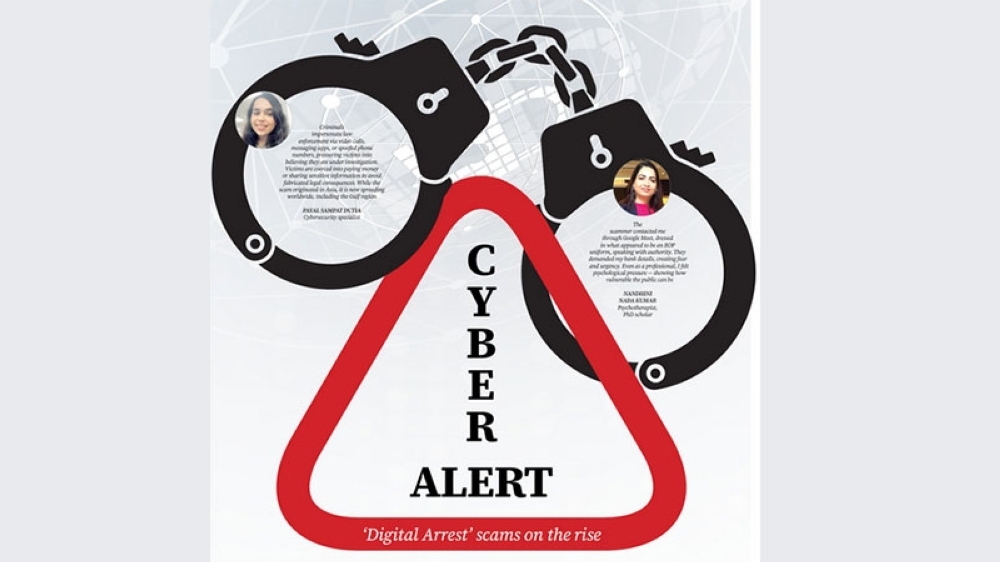
‘Digital arrest’ scams, a sophisticated form of cyber fraud, are increasingly threatening individuals worldwide, including in Oman. These scams involve criminals impersonating law enforcement or government officials, falsely accusing victims of criminal activities, and threatening immediate arrest to extort money or sensitive information.
The Royal Oman Police (ROP) has been actively addressing various forms of cybercrime, reporting several arrests linked to digital scams.
Authorities have urged the public to stay vigilant, avoid sharing personal information or documents without verification, and report suspicious calls or messages through official communication channels.
The ROP advisory emphasised that “protecting your information is a shared responsibility,” highlighting the growing sophistication of online fraud targeting unsuspecting individuals.
Cybersecurity specialist Payal Sampat Dutia, working in the oil and gas sector, explained that digital arrest scams exploit psychological manipulation to instil fear. “Criminals impersonate law enforcement via video calls, messaging apps, or spoofed phone numbers, pressuring victims into believing they are under investigation. Victims are coerced into paying money or sharing sensitive information to avoid fabricated legal consequences. While the scam originated in Asia, it is now spreading worldwide, including the Gulf region,” she said.
She detailed that fraudsters use caller ID spoofing, video overlays, or AI-generated visuals to make calls appear legitimate. Victims are accused of crimes such as money laundering or identity fraud and are threatened with immediate ‘digital arrest,’ creating panic and urgency that forces many to comply.
Tariq al Barwani, an IT expert, highlighted that no legitimate authority will demand payments over a call or chat. “These scams are designed to scare people into giving up money or information. If you receive such a call, don’t panic. Verify through official contacts and report it immediately,” he said.
Nandhini Nada Kumar, a psychotherapist and PhD scholar, recounted her own encounter with a digital arrest scam.
“The scammer contacted me through Google Meet, dressed in what appeared to be an ROP uniform, speaking with authority. They demanded my bank details, creating fear and urgency. Even as a professional, I felt psychological pressure — showing how vulnerable the public can be,” she said.
She added that these scams are deliberately structured to overwhelm logical thinking. “When confronted with apparent authority and threats of legal action, the brain’s stress response often takes over, making even educated individuals hesitate or comply. This demonstrates why these scams must be treated as a serious threat. Greater awareness, education and strong government measures are essential to protect people from falling victim to such manipulative crimes.”
Oman Observer is now on the WhatsApp channel. Click here