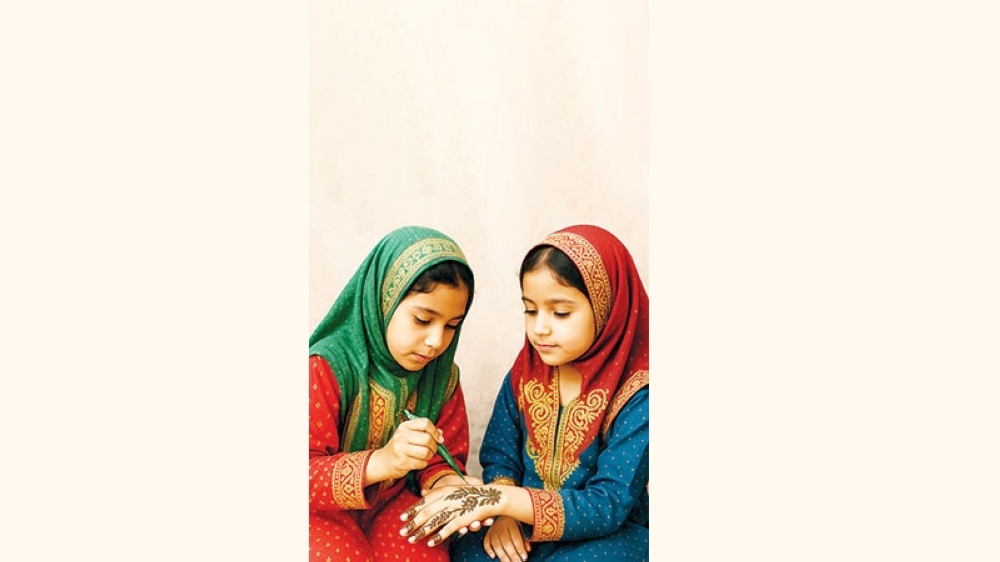





Henna has a unique character, distinguished by its inscriptions and drawing techniques. For generations, henna has been an integral part of Omani women’s heritage and identity, used on various special occasions.
Far from being a modern trend, henna’s roots stretch deep into history, affirming its enduring quality and longevity. Its presence in Omani culture was not solely for decorative purposes. Historically, henna leaves were picked, dried, ground, and mixed with crushed lemon and water when needed.
In an interview with Alia al Wahaibi, a talented henna artist, she shared: “The skill of henna tattooing is both a hobby and a talent—an income for many. I learned it by practising with my sisters. As I practised, my passion for it grew. I used to draw in sketchbooks with a pencil when I was just thirteen years old. Since then, I’ve been dedicated to perfecting my craft.”
In the past, preparing henna was a meticulous process, often done days before Eid. Women would knead the henna mixture and apply it to their children’s hands and feet before bedtime. Unlike today’s intricate patterns, early henna use was very simple, with no designs or motifs. Traditionally, henna leaves were used not only to beautify but also to heal ailments, ward off the evil eye, and attract good fortune. If applied on the head for an extended period, henna absorbed heat from the scalp, making it useful in treating sunstroke. Both men and women also used henna to address dandruff, bleeding, and deep wounds. Today, henna’s presence remains strong in Omani life. The henna night before a wedding, in particular, continues to be one of the most significant traditions, celebrated with joy and colour.
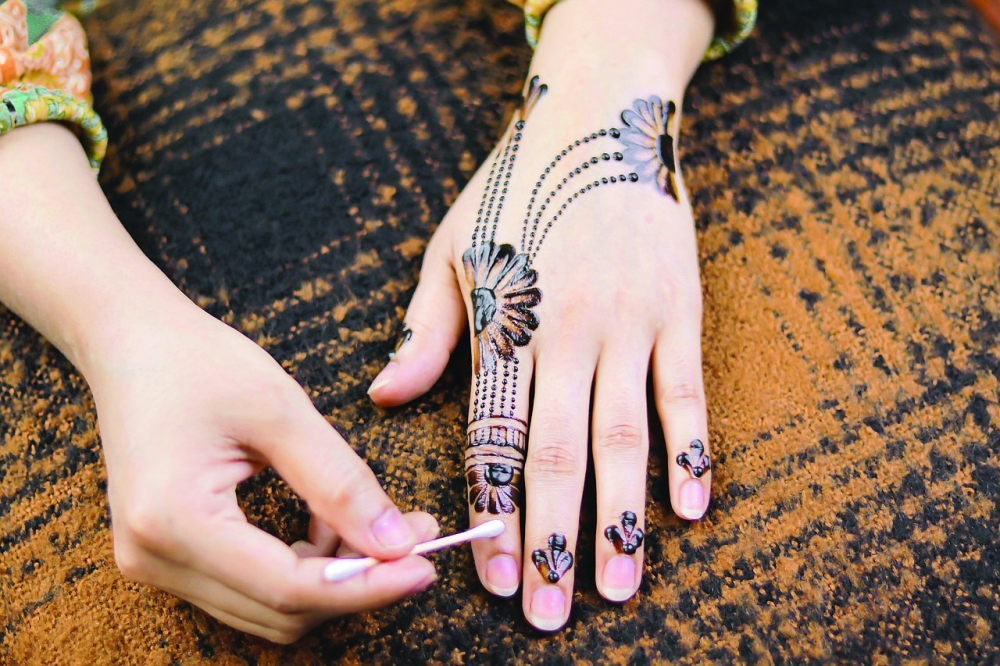
Henna holds great sentimental value for Omani women as a symbol of happiness and celebration. This importance has never waned, and henna remains a cherished part of Gulf traditions, including those in Oman. During wedding seasons, festivals, or summer nights, young women flock to specialised salons to adorn themselves with beautiful designs and the finest henna. The number of salons dedicated to henna tattooing has increased, making it a popular art form. For many women, henna tattooing is more than just decoration—it is an essential aspect of adornment and a symbol of joy.
In Omani society, henna signifies celebration and beauty. It is an indispensable part of a bride’s adornment on her wedding day, and applying henna on the wedding night, engagement day, or family gatherings remains a long-standing tradition. It is customary for close family members of the bride and groom to also apply henna, reinforcing these shared moments of happiness.
Alia mentioned that plant-inspired designs remain some of the most popular among women today. These include large floral patterns surrounded by smaller flowers, leaves, and delicate dots. “The beauty of henna depends on the precision of its design and the skill of the artist. These elements are often considered more important than the type of henra used,” she explains.
She emphasised that a skilled henna artist must be talented in drawing, capable of continually creating new designs that set them apart. Fashionable patterns evolve over time; traditional motifs remain timeless, but designers adapt and improve them continuously. From geometric shapes to intricate plant motifs and delicate ornaments, creating these designs is no easy task—only those with steady hands and artistic flair truly excel.
Alia also advises young women to perform a patch test before applying henna, ensuring their skin is compatible and avoiding allergies or reactions. For those with sensitive skin, she recommends using natural henna free from chemicals, which is gentler and safer to use.
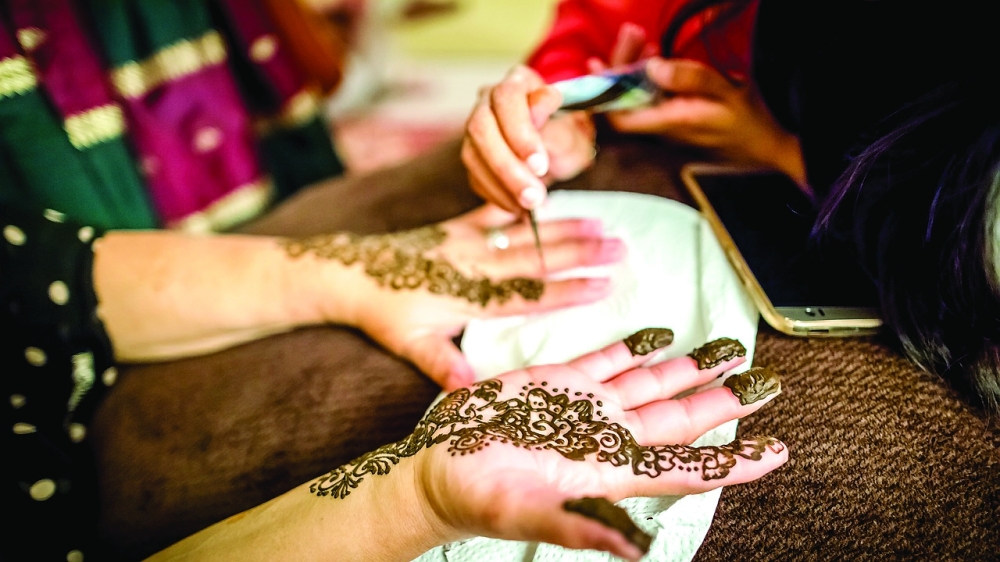
After application, women strive to maintain the rich colour of their henna for as long as possible. Once dry, it’s best not to wash it off with water. Instead, gentle peeling helps the henna adhere better to the skin. Beyond its aesthetic appeal, henna offers health benefits too. Traditionally, it has been used to nourish and purify the scalp, serving as a natural alternative to chemical dyes. Henna moisturises the hair, softens the ends, and is believed to help treat scalp issues such as dandruff.
While many still use henna for its medicinal properties, its primary purpose remains decoration—beauty with tradition. Recently, henna stickers have become popular for quick, easy designs. These offer a variety of styles, ideal for those seeking a swift, attractive solution.
Despite the demanding nature of the profession, henna tattooing remains a deeply rewarding craft, bringing joy, beauty, and a sense of cultural pride. Each intricate design is a testament to the artist’s skill and patience—a fleeting masterpiece that carries the weight of tradition and modern artistry alike.
Alia explains that beyond the artistic challenge, the most fulfilling part of her work is seeing her clients’ faces light up with happiness. “Whether it's a bride preparing for her wedding or a young woman celebrating a special occasion, knowing I’ve contributed to her joy makes it all worthwhile,” she says with a smile.
As henna continues to evolve with new styles and techniques, the essence of its cultural significance endures. It serves as a bridge connecting the past with the present—preserving a beautiful tradition while adapting to contemporary tastes. Whether through traditional motifs or modern, fashionable patterns, henna remains a vibrant symbol of life’s celebrations in Oman.
Oman Observer is now on the WhatsApp channel. Click here