







MUSCAT: Gulf Cooperation Council (GCC) countries posted notable progress on the Circular Carbon Economy Index in 2024, with the bloc’s average overall score rising to 41.5 from 37.7 in 2023, according to data from the GCC Statistical Centre (GCC-Stat).
The centre’s figures show that three GCC states lead the Middle East and North Africa on the index, which is a comprehensive assessment tool tracking the progress of 125 countries towards net-zero emissions through the circular carbon economy framework that balances mitigation technologies with enabling policies and tools.
The index comprises two main pillars. On the Performance Index — which measures the deployment of emissions-mitigation technologies — the GCC average rose to 35.8 points from 29.7 in 2023. The bloc also improved on the Enablers Index — which captures readiness for transition to a low-carbon economy — reaching 47.2 points from 45.6 a year earlier.
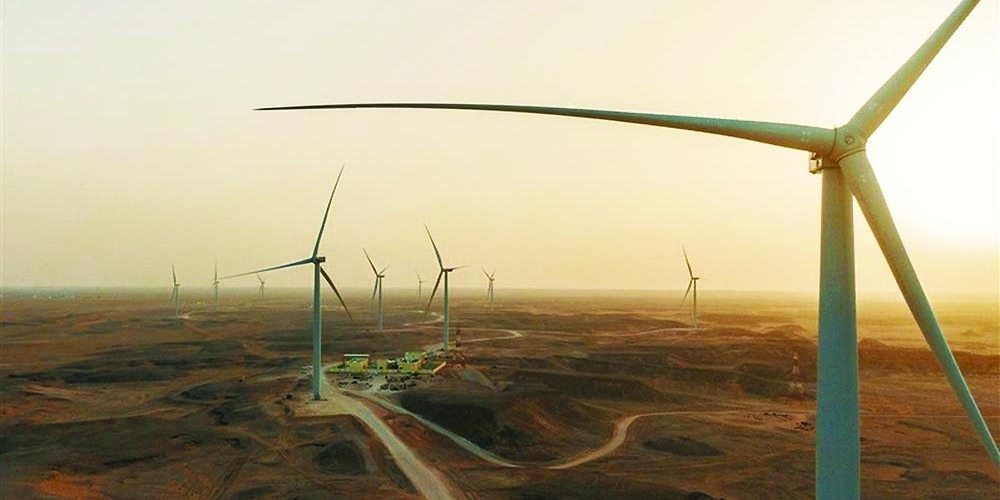
GCC-Stat data further indicates a step-change in the region’s contribution to global renewable power build-out. The GCC’s share of global installed (design) renewable power capacity increased to 0.43% in 2024, up from 0.03% in 2015.
The GCC Supreme Council underscores its adoption of the core pillars of the energy transition — energy security, economic development and climate change — supported by sustainable investment in hydrocarbon resources. Member states are pursuing the four pillars of the circular carbon economy approach: reduce emissions, reuse carbon, recycle carbon and remove residual emissions. — ONA
Oman Observer is now on the WhatsApp channel. Click here


