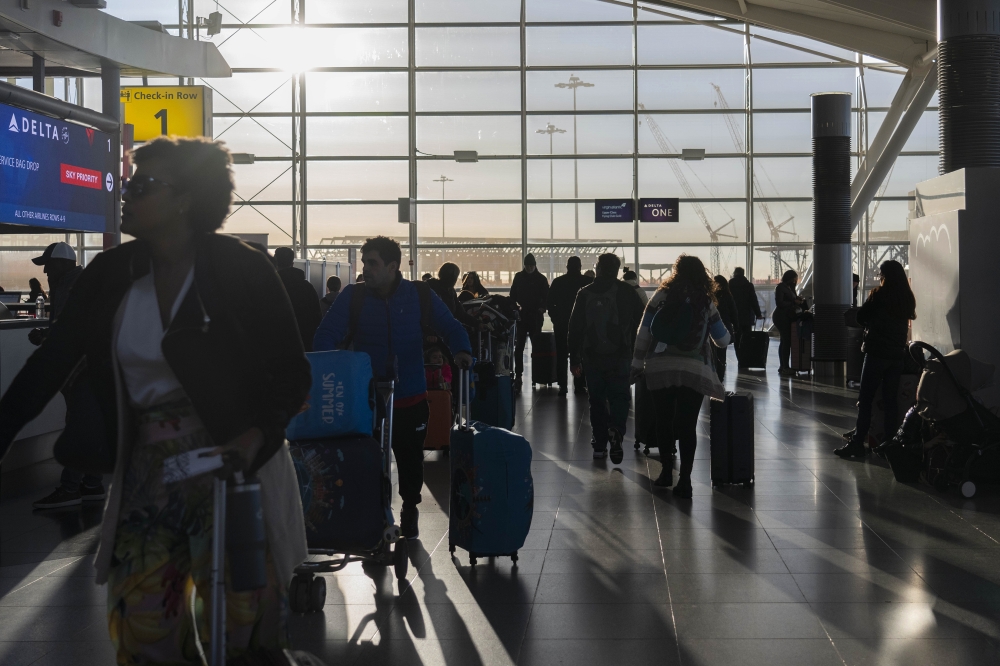
As a customer, it is our time to become critical of businesses and service providers. We cannot remain silent anymore. From banks to telecommunications, from fintech to education services, from shopping malls to airlines — customers are too often taken for granted. The question is simple: how can we pay for a service and yet struggle endlessly to actually receive it?
Let me begin with a recent personal experience that highlights this frustration. My journey was booked from Muscat to Bahrain and then onward to Moscow. On the surface, it should have been a smooth trip. Yet what unfolded was an example of how airlines—and many other service providers—fail to respect the very people who sustain them: their customers.
The first problem began even before leaving Muscat. The flight took off 35 minutes late. To some, that might not seem significant. But what does 35 minutes mean for a passenger? For one traveler, it could mean missing a crucial business meeting. For another, it might be the loss of a carefully scheduled medical appointment. Airlines rarely acknowledge these “small” delays, nor do they calculate the real cost they impose on passengers’ lives.
A 35-minute delay may be invisible on their balance sheets, but for customers, it is time, money, and opportunity lost.
The second, and far worse, issue arose upon arrival. Many passengers, including myself, found that our luggage simply did not arrive. Imagine being in a foreign country, exhausted from travel, only to realise that your clothes, essentials, and belongings are missing.
Does the airline measure the psychological stress this creates? Do they calculate the cost of disrupted plans, ruined schedules, and sheer anxiety that baggage loss inflicts? The answer is no. Instead, they treat it as a routine inconvenience, brushing it off as if passengers should simply accept it.
But this is not something we should accept. We pay for a complete service. When the baggage doesn’t arrive, when the flight is late, when call centers fail to respond, the contract between customer and company is broken.
In my own case, things went from bad to worse. I tried calling the airline’s customer service centers, only to find no answer. I wrote multiple emails—no reply. I attempted to contact their “customer experience” department — again, no luck. Out of sheer desperation, I even attempted to escalate the issue to the CEO’s office, but the doors were firmly closed.
So here lies the pressing question: what options does a customer have in such circumstances? File a legal case? Wait for connections or “wasta” to intervene? Why should it be this difficult in what we proudly call the “age of fast services”?
Technology has advanced, automation is everywhere, yet customers are still left waiting, voiceless and powerless.
This brings us to another fundamental issue—management accountability. Do airline executives truly deserve the astronomical salaries they receive while failing to deliver basic services?
Consider this: the average CEO of a major airline in the Gulf earns more than R0 300,000 to RO 600,000 per year in salary alone, not including bonuses and perks. Chief officers—CTOs, CFOs, CHROs, and even “Chief Customer Experience Officers”—can each earn between RO100,000 and RO250,000 annually, depending on the airline.
Let’s put that into perspective. An ordinary customer, like myself or you, RO 200 or RO 300 for a ticket, expecting reliability and care. Multiply that by the thousands of passengers boarding each day, and it becomes clear how airlines generate enormous revenue. Yet despite this, when customers face problems, delays, lost luggage, no communication—they are treated as though they don’t matter.
Customers must demand accountability, transparency, and above all, value for money. Airlines and other service providers must learn that their reputation is not built on marketing campaigns, but on every passenger, every call answered, and every complaint resolved.
Businesses cannot survive without customers. Yet too many behave as though they are doing us a favor by providing a service. The truth is the opposite: we keep them in business. Our money funds their salaries, their profits, and their bonuses. And therefore, we deserve to be heard, respected, and served with dignity.
Mohammed Anwar Al Balushi
The author is with Middle East College
Oman Observer is now on the WhatsApp channel. Click here