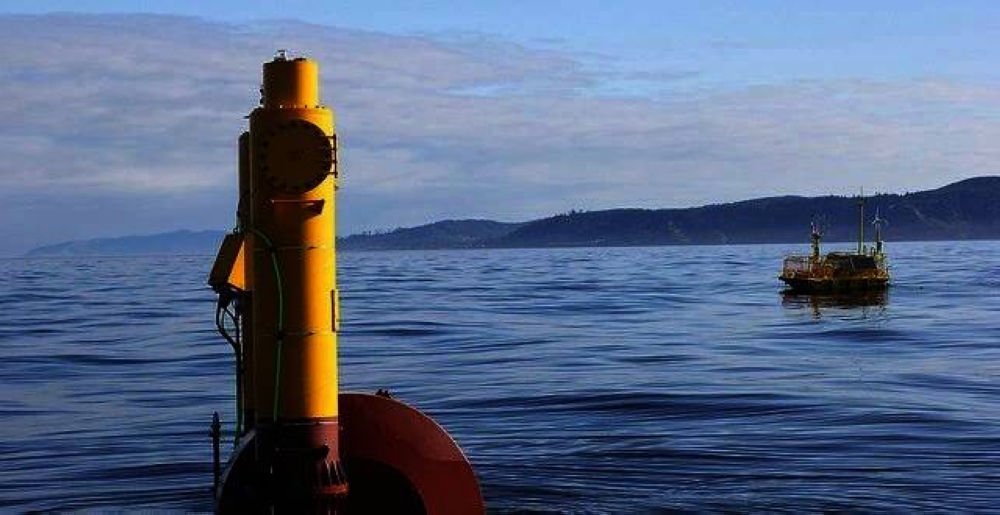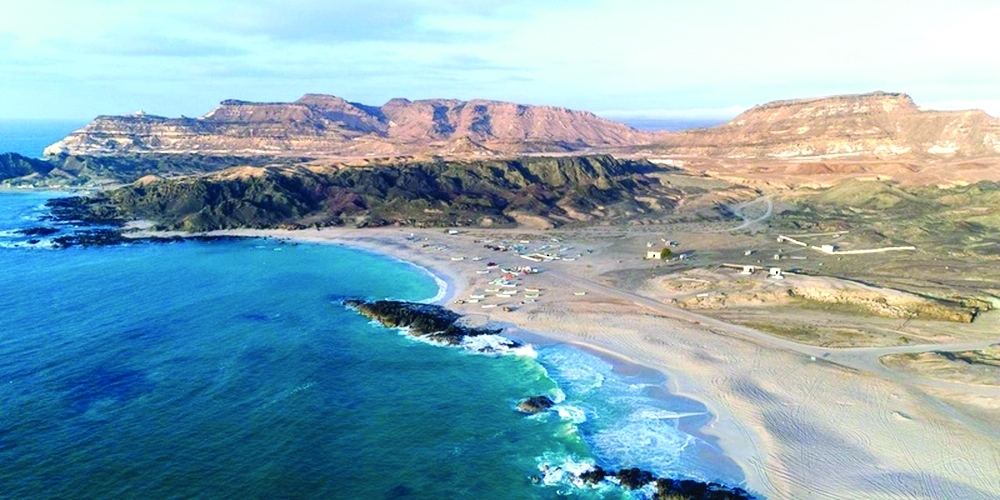





MUSCAT: A new study conducted by a joint team of Omani researchers has uncovered compelling evidence of significant wave energy potential off key stretches of the Sultanate of Oman’s southeastern coastline.
An analysis of wave conditions at three locations along the country’s eastern seaboard determined that Masirah and Shaleem and Al Hallaniyat Islands hold strong promise for wave energy development, while Muscat showed more moderate potential.
If proven commercially viable, wave energy could complement solar and wind — currently at the heart of Oman’s transition to a low-carbon economy. The findings also bolster the ambitions of a number of ocean energy developers keenly eyeing investment opportunities in Omani waters.
Globally, wave energy is considered vast but still largely untapped, with a theoretical potential of over 29,000 terawatt-hours (TWh) per year — close to current global electricity demand. In practical terms, however, the economically recoverable share is estimated at about 4,000 TWh per year, enough to supply roughly 10–15% of global electricity needs. Underscoring wave energy’s appeal is its predictability, consistency and higher energy density compared to solar and wind.
The latest study adds to a growing body of research on Oman’s wave energy prospects. The three-year project involved Abdullah al Badi of the College of Engineering (Sultan Qaboos University), Jamal al Hinai of the Civil Aviation Authority (CAA), Abdulmajeed al Wahaibi of the University of Technology and Applied Sciences (UTAS) and Sultan al Yahyai of Code Academy.
“The spatial analysis reveals a clear trend of increasing wave power along the southeastern coast, towards the open Indian Ocean, where stronger wind conditions prevail. The monthly analysis indicates that mean wave power peaks during the summer months (June to August), coinciding with the southwest Indian monsoon season, which significantly enhances wave activity along the southern coastline”, the team noted in their published report.
“Results indicate that most of the annual wave energy is contributed by significant wave heights ranging between 1 and 4 metres, suggesting that systems designed for this region should be optimised for this range. These findings offer valuable insights into the site-specific feasibility of wave energy development in Oman, highlighting the most promising locations and seasons for efficient energy harvesting”, they added.
The researchers concluded that, of the three locations studied, Shaleem and Al Hallaniyat Islands (off Dhofar Governorate) exhibited the highest potential, with peak wave power reaching up to 64.5 kW/m during summer. Masirah also showed strong seasonal potential, while Muscat displayed the most stable wave conditions in terms of monthly and seasonal variability, though with lower overall energy levels.
“In conclusion, Oman’s southern coastline — especially near Shaleem and Al Hallaniyat Islands and Masirah — presents substantial potential for wave energy development, particularly as a seasonal source that can help meet rising energy demand during the summer months”, the scientists said.
“These findings provide valuable guidance for future strategic planning, site selection and system design of wave energy projects in the region. Further work is recommended to explore techno-economic feasibility, environmental impacts and long-term variability under climate change scenarios”, they added.
Oman Observer is now on the WhatsApp channel. Click here