In a world where trade routes are being redrawn and climate imperatives are reshaping economies, Oman is stepping forward not just as a transit point but as pioneering architect of the future. With its commanding perch on the Arabian Sea and the Indian Ocean, Oman is no longer content to be a waypoint — it is fast becoming a destination. At the heart of this transformation is logistics, elevated from a back-end function to a strategic pillar of national growth. Seamlessly linking sea, air, rail and road, Oman is designing a logistics blueprint that serves not only domestic ambitions but also global sustainability goals.
This logistics modernisation is not merely about physical infrastructure but about unlocking new avenues of economic potential. According to the Sultanate of Oman Logistics Strategy (SOLS 2040), logistics contributed approximately 6% to Oman’s GDP in 2023 and this figure is forecast to rise to 14% by 2040. This growth is facilitated by digitalisation initiatives like the Bayan Single Window and e-documentation systems, projected to cut customs dwell time by 20–30%. These reforms reflect a deeper shift — logistics is no longer about moving goods; it is about building a knowledge-based economy, integrating services, data and sustainability into the fabric of trade.
Oman’s approach to logistics is also grounded in strategic integration. From the Suhar-Khazaen-Al Wajajah corridor to the Salalah Sea-Air Express, the nation is forging seamless intermodal connections that not only shorten delivery times but also open up new markets across the GCC and Africa. The Khazaen Dry Port now acts as a final destination for containers, speeding up internal customs processing and reducing congestion at primary gateways. Meanwhile, the Hafeet Rail Project, linking Suhar to the UAE border, represents a milestone in regional connectivity. These investments aren't only domestic enhancements; they are cementing Oman’s reputation as a reliable, stable and efficient global trade hub. With Oman Vision 2040 as the policy anchor and strong public-private collaboration as the engine, Oman’s logistics blueprint is a model of long-term planning and near-term action.
Where Oman is truly redefining its logistics identity is in the green transformation of the sector. The commitment to achieve net-zero carbon emissions by 2050 has positioned logistics at the centre of climate and economic policy. The most compelling example is the Al Duqm–Amsterdam Green Corridor — the world’s first commercial liquid hydrogen trade route. This corridor, formalised through an international agreement in 2025 involving eleven partners from Oman, the Netherlands and Germany, links Al Duqm’s renewable energy output with European hydrogen demand. The vessels on this route are designed with zero-boil-off technology, preventing cargo loss and setting new benchmarks for sustainable logistics worldwide. Hydrogen produced in Oman will be regasified in Amsterdam and distributed across Europe, turning Oman’s sun and wind into strategic exports.
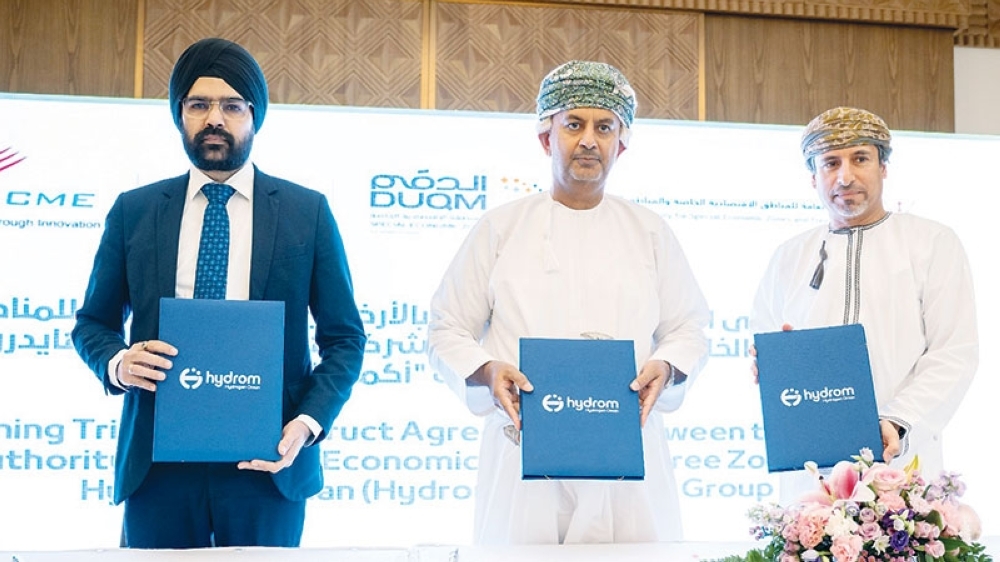
To support this vision, the government established Hydrogen Oman (Hydrom) in 2022, tasked with orchestrating policy, investment and project execution. By 2030, Oman aims to produce 1 to 1.25 million tonnes per annum of green hydrogen, with a target of 7.5 to 8.5 million tonnes by 2050. The pipeline includes mega-projects like Green Energy Oman (1.8 Mtpa), HyPort Duqm (650,000 tonnes of ammonia) and ACME Duqm (900,000 tonnes). These projects are expected to generate over $49 billion in investment by the end of this decade. More importantly, they are designed with a clear mandate to maximise In-Country Value (ICV) — from localising electrolyser manufacturing to developing domestic logistics services, thus creating a fully integrated hydrogen economy within Oman.
Oman’s strength lies not in being the cheapest producer of green hydrogen — that title may go to countries like Chile — but in offering a de-risked, investment-ready ecosystem. Hydrom serves as a one-stop regulator and planner, smoothing investor pathways and reducing uncertainties associated with land acquisition, power sourcing and export infrastructure. The incentives are generous: a 90% reduction in land lease fees during development, 10-year tax exemptions and low base royalties. This business-friendly model, combined with political stability and regulatory clarity, sets Oman apart in the competitive global hydrogen race. Already, the nation has allocated over 50,000 square kilometres for renewable energy projects and plans to install 300 million solar panels and 10,000 wind turbines by 2050.
Logistics, once seen as the “last mile” of economic activity, is becoming the first principle of Oman’s future. It is the foundation upon which industrial growth, renewable energy exports and regional trade integration will be built. As global supply chains realign in the wake of geopolitical shifts and climate imperatives, Oman’s logistics sector offers an example of how foresight, infrastructure and green innovation can converge. The story is no longer just about containers and customs — it is about how a nation redefines value, not by where it’s location, but by what it moves and how it moves it. Oman is inviting the world to partner in this transformation, not as a crossroads, but as a destination of purpose and progress.
Oman Observer is now on the WhatsApp channel. Click here