Stand in a busy market and look around: every face, body, and gesture tells a story written by the land. Skin holds the warmth or coolness of its climate, eyes reflect distant seas, and even the way we walk or dress whispers where we come from. We don’t just live in a place; the place lives in us.
Look in the mirror and you are not just seeing “you”, you are seeing a map. This is what scientists call biogeographic adaptation, one of the clearest ways our environment leaves its mark.
One of the clearest examples is skin colour. Across the world, human skin pigmentation follows one of the most consistent patterns in biology: the closer a population lives to the equator, the darker the average skin tone, and the farther away, the lighter it gets. But here is the important detail: this isn’t really about latitude. It’s about ultraviolet (UV) radiation, specifically UVB, which varies with altitude, cloud cover, and ozone as much as with latitude.
Darker skin in high-UV areas protects folate, an essential vitamin for healthy reproduction, from being broken down by sunlight. Lighter skin in low-UV areas lets the body produce enough vitamin D in weaker sunlight.
Climate has also shaped our noses.
A 2017 study found that people from colder, drier regions tended to have narrower nostrils, while those from warmer, more humid areas had wider ones. Narrower passages may help warm and humidify cold, dry air before it reaches the lungs; wider nostrils may make breathing easier in hot, moist climates.
Body shape follows similar rules.
More than a century ago, Carl Bergmann and Joel Allen observed that warm-blooded animals in colder climates tend to be bulkier (to conserve heat), while those in warmer climates are slimmer (to release heat more efficiently).
Longer limbs in warm climates help shed heat, while shorter limbs in cold climates help keep it in. Large-scale studies still find these trends in human populations, although modern housing and clothing have softened the effect.
Geography also shapes genes through proximity. A study in Northern Kenya found that people living closer together were more genetically similar, showing how location influences gene flow and variation.
And if we zoom out even further, environmental instability over thousands of years (shifting climates, changing landscapes) has been a powerful driver of human evolution. Adaptations in brain size, metabolism, and endurance have been linked to these environmental pressures.
If our genes carry the story of where we come from, our culture is the outfit we dress that story in.
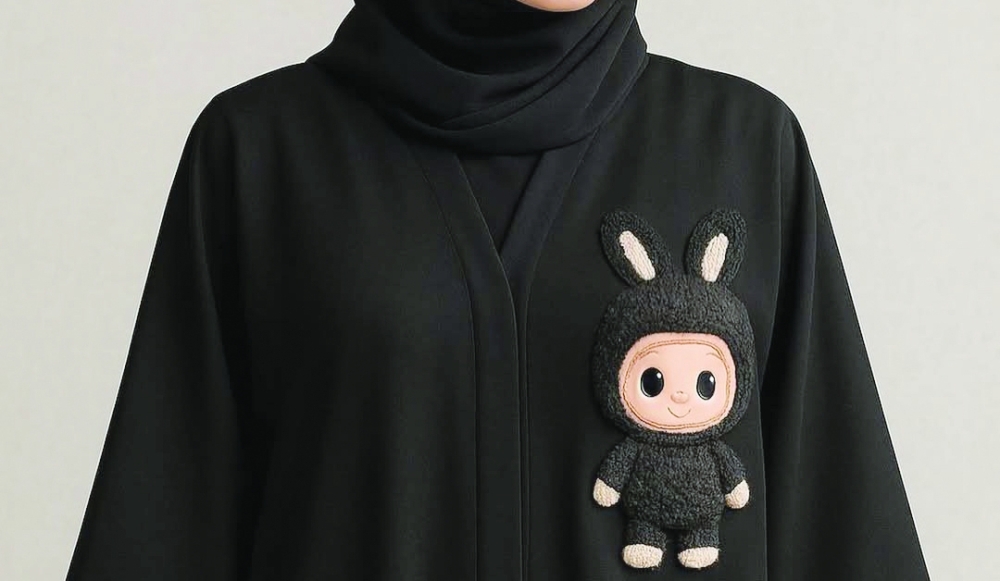
Traditional clothing reflects climate, resources, and cultural meaning. Loose, breathable fabrics dominate hot, dry regions, while layered, insulating materials are common in cold places. This is part of what anthropologists call cultural ecology: how human societies adapt to their environments through both biology and culture.
Language, too, carries geography in its sounds and words. Some linguists suggest that climate can influence sound patterns; for example, humid air may preserve high-frequency sounds better, shaping the 'music' of local languages. Geography also shapes vocabulary.
Arctic communities have dozens of words for snow, while island cultures develop rich terminology for winds and waves.
Even the way we stand, walk, and gesture (what sociologist Pierre Bourdieu called habitus) reflects our environment. Sunny, social plazas can foster close personal space and animated gestures, while colder, more enclosed environments often encourage more restrained body language.
In the end, we are walking archives: part museum of ancient landscapes, part gallery of living culture. The sun, the wind, the mountains, and the markets have all left their mark on us.
Long after we leave a place, it stays stitched into our skin, woven into our words, and folded into the way we move through the world. Geography may be silent, but in us, it speaks.
The author is an academic and researcher
Oman Observer is now on the WhatsApp channel. Click here